Saudi Foreign Property Ownership Law: Rules, Zones, and Fees Explained
The big picture: Saudi Arabia fundamentally reshaped its real estate sector under Vision 2030 by activating the new Law of Real Estate Ownership by Non-Saudis, in a a landmark legislation that transforms a broad economic blueprint into a regulated market reality. International buyers can now officially purchase property within precisely designated investment zones across the Kingdom.
Why it matters: Real estate serves as a vital pillar for the Kingdom’s non-oil growth strategy. Therefore, this framework shifts Saudi Arabia from an opaque approval system to a transparent, rules-based market.
- The timeline: The new Law of Real Estate Ownership by Non-Saudis took effect on January 22, 2026. Furthermore, the Cabinet approved the executive regulations and geographic zones on June 23, 2026.
- The shift: The overhaul replaces an outdated 2000-era law. Previously, the state restricted foreign buyers to basic business premises and worker housing. Today, global buyers can access premium assets.
Go deeper: Officials expect a major influx of international investment funds. As a result, global capital will directly flow into high-profile national infrastructure.
Navigating Digital Portals and Strategic Zones
To maintain local market stability, authorities enforce strict eligibility criteria. For example, buyers and sellers must register all transactions electronically through the unified “Saudi Property” portal.
The requirements: Foreign investors must secure a Ministry of Interior digital identity. Furthermore, they must open a local Saudi bank account and register an authenticated Saudi mobile number.
Registry rules: The target property must hold an official in-kind registration within the national Real Estate Registry to guarantee clear documentation and reduce legal disputes.
Family limits: The state curbs speculative housing bubbles by limiting family ownership. Specifically, the regulation treats a foreign spouse and non-Saudi children as dependents for a single residential purchase. Children can separately buy property only if the parents dissolve the marriage or the child reaches age 25.
Flashpoint: The law strictly protects the religious sensitivity of Islam’s holiest sites, restricting property ownership within Makkah and Madinah exclusively to Muslim individuals and Saudi companies. Non-Muslim foreign nationals cannot purchase real estate within these two holy cities under any circumstances.
Activating Strategic Urban and Giga-Project Hubs
Instead of deploying a completely unrestricted market, the state targets strategic zones to drive specialized regional growth. This map moves the Kingdom into a localized, precinct-based investment model.
The new zoning framework opens clear commercial and residential zones across major nodes:
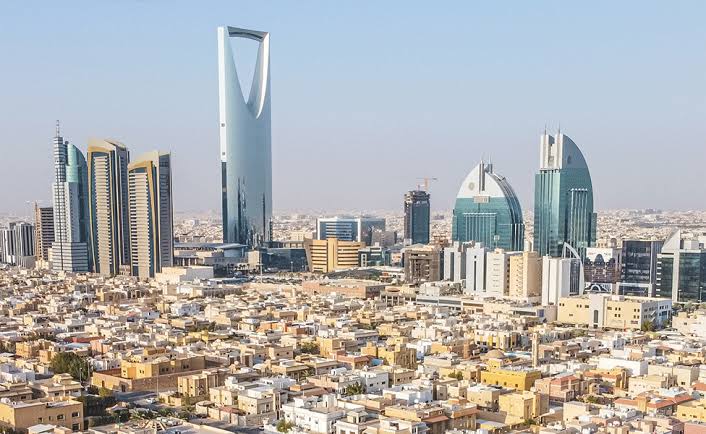
- Riyadh: The capital anchors the initiative. Foreign nationals can buy property in the King Abdullah Financial District (KAFD), Diriyah Gate, New Murabba, and Qiddiya.
- Jeddah: The coastal commercial hub opens the flagship Jeddah Central development alongside 55 separate zones across the wider governorate.
- Giga-Projects: Ambitious destinations fully integrate foreign ownership. Buyers can acquire real estate in NEOM, AMAALA, the Red Sea Project, and designated investment zones in AlUla.
- Economic Cities: To boost industrial localization, the rules cover King Abdullah Economic City (KAEC), Jazan, and Ras Al-Khair.
Dissecting Taxes, Fees, and Enforcement Fines
Investing in Saudi real estate involves a distinct cost structure to protect the domestic economy.
10%: The maximum cumulative transfer burden. This includes the standard 5% Real Estate Transaction Tax (RETT) and an additional non-Saudi disposal fee with a 5% cap.
2%: The specific transaction fee authorities collect on real estate rights in Riyadh, Jeddah, Makkah, and Madinah.
9: The number of categories exempt from the 2% fee, including inheritance divisions, final court judgments, and transfers to wholly owned investment funds.
The penalty: Special Real Estate General Authority (REGA) committees actively review market violations. General offenses trigger official warnings or fines up to 5% of the property value, capped at SAR 10 million. However, if individuals submit fraudulent or misleading information, they face severe consequences. Specifically, authorities can levy a SAR 10 million fine and sell the property at a public auction. To ensure fairness, the state grants violators a 10-to-180-day grace period to rectify their legal status.
REGA officials state the framework will “regulate non-Saudi ownership within defined criteria and geographical zones, while supporting investment appeal and real estate market efficiency under Saudi Vision 2030.” Ultimately, this historic reform will stimulate legal consulting, brokerage, and construction firms, creating thousands of new jobs for the local workforce.
Why the Economy Stands to Benefit
The timing reflects real momentum, as Saudi Arabia’s real estate sector doubled its GDP contribution from 5.9% in 2023 to roughly 12% in 2024, and the market, valued near $77 billion in 2025, could nearly double to $141.6 billion by 2034, according to IMARC Group estimates cited by Arab News.
Officials also expect the reform to boost demand for legal, brokerage, contracting, valuation, and facility management services, creating jobs across construction and real estate.
Oliver Morgan, real estate leader at Deloitte Middle East, said the reform diversifies demand across the market while keeping regulatory guardrails in place, adding that the UAE, Malaysia, and Turkey have followed a similar path to strong effect.
Minister of Municipalities and Housing Majed Al-Hogail, who chairs the Real Estate General Authority, thanked Saudi leadership for approving the framework and called it a step toward a more transparent, trustworthy market. He stressed that the new rules preserve the Kingdom’s religious and cultural values while protecting citizens’ rights and market stability.
For now, prospective buyers should confirm eligibility through the Saudi Property portal before committing to any purchase, since ownership rights depend entirely on a property’s location within the approved zones.