Beyond the Skies: How Saudi Arabia’s New Aerospace Force Protects the Kingdom
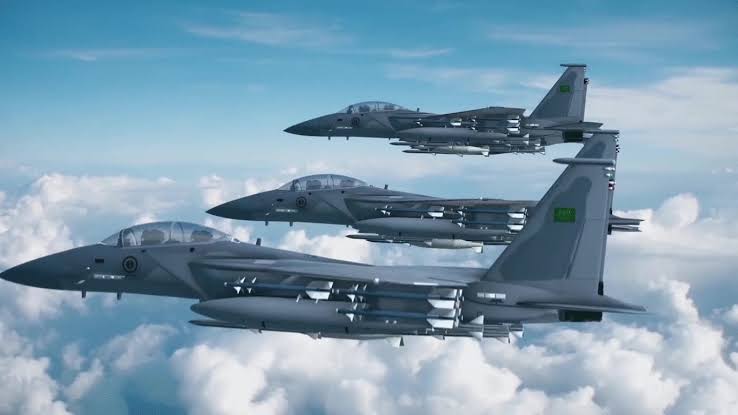
The big picture: Saudi Arabia is formally merging the Royal Saudi Air Force (RSAF) and the Royal Saudi Air Defense Forces (RSADF) into a single entity: the Royal Saudi Air and Space Force (RSASF). Air Force Commander Lt. Gen. Prince Turki bin Bandar recently confirmed this historic transition has entered its final phase, following years of quiet integration between the two services. Consequently, this institutional shift marks a profound operational evolution for the Kingdom.
Why it matters: The Kingdom borders highly strategic maritime and air corridors, including the Red Sea and the Arabian Sea. Furthermore, Saudi Arabia hosts the world’s largest continuous concentration of energy infrastructure. Therefore, defending these vital assets requires persistent awareness across a complex battlespace. This merger unifies air operations, air defense, space assets, and intelligence under a single command.
What they’re saying: British defense outlet Tomorrow’s Affairs summed up the shift directly, stating, “Saudi Arabia no longer just possesses a large air force. Instead, it now owns an integrated air and space force. This structure brings air operations, air defense, space, and intelligence under a unified command. Consequently, it enhances the Kingdom’s ability to protect its interests and manage regional challenges.”
Since 2015, Saudi military planners have steadily built an air power model that links aircraft, missile defense, intelligence, and space assets into one combat system, rather than treating them as separate branches. Dr. Nawaf Obaid, senior research fellow at King’s College London’s Department of War Studies, argues that this transformation explains why the Kingdom is establishing this force now, since operations across the theater increasingly show mature, integrated command and control.
A Multi-Layered Shield
By the numbers: The RSAF’s fleet underscores the scale behind this transformation.
- The force operates roughly 365 combat aircraft, including about 226 4.5-generation fighters.
- This fleet comprises 154 F-15SA jets and 72 Eurofighter Typhoons.
- Approximately 59 F-15C/D aircraft and around 80 Tornado IDS strike jets round out the inventory, making Saudi Arabia the world’s second-largest F-15 operator after the United States.
Air defense capability matches this ambition, as they span three tiers:
- Upper Tier: THAAD systems intercept high-altitude ballistic missiles
- Middle Tier: Patriot batteries (PAC-2 and PAC-3) protect critical infrastructure and population centers
- Lower Tier: A dense SHORAD network, including Shahine and Crotale-derived systems, counters drones and low-flying threats
Once technicians complete all deployments, only the United States will field a larger layered air and missile defense architecture.
The Next Frontier: Space
Space now represents the RSASF’s next major investment area. The Kingdom is pouring resources into geospatial intelligence, satellite constellations, secure communications, and strategic early-warning systems, since modern military effectiveness increasingly depends on detecting threats earlier and responding faster than adversaries can react.
This shift moves the force from a traditional layered sensor network, known as C6ISR, toward a more cognitive framework often described as C7ISR, where commanders convert information into decisive action more rapidly. Under the RSASF, aircraft, missile defenses, drones, intelligence systems, and space-based assets will operate under one command structure built to manage the battlespace comprehensively, rather than simply respond within it.
What’s next: Saudi Arabia has also invested heavily in indigenous missile and unmanned systems production, emphasizing domestic manufacturing of long-range strike systems, reconnaissance platforms, and one-way attack drones. This push aims to build a more resilient defense-industrial base and reduce dependence on external suppliers, aligning with the Kingdom’s Vision 2030 localization targets. Meanwhile, the Royal Saudi Strategic Missile Force continues its own separate modernization path outside this restructuring.
As Dr. Obaid concludes, sophisticated equipment alone doesn’t create military power, institutions do. The RSASF gives the Kingdom the institutional structure it needs to preserve and expand its regional influence for the next generation.