Saudi Aramco is weighing an expansion of its global storage network to secure energy supplies in the wake of the US-Iran war, which disrupted shipping through the Strait of Hormuz.
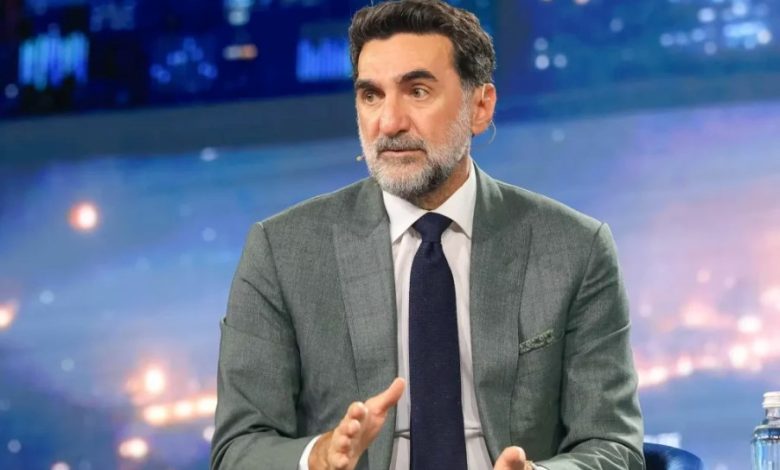
Chairman of Aramco and Governor of the Public Investment Fund (PIF), Yasir al-Rumayyan, unveiled the plans during the FII PRIORITY Europe summit in Rome, hosted by the PIF-backed FII Institute.
“Aramco has storage facilities around the world especially in Asia, in Korea and Japan, and we are thinking seriously of having larger storage facilities all over the world,” al-Rumayyan said.
Bypassing Hormuz
Al-Rumayyan also highlighted how the Kingdom’s East-West Pipeline has been pivotal in hedging against the fallout of the Hormuz closure, providing a “lifeline” for global energy markets during the conflict.
“We had a similar situation back in the 80s where the strait (of Hormuz) performance was threatened with a blockade by the Iran regime, and it was decided since then that we would have a pipeline from east to west (of the Kingdom),” he said.
“In Saudi Arabia, we think in years and decades, rather than just quarters,” al-Rumayyan noted.
The East-West Crude Oil Pipeline, also known as Petroline, is a 700-mile-long pipeline that runs from the Abqaiq oilfield in the Eastern Province to Yanbu along the Red Sea coast. It reached its maximum capacity of 7.0 million barrels per day in the first quarter of 2026.
The US-Israeli war with Iran, which broke out on February 28, 2026, paralyzed transit via the Strait of Hormuz – a strategic waterway linking the Arabian Gulf with the Gulf of Oman and the Arabian Sea, through which around a fifth of daily global oil and LNG supplies pass.
PIF’s Shifting Global Strategy
In his remarks, al-Rumayyan addressed Saudi Arabia’s massive financial footprint on Europe. Between 2017 and 2025, the PIF deployed roughly €98 billion ($112.8 billion) across Europe and the UK, while Aramco spent roughly €8 billion with European suppliers.
However, al-Rumayyan warned that tightening European regulations are actively jeopardizing future capital flows. “Regulatory challenges are really hurting investors such as Aramco, SABIC, and PIF, not only in their ability to invest more, but also to keep their investments in Europe,” al-Rumayyan said, adding he hopes policymakers find better solutions.
Al-Rumayyan also noted a strategic shift for the PIF, indicating that while Saudi Arabia will maintain its global investments, they will comprise a smaller share of the fund’s overall portfolio moving forward.
“Since 2016, the PIF has brought Saudi Arabia to the world. Our new strategy is to bring the world back to Saudi Arabia,” he said.