KAUST Redefines Industrial Gas Separation with Breakthrough Membrane Technology
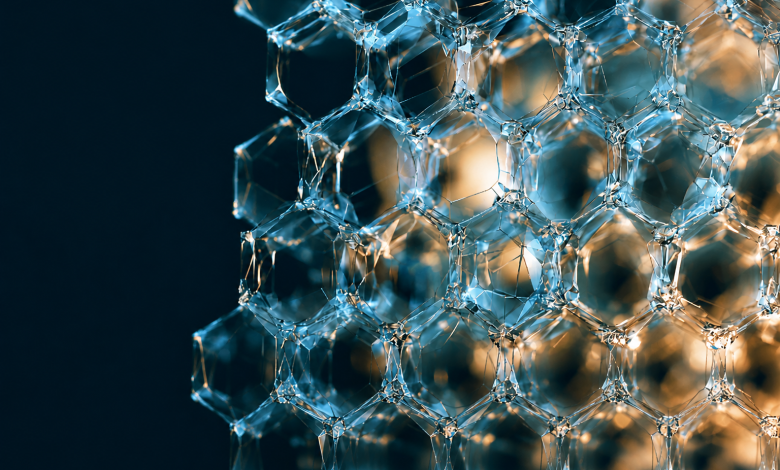
Rather than accepting the rising energy demands of industrial gas separation as inevitable, researchers at King Abdullah University of Science and Technology (KAUST) are transforming the process through a breakthrough membrane technology that could dramatically cut its energy consumption.
From Scientific Promise to Industrial Reality
Since gas separation accounts for roughly 15 percent of global energy consumption, the innovation is poised to rewrite the future of one of industry’s most energy-intensive operations.
Published in the prestigious Nature journal, the study features a high-performance membrane composed of more than 90 percent metal-organic frameworks (MOFs), a class of highly porous materials known for their extraordinary ability to meticulously separate gas molecules.
While MOFs have long been celebrated for their unparalleled separation capabilities, translating their promise into large-scale industrial applications has remained a formidable challenge.
The KAUST team made a bold stride, overcoming this hurdle by crafting a membrane that not only demonstrates unique performance but also maintains the flexibility and durability needed for industrial-scale manufacturing.
Can Advanced Membranes Finally Be Manufactured at Scale?
According to Mohamed Eddaoudi, professor of chemical science at KAUST and the study’s corresponding author, the greatest challenge has never been exploring materials capable of highly efficient gas separation but rather scaling them for industrial use.
“This work provides a practical pathway for doing that and brings advanced membrane technologies much closer to real-world deployment,” Eddaoudi added.
As a living testament to its readiness for industrial adoption, the research team successfully produced continuous 20-meter membrane rolls through a commercial roll-to-roll production process. This bold step represents an important milestone in proving the technology can be produced at scale.
Proving Its Potential Beyond the Laboratory
Apart from the laboratory, the membrane also showed impressive performance across a vast array of environmental and industrial applications, from carbon capture and hydrogen purification to propylene separation.
More boldly, the technology generated polymer-grade propylene in a single separation step while maintaining stable operation for more than 150 consecutive days.
Based on techno-economic analyses, the membrane could lower purification costs by as much as 80 percent compared with traditional thermal distillation methods.
Researchers also see broad potential for the technology in natural gas processing, hydrogen recovery, and direct air capture of carbon dioxide, expanding its scope in the transition toward cleaner industrial systems and supporting global decarbonization efforts.
Can Cross-Border Science Solve Global Challenges?
Reflecting the growing significance of international scientific collaboration, the study was led by Xing Zhu, a KAUST doctoral graduate, in partnership with researchers from the Hong Kong University of Science and Technology, the University of Montpellier, and the French National Center for Scientific Research.
This collaboration tackled one of the field’s most enduring engineering challenges, advancing membrane design while laying the groundwork for commercially scalable green technologies.
Related Topics:
Genetic Leap: How KAUST Is Rewriting the Future of Plant Biotechnology
KAUST Innovation: Wearable Smart Patch Tracks Real-Time Drug Levels
Aramco, Honeywell, KAUST Partner to Develop Crude-to-Chemicals Technology