
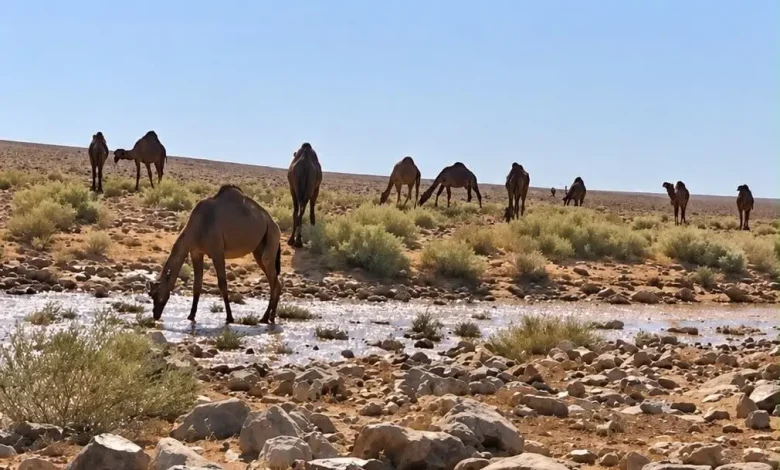
Seasonal rainfall has uncovered another side of Turaif Governorate, where flowing streams and flourishing vegetation have transformed parts of its otherwise arid landscape.
Camels grazing across the wild pastures add an exceptional layer to the scenery, reflecting the close relationship between the region’s natural environment and traditional pastoral life.
Footage released by the Saudi Press Agency (SPA) captures the breathtaking scenery, mirroring the impact of seasonal rains on the region’s natural environment and traditional grazing areas.
Rainfall Revives Turaif’s Desert Vegetation
Located within Saudi Arabia’s Northern Borders Region, Turaif is fully surrounded by vast desert plains, rocky formations, as well as seasonal watercourses known as wadis.
Despite the fact that these valleys and ravines remain dry for much of the year, seasonal rainfall brings water through their channels, enriching the surrounding land and supporting the growth of wild vegetation.
Through its arid climate, hot summers, and cold winters, the region experiences irregular rainfall, making each rainy period particularly significant.
Recent precipitation has created visible streams and encouraged the growth of shrubs and wild plants, adding patches of green to the brown desert landscape.
What Do These Rains Mean for Local Herders?
Remarkably, the footage released by the SPA vividly captures rainwater moving through Turaif’s rocky valleys, with camels grazing across the surrounding pastures.
Such scenes reflect the seasonal changes that periodically reshape northern Saudi Arabia’s desert landscape, bringing renewed vegetation and natural grazing areas.
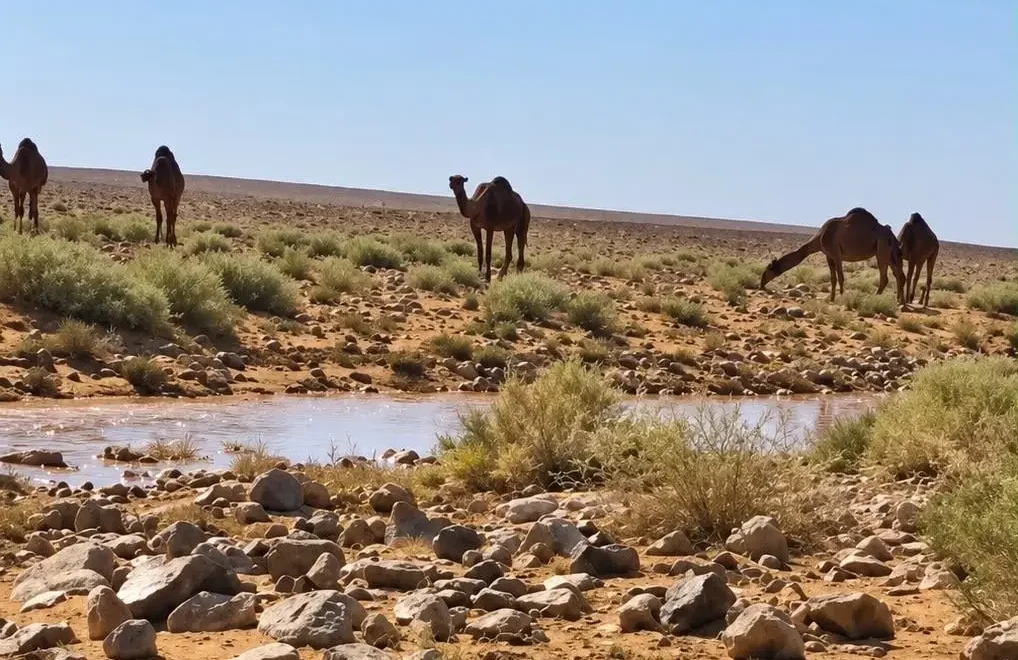
For local communities, these rains are particularly valuable, as they support livestock and revive pastures that provide a natural source of food for their herds.
The transformation also sheds light on the role of rainfall in sustaining desert ecosystems. While Saudi Arabia continues to make bold strides in investing in water management and conservation, natural precipitation remains important to the health of its rangelands and groundwater resources.
In Turaif, the flowing streams and emerging vegetation show how seasonal water cycles contribute to the delicate balance between the natural environment and traditional livelihoods.
What Makes Turaif’s Landscape Distinctive?
More boldly, the transformation of Turaif’s landscape offers an exclusive opportunity to showcase another dimension of Saudi Arabia’s natural and cultural heritage.
The combination of flowing water, flourishing vegetation, and camels grazing across open pastures reflects the distinctive character of the Kingdom’s northern landscapes and the traditional activities connected to them.
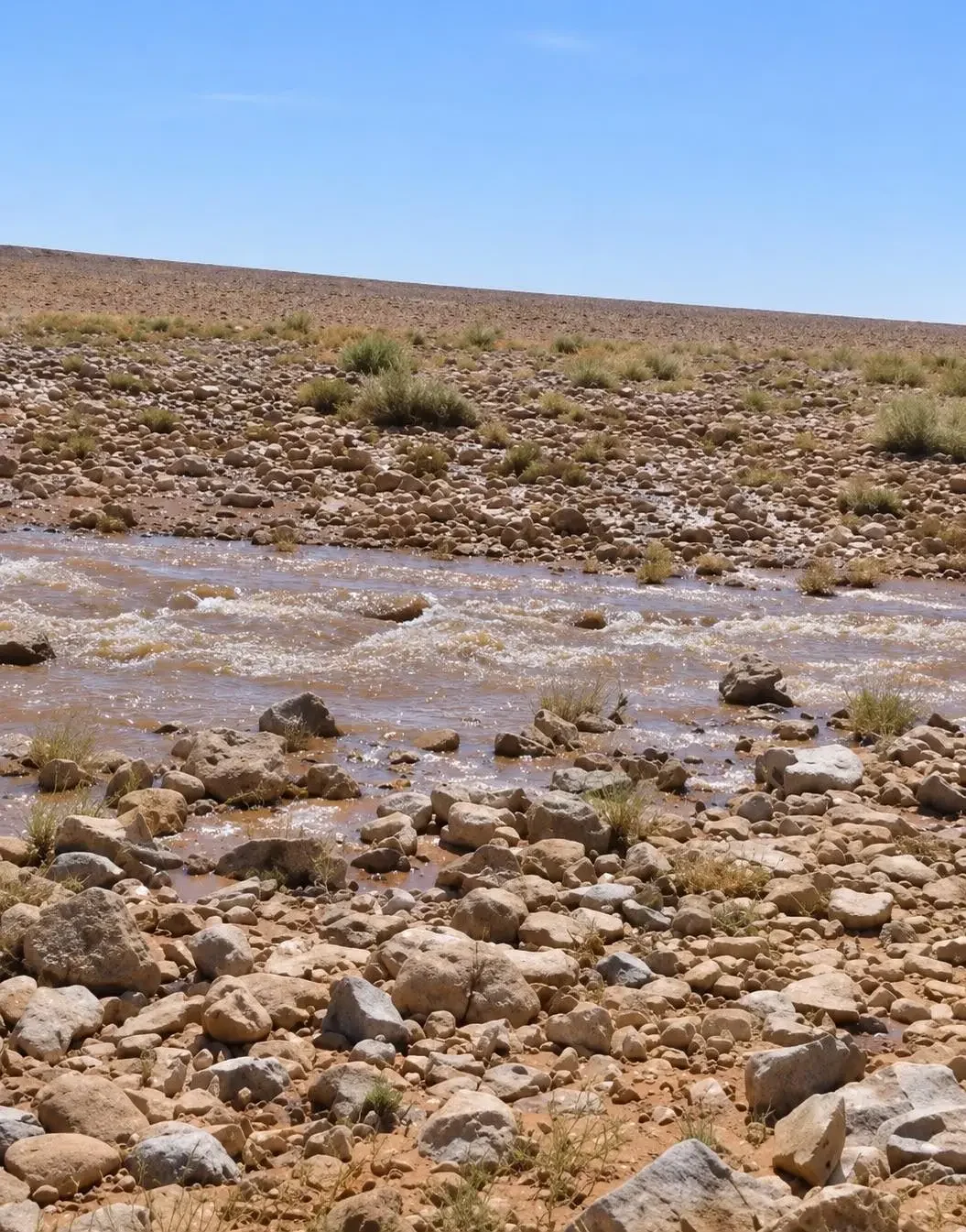
These scenes also highlight the importance of seasonal rainfall across the Arabian Peninsula, where periods of precipitation bring temporary changes to desert environments.
By drawing attention to such landscapes, the footage offers a broader perspective on the Kingdom’s geographical diversity and the relationship between its communities and natural surroundings.
How Can Nature Support Tourism in Turaif?
The flourishing pastures also carry significance for Turaif’s traditional pastoral activities, providing natural grazing areas for camels and other livestock.
For local herders, the growth of wild vegetation following rainfall offers renewed access to natural feeding grounds, highlighting the importance of seasonal precipitation to livelihoods across the Northern Borders Region.
At the same time, the changing landscape reflects the wider importance of preserving natural resources in Saudi Arabia’s arid environment.
The renewal of vegetation and seasonal watercourses highlights the relationship between rainfall, healthy rangelands, and environmental sustainability. These natural features also contribute to the region’s potential for nature-based tourism, supporting Vision 2030’s efforts to diversify the Kingdom’s tourism offering.
Vision 2030 Connects Nature and Heritage
The stunning scenes unfolding in Turaif also reflect the broader value of Saudi Arabia’s natural and cultural heritage as the Kingdom advances its Vision 2030 objectives.
The flourishing vegetation highlights the importance of protecting desert ecosystems, while camels grazing across the pastures offer a reminder of traditions that remain closely connected to the country’s identity.
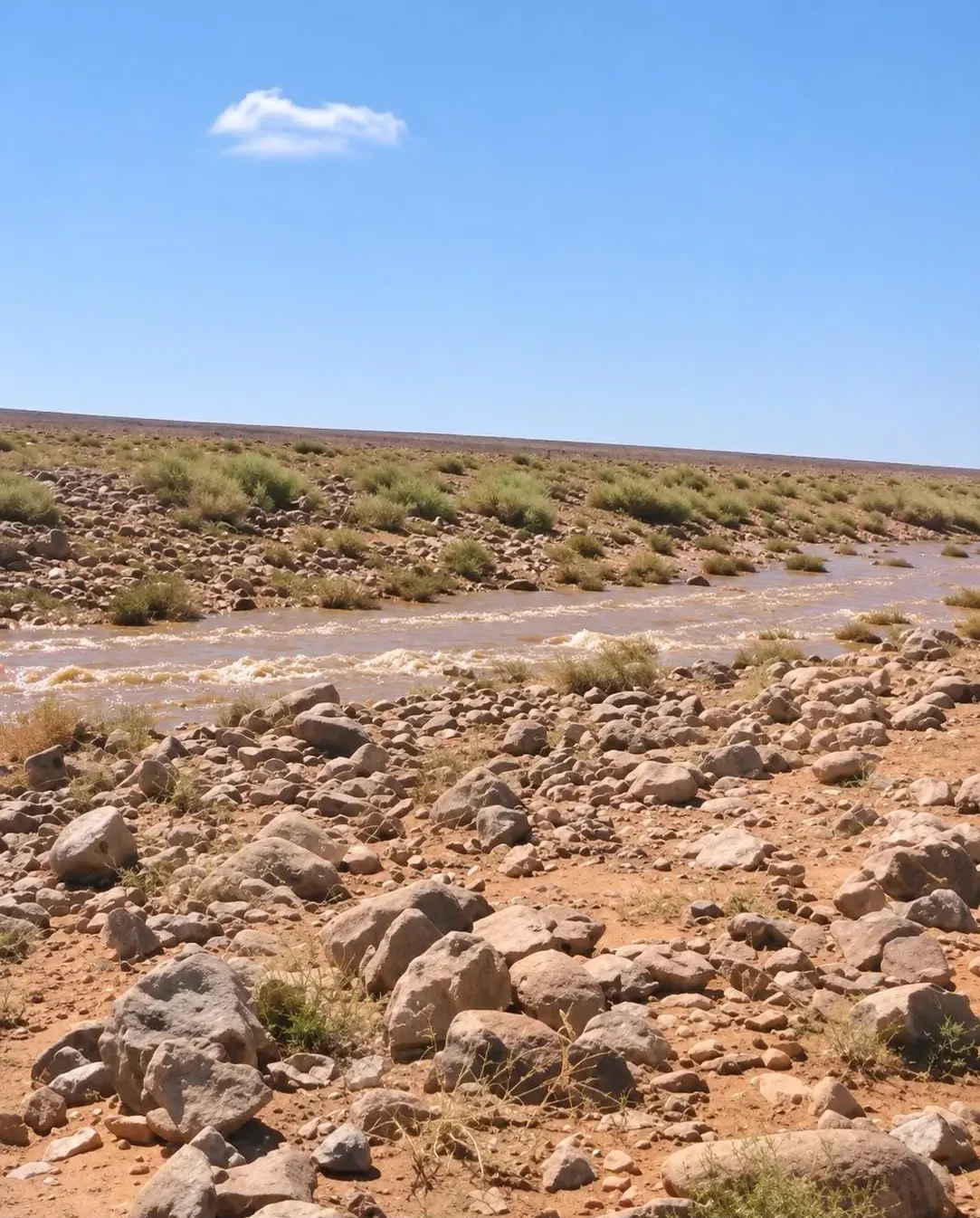
These elements intersect with the environmental priorities of the Saudi Green Initiative and the National Environment Strategy, which place greater emphasis on preserving natural habitats and promoting sustainable resource management.
They also demonstrate how regional landscapes can contribute to a richer understanding of Saudi Arabia’s cultural and geographical diversity.
Related Topics:
Market Rules: Saudi Arabia Draws New Lines Around Camel Trade
Royal Tour: Saudi Crown Prince, Britain’s Prince William Visit UNESCO Site At-Turaif
Camels to Carry Passports in Saudi Arabia’s New Initiative