Red Sea Remains Free: Houthis Deny Shipping Fee Plans as Tensions Escalate
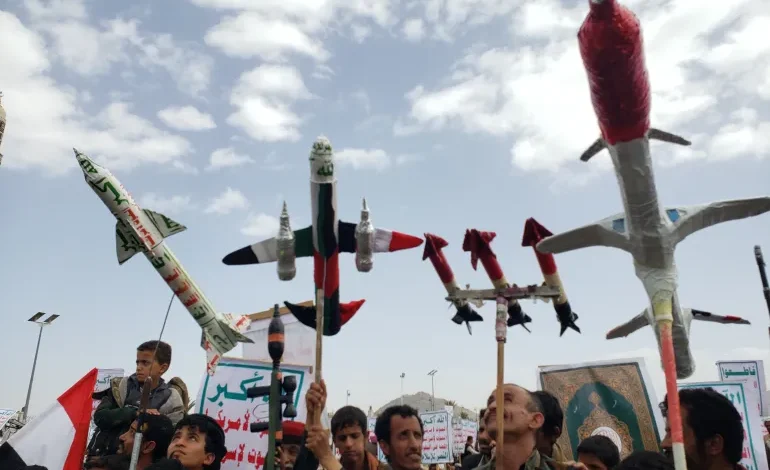
Yemen’s Houthis on Saturday denied reports alleging plans to collect transit fees from commercial ships in Bab Al-Mandeb. Consequently, the group insisted that its leadership made no such decision, affirming free passage through the strategic waterway.
Why it matters: The Bab Al-Mandeb Strait has gained vital importance for international trade, Saudi Arabia, and Gulf countries. Because US-Iran hostilities and Iranian blockades have largely closed the Strait of Hormuz, Red Sea shipping routes carry vital trade. Therefore, any Houthis attempt to extort passing vessels directly threatens Kingdom economic security and destabilizes global energy markets.
The denial follows a Reuters report citing regional intelligence sources. Specifically, the report disclosed that the Iran-backed group evaluated imposing tolls on commercial ships in the southern Red Sea. Moreover, Houthi delegates discussed this financial proposal with Iranian officials during a July visit to Tehran. However, the report noted that the group established no official timeline for implementing the toll framework.
Notably, this controversial proposal emerged shortly after the Houthis declared a maritime blockade against Saudi Arabia. Furthermore, intelligence officials noted that Tehran encouraged the militia to target Bab Al-Mandeb while Iranian forces blockaded Hormuz.
Riyadh Responds with a New Coalition
In response to the blockade, Saudi Arabia hosted delegations from 43 countries and the European Union in Riyadh on 30 July to launch a new Multinational Maritime Defence Coalition. Fourteen nations, including Turkey, Egypt, Pakistan, and Jordan, signed the founding statement, and Saudi Arabia will serve as the coalition’s leading state, hosting its permanent headquarters and joint operations center.
The coalition’s mandate covers the Bab Al-Mandeb Strait, the Red Sea, and the Gulf of Aden, though analysts are still asking how it will coordinate with Aspides, the European Union’s existing naval mission in the same waters.
Saudi Arabia’s Foreign Ministry has pledged “all necessary measures” to protect its vessels, and Yanbu, the terminal that feeds the Abqaiq-to-Red-Sea pipeline, has become the kingdom’s critical oil export artery.
The Denial
Responding to intelligence reports, the Houthi-run Humanitarian Operations Coordination Center (HOCC) pushed back firmly. Specifically, the agency asserted that its “safe transit service was a voluntary and cost-free service”.
What they are saying: The coordination center strongly disavowed unauthorized entities seeking monetary payments from commercial shipping operators. “The HOCC categorically confirms that any individual or entity requesting the payment of money in exchange for transiting the Bab Al-Mandeb strait does not represent the Republic of Yemen or HOCC in any capacity whatsoever,” the center stated.
Furthermore, the agency warned international maritime companies against complying with unverified payment demands. “The HOCC urges shipping companies not to make any payments or provide any information to unauthorized individuals or entities,” it added.
Regional Security and Strategic Protection
Between the lines: Government officials in Aden accused Iranian commanders of encouraging Houthi extortion tactics across both strategic chokepoints. Consequently, defense analysts view the new Saudi-led naval coalition as an essential countermeasure. Indeed, coalition members share real-time maritime intelligence and coordinate joint patrols to secure vital trade corridors.
The big picture: With Hormuz largely closed, Saudi Arabia and its security partners maintain heightened vigilance across Red Sea waterways. Furthermore, Saudi naval forces actively protect commercial trade routes to preserve international supply chain resilience.
What’s next: Shipping companies will monitor Red Sea stability closely while coordinating navigation protocols directly with Saudi naval coalition authorities. Ultimately, unhindered commercial transit through the Bab Al-Mandeb Strait remains a crucial priority for the Kingdom and global trade.