
Business as Usual: How Saudi Arabia Remains a Beacon of Stability in a Turbulent Region
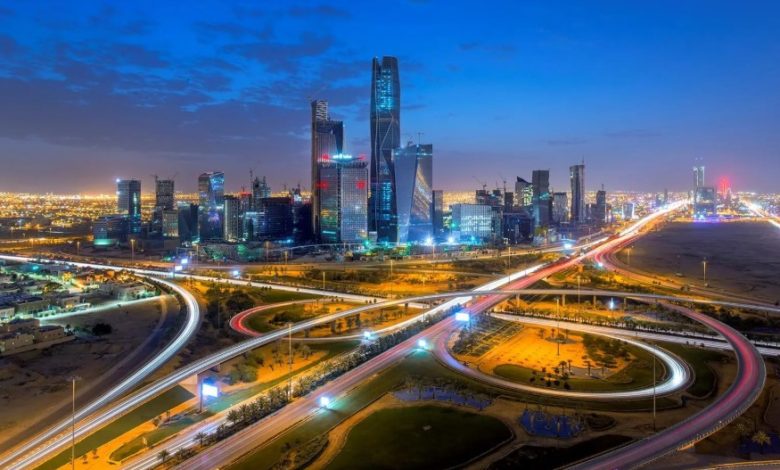
As military tensions shake the Middle East, Saudi Arabia‘s cities bustle with life, with vibrant public venues, crowded airport terminals, and packed event calendars throughout the year, operating seamlessly despite regional threats.
This shielded environment is the direct outcome of a robust defense posture and an unmatched economic resilience that maintains operational continuity and insulates daily life from external disruptions.
A Region in Turmoil
Following the outbreak of the US-Iran conflict in late February 2026, civilian infrastructure in the Gulf states and the wider region came under Iranian missile and drone attacks. The UAE’s aviation sector, in particular, was heavily impacted, with Dubai International Airport and Zayed International Airport in Abu Dhabi sustaining strike damage that forced temporary airspace closures and widespread flight cancellations in late February and early March.
For Saudi Arabia, Iranian-backed militias have escalated their attacks against the Kingdom’s civilian and energy facilities. Since July 2026, the Houthis have launched drone and missile attacks across several Saudi cities, including Riyadh, Taif, Abha, Jeddah, Yanbu, Khamis Mushait, Jazan, and Najran. The militia has also targeted Saudi Arabia’s airports, including King Khalid International Airport in Riyadh, King Fahd Airport in Dammam, as well as Abha, Jazan, and Najran airports, killing dozens of civilians and injuring hundreds. Moreover, the Houthis have attempted to target Makkah and Madinah, the two holiest cities in Islam.
In parallel, Iranian-backed militias based in Iraq targeted Saudi oil facilities in the Eastern and Riyadh regions with drones on July 27 and July 28.
Saudi Defense Supremacy
Unlike regional peers, Riyadh has been steadfast in safeguarding its national sovereignty and security. The Royal Saudi Air Defense Forces (RSADF) have demonstrated high operational readiness and efficiency protecting the kingdom’s airspace and critical infrastructure from aerial, drone, and ballistic missile threats.
By operating layered missile defense and anti-aircraft systems, including Patriot missile batteries and THAAD, and early-warning systems, Saudi air defenses neutralize Houthi drone and missile attacks around the clock, shielding the Kingdom’s vital infrastructure and airspace with exceptionally high interception rates.
Furthermore, the Saudi-led Coalition to Restore Legitimacy in Yemen has carried out defensive operations, eliminating the sources of Houthi threats in Yemen. It also provides air support for the Yemeni Armed Forces, as part of Operation Dawn of Yemen – a military counteroffensive aimed at recapturing the remaining Houthi-controlled territories and restoring state authority.
In response to attacks launched from Iraq, the Saudi Armed Forces, in coordination with the US Central Command (CENTCOM), conducted precision strikes against specific targets in Iraq from which these attacks originated on July 29.
Uninterrupted Traffic: Saudi Logistics Resilience
Although the blatant Houthi attacks put Saudi airports on their radar, the Kingdom’s aviation sector remains fully operational. Only 10 days after being targeted with 20 Houthi attacks from October 1-15, King Khalid International Airport (KKIA) in Riyadh announced resumption of operations in Terminals 1 and 2.
Similarly, King Fahd International Airport in Dammam restored normal air traffic after a temporary suspension following a Houthi attack on October 21.
On the maritime front, all the Kingdom’s major ports on the Red Sea and the Arabian Gulf, such as Jeddah Islamic Port, King Abdulaziz Port, and King Fahd Industrial and Commercial Ports, operate normally, streamlining the flow of energy and trade supplies.
Unshaken Diplomatic Confidence
This logistical stability is mirrored in the unhindered flow of foreign leaders traveling to Riyadh. In recent weeks, a steady stream of high-level delegations arrived in the Saudi capital, signaling international endorsement of Saudi Arabia’s airspace safety and sovereign stability:
- Syrian President Ahmed Al-Sharaa visited Riyadh twice in less than a month.
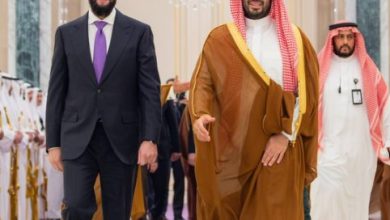
- Jordanian Crown Prince Al Hussein bin Abdullah II met with the Saudi Crown Prince at Al-Yamamah Palace on November 2.
- French President Emmanuel Macron visited Riyadh on October 21, sending a strong signal of solidarity and confidence.
The Conclusive Proof: A 2026 Tourism Boom
As the regional conflict disrupted air traffic in many capitals across the Middle East, Saudi Arabia has emerged as an attractive destination for international visitors in the first half of 2026 – compelling evidence of tourist confidence in the Kingdom’s safety and security.
In a major announcement by Saudi Tourism Minister Ahmed al-Khateeb, during the inauguration of the Kingdom’s pavilion at World Travel Market London 2026, Saudi Arabia welcomed 61.2 million tourists in H1 2026, accounting for 1% increase year on year. During the same period, the Kingdom generated SAR 151.9 billion ($40.5 billion) in tourism spending.
This surge was backed by more than 44,000 room keys in newly licensed facilities and 623,000 licensed room keys to meet demand across popular destinations, such as Riyadh, Jeddah, AlUla, and the Red Sea.
Robust Economic Performance
Saudi Arabia’s security is evident in global market confidence. In October 2026, the Kingdom registered 1,275 new foreign companies representing more than SAR 10.3 billion ($2.7 billion) in foreign capital, attracting investors from 45 countries, according to data released by the Federation of Saudi Chambers.
These figures, along with H1 tourism metrics, prove that Saudi Arabia is not only secure, but also the premier economic engine of the entire Middle East.
A Packed Events Calendar
The surge in tourist arrivals goes in tandem with a busy agenda of major events and prestigious gatherings.
- Riyadh Energy Week: From October 11-15, 2026, Riyadh hosted a series of energy events, including the 25th WPC Energy Congress, the IEF17 Ministerial Meeting of the International Energy Forum, the 17th Clean Energy Ministerial (CEM17), the 16th Session of the Arab Ministerial Council for Electricity, and a series of technical events organized by the Organization of Arab Petroleum Exporting Countries (OAPEC).
- LEAP 2026: From August 31 to September 3, 2026, Riyadh hosted the fifth edition of LEAP, the world’s largest tech event, bringing together technology leaders, investors, experts, and startups from across the world.
- Riyadh Season: On October 21, 2026, Saudi Arabia launched the seventh edition of Riyadh Season – the world’s largest annual entertainment festival. Running for 10 weeks, the season offers dynamic entertainment events, global sports tournaments, theatrical performances, music concerts, and world-class experiences, drawing millions of visitors from around the globe.
- Saudi Winter Events Calendar: In late October 2026, the Saudi Tourism Minister launched the Saudi Winter events calendar for 2026, featuring a diverse range of events, activities, and experiences throughout the winter season across nine key destinations: Riyadh AlUla, Qassim, Hail, Jeddah, Al-Khobar, Al-Ahsa, Madinah, and The Red Sea.
Saudi Arabia: The Cornerstone of Stability
With this unmatched ability to blend efficient military deterrence with economic and culture expansion, Saudi Arabia sets a model of high resilience and sovereign stability.
While other regional capitals find it hard to navigate geopolitical turbulence, Riyadh’s proactive defense, solid economic foundations, and vibrant social calendar prove that the Kingdom remains the undisputed anchor of safety, growth, and security in the Middle East.