Saudi Robotaxis Go National: Kingdom Plans Autonomous Vehicle Expansion to Jeddah, Dammam
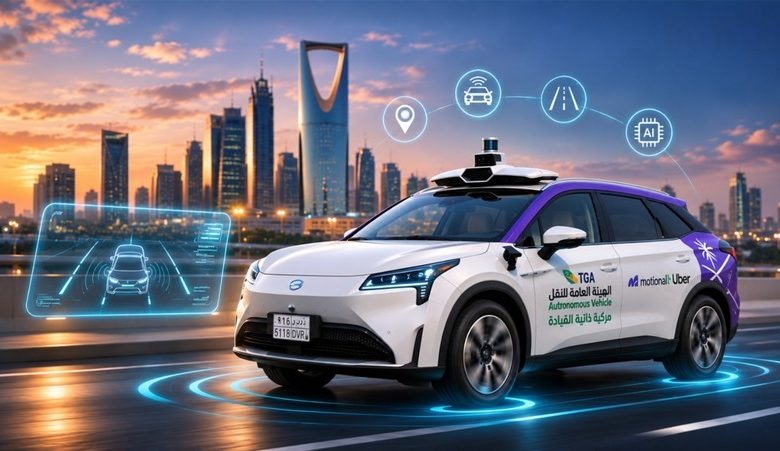
Driving the news: Saudi Arabia is preparing to take self-driving vehicles beyond Riyadh. The Transport General Authority (TGA) plans to expand the passenger service to Jeddah and Dammam in the coming phases. The move follows strong results in the capital, where more than 7,300 passengers have completed over 3,600 autonomous trips since launch.
Why it matters: The Kingdom is turning a Riyadh pilot project into a national self-driving service. The expansion supports Vision 2030, opens the market to global investors, and sets a regional benchmark for smart mobility.
New Routes, Bigger Fleet
The big picture: Eight autonomous vehicles carry passengers in Riyadh today, TGA told Al Arabiya.net. The fleet will grow, and the authority keeps testing new routes. Meanwhile, TGA is refining the regulatory framework for autonomous transport.
Moreover, a new route now links Hayat Mall and Riyadh Gallery. TGA continues to evaluate additional routes before adding them to public service.
Beyond the capital, TGA wants autonomous technology in the Kingdom’s major cities. Jeddah comes first, then Dammam. Other regions will follow in later phases. Public enthusiasm is growing too. As a result, TGA reads rising rider interest as proof that society accepts smart mobility built on modern technology.
Flashback: TGA launched the Riyadh pilot in July 2025, when Transport Minister Saleh Al-Jasser inaugurated the initial operational phase of autonomous vehicles.
From Passengers to Packages
Autonomous technology is now moving goods, not just people. TGA recently launched driverless delivery with Nero and Ninja in Riyadh’s Al Falah district.
Nero, a Saudi startup founded in late 2025, holds the first permit for autonomous delivery in public neighborhoods. Its electric vehicles run on Level 4 autonomy and carry payloads of up to 200 kilograms. In addition, 360-degree sensors and a remote operations center monitor every trip in real time, with the option to stop the vehicle instantly.
The workflow is simple. Customers order electronically, the store loads the vehicle, and the robot completes the delivery itself. The recipient then opens the compartment and collects it. Consequently, the technology has moved from passenger transport into logistics. That shift opens the door to wider delivery and supply-chain applications.
By the numbers:
- 7,300+ passengers served since the Riyadh launch.
- 3,600+ trips completed across pilot routes.
- 8 robotaxis in service today, with plans to grow the fleet beyond 20.
- 30,000+ km covered earlier, across 1,700 trips and 3,000 passengers.
- 25% of goods vehicles to run autonomously by 2030.
- SAR15 billion (about USD4 billion): Projected value of the Kingdom’s autonomous vehicle market by 2030.
- SAR45 billion (USD12 billion): Targeted annual non-oil revenue from transport and logistics by 2030.
- 10%: Targeted transport and logistics share of GDP by 2030, up from 6%.
New Rules of the Road
Regulation is keeping pace with technology. TGA has approved the executive regulation for autonomous passenger transport. The official gazette Umm Al-Qura published the 31-article rulebook on 6 November, 2026. Therefore, it takes effect on 6 January, 2027. The rules define licensing and operating requirements for service providers. They also set technical standards that protect passenger safety and service reliability.
Furthermore, the rulebook covers facility and vehicle qualification, insurance, operational oversight, and protocols for emergencies and cybersecurity risks. Each vehicle must carry a safety officer at first. However, TGA can permit driverless runs once technical readiness and performance reports justify the change.
Earlier, in June 2026, the Kingdom amended its traffic regulations. As a result, the owner of a fully autonomous vehicle now bears the same legal responsibility a driver would hold in an accident.
Self-Driving Vehicles Go Kingdomwide
What’s next: The expansion advances the National Transport and Logistics Strategy, which Crown Prince Mohammed bin Salman launched in June 2021. The strategy channels more than SAR 1 trillion (about USD 267 billion) into transport by 2030. So far, Saudi Arabia has committed roughly SAR 200 billion (about USD 53 billion). Private-sector investment, meanwhile, exceeds SAR 250 billion (about USD 67 billion).
Global players see momentum. Uber and WeRide started robotaxi rides in Riyadh in October 2025 with local partner AiDriver. Separately, inDrive and AI Driver signed an agreement to scale autonomous ride-hailing, starting in Riyadh and later Jeddah. WeRide estimates it could run 7,000 to 10,000 robotaxis in the Kingdom by the end of the decade.
What they said: Industry leaders frame the moment in strategic terms. “We are proud to continue our collaboration with the Transport General Authority and WeRide in bringing this advanced technology to Saudi Arabia,” said Mohamad Jardaneh, head of autonomous mobility for the Middle East at Uber. “This step reflects our shared vision to make mobility safer, smarter, and more sustainable, while supporting the Kingdom’s leadership in adopting innovative transport solutions.”
“We’re proud to partner with Uber to introduce autonomous mobility in Riyadh, marking another global milestone for WeRide and for the Kingdom’s journey toward smart and sustainable transport,” said Jennifer Li, chief financial officer and head of international at WeRide.
The bottom line: Jeddah and Dammam mark the next stops on the Kingdom’s autonomous roadmap. With clear rules, expanding routes and a curious public, self-driving mobility is moving from experiment to everyday life in Saudi Arabia.