Back in Service: Riyadh Airport Resumes Operations as Saudi Defenses Deter Threats
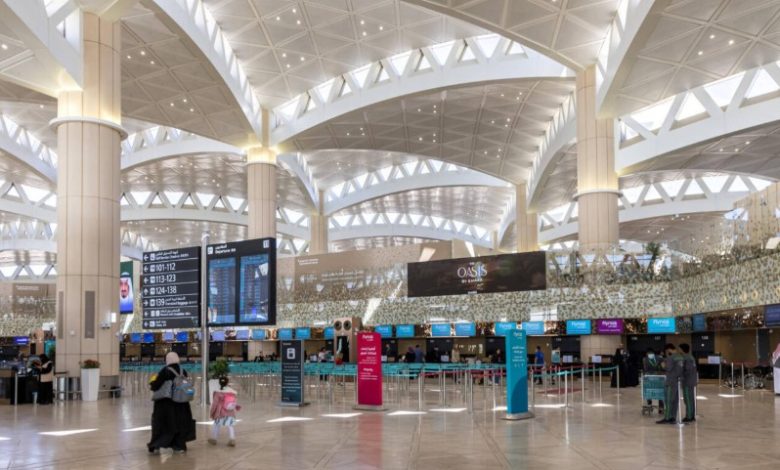
King Khalid International Airport in Riyadh has resumed partial operations on Sunday, October 25, 2026, following temporary disruptions caused by repeated Houthi attacks targeting Saudi Arabia’s major aviation hub.
The airport’s reopening comes as Saudi air defenses successfully intercept drones and missiles across the Kingdom’s skies, including flagrant aggressions launched toward Makkah and Madinah – the two holiest cities in Islam.
King Khalid Airport Reopens
Driving the News: In a statement on X, King Khalid International Airport (KKIA) announced that Terminals 1 and 2 would reopen on Sunday as part of measures to streamline operations and passenger arrivals.
Operational Details: According to the statement, Terminal 1 will be dedicated to domestic flights, while Terminal 2 will be designated for international flights operated by national carriers, such as Saudia and flynas.
What It Said: “We kindly advise passengers with confirmed bookings to contact their airlines to verify the status of their bookings and flights before heading to the airport.” – A Statement by King Khalid International Airport.
Saudi Arabia’s Global Gateway
The Big Picture: KKIA is a premier aviation hub and one of the Middle East’s busiest airports, connecting Riyadh to over 121 destinations worldwide. It has five main terminals, two private terminals, and one royal terminal, operating 299,000 flights and handling over 40 million passengers annually.
The airport has also served as the Kingdom’s humanitarian corridor, operating multiple relief air bridges to countries in need. KKIA has gained international recognition as one of the world’s top airports.

Flashback: From October 1-15, King Khalid International Airport in Riyadh was targeted by 20 Houthi attacks, killing 17 people and injuring over 330 others.
Why It Matters: The reopening of King Khalid Airport marks a major step in restoring full flight operations, underscoring the Saudi civil aviation sector’s operational resilience, rapid infrastructure recovery, and unwavering commitment to passenger safety.
Saudi Defense Vigilance
State of Play: Since the recent escalation, Saudi air defenses have continued to neutralize Houthi aerial threats across several regions, safeguarding the Kingdom’s skies around the clock. Furthermore, the Saudi-led Arab Coalition to Restore Legitimacy in Yemen has been conducting defensive operations to eliminate Houthi capabilities and launch sites. These operations also aim to and halt the militia’s weapon-smuggling operations, in collaboration with Yemeni Armed Forces as part of Operation Dawn of Yemen.
The Backstory: In July 2026, the Iranian-backed Houthi militia broke a four-year period of de-escalation, targeting Saudi civilian buildings and energy facilities with drones and missiles across Riyadh, Taif, Abha, Jeddah, Yanbu, Khamis Mushait, Jazan, and Najran. The militia has also targeted Saudi Arabia’s airports, including KKIA in Riyadh, King Fahd Airport in Dammam, as well as Abha, Jazan, and Najran airports, killing dozens of civilians and injuring hundreds.
Makkah & Madinah in the Crosshairs
Between the Lines: Houthi attacks have also reached the Holy Cities of Makkah and Madinah. On Saturday, October 24, the Saudi General Directorate of Civil Defense said that civil defense teams responded to falling debris from the interception of two ballistic missiles targeting the Makkah and Madinah regions.

The Impact: As a result of the interception process, falling debris landed in Wadi Al-Mughammas in Makkah, Al-Nuzha neighborhood in Jeddah Governorate, Wadi Jalil in Taif Governorate, and Masturah Center in Rabigh Governorate.
Islamic Rejection of Houthi Attacks
Zoom In: The blatant attacks against Makkah and Madinah have sparked outrage across the Islamic world. President of Religious Affairs at the Grand Mosque and the Prophet’s Mosque Sheikh Abdulrahman Al-Sudais strongly condemned the Houthi attacks as a “criminal approach” and an affront to international humanitarian norms. He stressed that the security and sanctity of the Two Holy Mosques remain a “red line that must not be breached.”
Similarly, GCC Secretary-General Jasem Albudaiwi stated that exposing Makkah to the risks of such attacks was a grave violation of the sanctity of the Holy Sites and a provocation to the sentiments of Muslims worldwide. He described the attacks as a blatant disregard for civilian lives and safety, which cannot be justified or tolerated under any pretext.
The Muslim World League (MWL) also condemned the attacks as a violation of the sanctity of Islam’s holy sites and a dangerous provocation to the sentiments of more than two billion Muslims, expressing solidarity with Saudi Arabia in all measures it takes to deter such attacks.
The Takeaway: The swift reopening of KKIA terminals stands as strong evidence of Saudi Arabia’s operational readiness and resilience. Meanwhile, the successful interceptions of incoming aerial threats underscore the Kingdom’s defense efficiency and its enduring role as the guardian of the Two Holy Mosques.