As water security has become a strategic priority across the world, the Gulf Cooperation Council (GCC) countries are accelerating efforts to move forward with the Gulf Water Interconnection Project, which aims to create a unified water grid to sustain supplies during times of shortages or emergencies.
Saudi Arabia serves as the centerpiece of this project, sharing direct borders with all five GCC member countries and maintaining an undisputed global leadership in water desalination production and transmission.
The GCC Water Grid
Driving the News: The GCC General Secretariat held the 47th meeting of its water resources committee on September 3, 2026. The meeting discussed the latest developments in a feasibility study regarding the establishment of water-grid interconnection projects among the GCC states, conducted by the consulting firm ARTELIA.

The Big Picture: On August 12, the GCC General Secretariat and the GCC Interconnection Authority (GCCIA) reviewed the feasibility study for Phase 1 during a technical workshop in Dammam. The study included an assessment of water supply infrastructure and the actual needs of GCC states, as well as the technical requirements and data needed to complete the study.
The Network’s Blueprint
The Backstory: In 2004, an initial feasibility study outlined a 1,324 km master pipeline stretching from Sohar on the Gulf of Oman to the northern border of Kuwait.
The Original Vision:
- 3 Desalination Hubs: Sohar (Oman), Sila (UAE), and Khafji (Saudi Arabia).
- Core Metrics: 275,000 m3/day capacity, 13 pumping stations, and unified SCADA network monitoring.
- Storage Fleet: 6 main strategic reservoirs in each GCC nation alongside 14 standard system tanks.
- Emergency Buffer: Designed to secure 23%-40% of member states’ water needs during catastrophic emergencies, and up to 100% during normal operational sharing.

The Modernized Plan:
Drawing operational insights from the GCC Power Grid, the plan has evolved into a bi-directional network anchored in Saudi Arabia’s Eastern Province. According to the latest feasibility study, reported by Meed, the proposed project features a network of pipelines designed to pump water back and forth according to peak demand, seasonal maintenance, or crisis scenarios.
These bilateral routes include:
- Saudi Arabia – Bahrain: Expanding existing links across the King Fahd Causeway corridor.
- Saudi Arabia – Kuwait: Connecting northern Saudi production nodes with Kuwaiti distribution networks.
- Saudi Arabia – Qatar: Linking Eastern Province production to Qatari hubs.
- Saudi Arabia – UAE: Linking eastern transmission lines with the UAE grid via border hubs.
Saudi Arabia’s Centrality
Between the Lines: Saudi Arabia is the only country sharing borders with the other 5 GCC member states, making it the strategic node for any multilateral grid. The Phase 1 study positions the Eastern Province and Riyadh as the technical anchors of the water interconnection network.
Go Deeper: Dammam is the headquarters of the GCC Electricity Interconnection grid, managed by the GCCIA, which links the national networks of Saudi Arabia, Bahrain, Kuwait, Oman, Qatar, and the UAE.
State of Play: The Kingdom has established itself as the world’s largest producer of desalinated water, boasting a robust desalination infrastructure and production facilities managed by the Saudi Water Authority (SWA).
By the Numbers:
- #1: Saudi Arabia’s global rank in desalinated water production.
- Robust Infrastructure: 574dams (with a total capacity of 6 billion cubic meters), 36 seawater desalination plants, and 160 advanced wastewater treatment facilities.
- Production Capacity: 16 million m3 of daily desalinated water.
- Transmission Network: 11,000 km of desalinated water pipelines and 127,500 km of distribution networks.
- Global Recognition: 11 Guinness World Records in water desalination infrastructure and technologies.
The Eastern Province Hub
Saudi Arabia’s Eastern Province lies at the heart of the GCC water grid as it hosts some of the world’s largest and most technologically advanced desalination plants, largely managed by the SWA. This includes facilities in Ras Al-Khair, Jubail, Khobar, and Dammam.
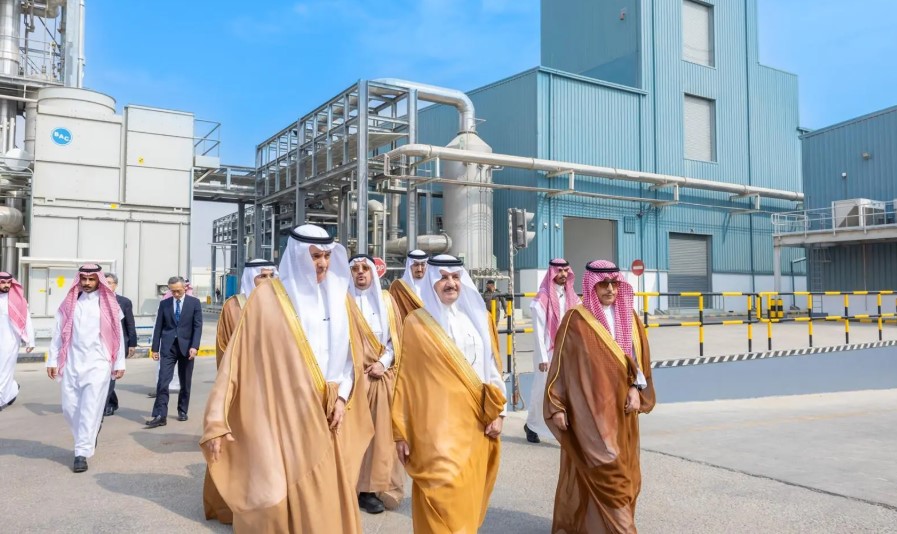
Zoom In: The Eastern Province has moved beyond desalination to manufacturing the technology behind it. In November 2025, Saudi Arabia inaugurated the Toray Membrane Middle East (TMME) plant in Dammam’s Third Industrial City, valued at more than SAR 1 billion. It is the largest facility for water desalination membrane technologies in the Middle East.
By the Numbers:
- 300,000: Annual capacity of Reverse Osmosis (RO) membranes produced across 6 integrated lines.
- 72%: Target localization rate for manufacturing inputs, cutting supply lead times by 53%.
- 4-5%: Reduction in desalination energy consumption driven by next-generation membrane technology.
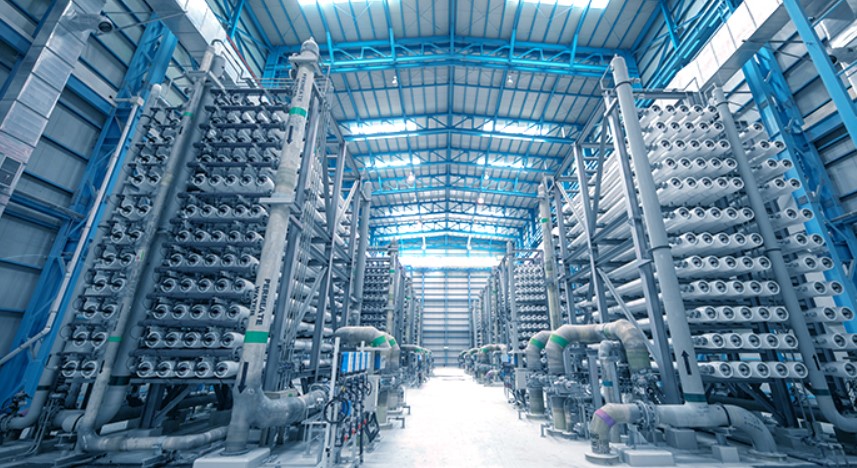
Why It Matters: By localizing the production of RO membranes in Dammam, Saudi Arabia ensures sustained and secure supply chains for the GCC grid’s filtration components, safeguarding the regional network against global disruptions and shocks.
The Takeaway: The GCC Water Interconnection Project is a strategic initiative aimed at achieving regional water security. Saudi Arabia is positioned to drive the Gulf’s water future thanks to its state-of-the-art infrastructure and production technologies.