Saudi Arabia is rapidly transforming its water sector from a heavy consumer into a dynamic industrial manufacturing powerhouse. Consequently, the kingdom is securing critical supply chains, cutting reliance on foreign imports, and expanding its global footprint under Vision 2030.
The big picture: The Saudi Water Authority (SWA) has committed SAR 2.8 billion ($746.6 million) across seven strategic water technology factories. Therefore, this bold step advances the kingdom’s broader Water Industries and Services Localization Program, which targets 18 priority product categories. Overall, these initiatives move six key investment opportunities directly into implementation through three major industrial localization agreements and two official factory openings.
Why it matters: Global supply chains currently face increasing geopolitical disruptions and operational vulnerabilities. However, Saudi Arabia is actively safeguarding its critical water infrastructure through proactive industrial planning. Furthermore, the program turns immense domestic purchasing power into a thriving manufacturing engine. Consequently, the kingdom is strengthening national economic resilience while positioning itself as a premier regional export platform.
Building a Water Tech Powerhouse
Saudi Arabia’s water sector strategy directly matches future project requirements with domestic manufacturing capabilities. Therefore, leading international manufacturers are transferring advanced technologies and establishing major production operations inside the kingdom.
- Italmatch Chemicals is constructing four specialized factories across Wa’ad Al Shamal, Jubail, and Jeddah. Furthermore, its Wa’ad Al Shamal complex will become the Italian firm’s largest industrial facility outside Italy by 2028, producing essential water-treatment chemicals and scale inhibitors.
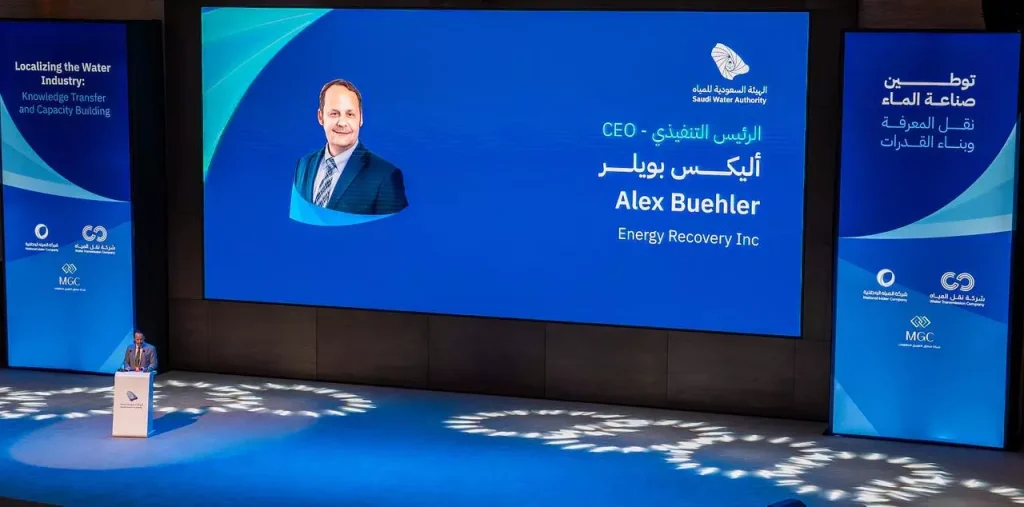
- Energy Recovery is building a modern 3,750-square-metre manufacturing plant near Dammam Second Industrial City. Moreover, this state-of-the-art facility will supply one-third of the company’s global customer base by early 2027.
- Torishima is expanding high-pressure pump manufacturing in Jeddah, while Alfanar operates a Distributed Control Systems facility in Riyadh.
- Meanwhile, Toray continues operating its landmark reverse-osmosis membrane factory in Dammam, which has successfully produced advanced components since 2025.
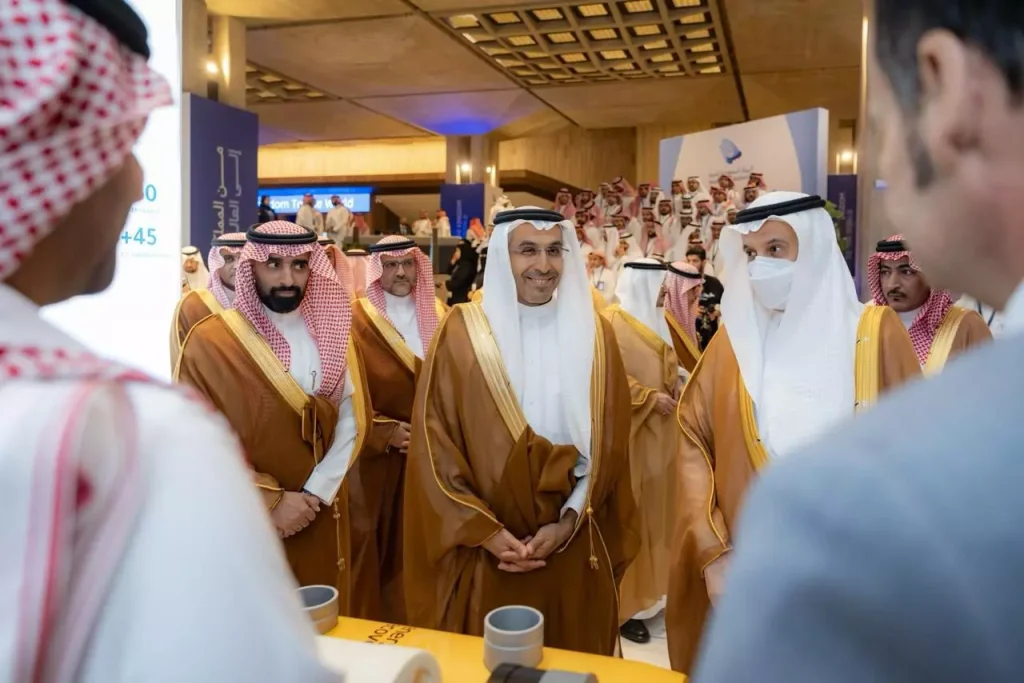
The initiative operates alongside the Local Content and Government Procurement Authority, supported by the Ministry of Industry and Mineral Resources and the Ministry of Investment. Consequently, these partnerships ensure long-term market visibility for private investors.
What they are saying: “Saudi Arabia was the largest water consumer and has now become an expert operator,” stated SWA President Abdullah Al-Abdulkarim. “It then became a source of expertise for manufacturers of the system’s various components, bringing us to a new stage in which we become a partner in developing the next generation of technologies.”
By the numbers:
- SAR 2.8 billion ($746.6 million): Direct capital commitment for seven strategic water technology factories across the kingdom.
- SAR 4.36 billion ($1.16 billion): Projected gross domestic product contribution from the six implementation projects by 2033.
- 3,090 new jobs: Direct technical positions created by 2033, reserving at least 70% of specialized roles for Saudi nationals.
- SAR 11.37 billion ($3.03 billion): Projected local demand directly supporting the six projects currently entering implementation.
- SAR 15 billion ($4 billion): Forecasted domestic demand for the 18 targeted product lines over the next decade.
- SAR 65 billion ($17.33 billion): Estimated market demand for these specialized components across the Middle East and North Africa.
- SAR 11 billion ($2.93 billion): Total target investment for the full SWA localization program by 2033.
- 12,000 technical jobs: Overall employment creation target across the comprehensive water localization program under Vision 2030.
- 3,441 active suppliers: Current water sector supplier base in 2026, up significantly from 739 companies in 2022.
- 27%: Local content rate achieved in early 2026, marking substantial growth from 45% in 2020.
- 70%: Mandatory threshold for domestic production inputs and technical staffing across localized sector projects.
- 27 countries: Global markets currently importing high-quality, Saudi-manufactured reverse-osmosis membranes.
Securing Global Supply Chains
Technological transfer is already delivering measurable operational gains across national water infrastructure. For instance, technical knowledge exchange raised high-pressure pump efficiency to 91%. Furthermore, locally produced reverse-osmosis membranes boosted daily processing capacity at the Al Khobar plant from 600,000 to 700,000 cubic metres without increasing operational costs.
Additionally, operators now monitor equipment against 17 daily performance indicators. This rigorous oversight allows technicians to identify efficiency gains early and maintain supply reliability. In addition, localized components, including antiscalants, membrane-cleaning chemicals, and supervisory control systems, serve overlapping needs in mining, energy, and agriculture. Consequently, Saudi Arabia is rapidly building a resilient, interconnected industrial base.
What’s next: The Kingdom is targeting a 90% domestic supply reliability rate for its localized products. Officials say the next phase will push beyond manufacturing into research, product development and exports. That would position Saudi Arabia, in Al-Abdulkarim’s words, as “a partner in developing the next generation of technologies” for water systems worldwide.