
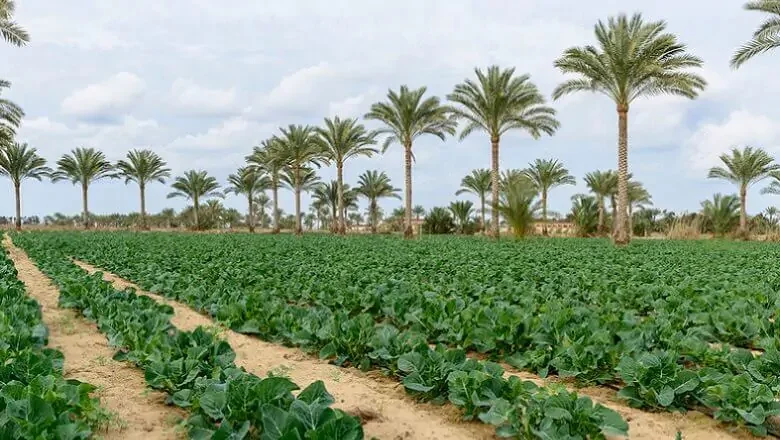
Saudi Arabia has locked in six more years of support for its largest rural farming push. On Tuesday, the Cabinet extended the Sustainable Agricultural Rural Development Program, branded “Saudi Reef,” until the end of 2032.
Why it matters: The extension shows that Riyadh treats rural farming as a pillar of food security, not a side project. It also gives smallholders, buyers and investors a clear horizon for planning.
Driving the news: Deputy Minister of Environment, Water and Agriculture Mansour bin Hilal Al-Mushaiti said the leadership’s backing, together with Minister Abdulrahman Al-Fadhli’s close follow-up, helped the program meet its targets since 2020. He added that this support widened its development impact across the Kingdom’s regions, according to the Saudi Press Agency (SPA).
Al-Mushaiti described the extension as “a new phase” for maximising the impact of sustainable rural agricultural development. He said the program will build on its gains in empowering small farmers, growing rural sectors and raising the economic value of local products.
Zoom in: The program has managed and delivered 106 development projects across its target sectors. According to Al-Mushaiti, those projects raised small farmers’ incomes, lifted productivity, strengthened food security, developed rural communities and protected natural resources.
A Track Record that Stretches from Coffee to Honey
King Salman launched Reef Saudi on 9 January, 2019, and the program operates with the Ministry of Environment, Water and Agriculture in coordination with the UN Food and Agriculture Organization (FAO). It supports eight sectors, including Arabic coffee, beekeeping, aromatic plants, fruit, fisheries and small livestock.
Sector results show how the model works. For example, fruit output reached nearly 367,000 tons by the end of 2025, backed by more than SAR 330 million ($88 million) in direct support to 12,400 beneficiaries. Likewise, about SAR 140 million ($37.3 million) in honey-industry funding has helped 10,584 beneficiaries since 2020. Coffee growers also gained: the program has allocated SAR 61 million ($16.3 million) to 3,718 beneficiaries.
International recognition followed. The FAO awarded Saudi Arabia its Technical Recognition Award for South-South and Triangular Cooperation, and it described Reef Saudi as the world’s largest agricultural development initiative. Al-Mushaiti said that honour, along with appearances at global forums and exhibitions, put the Saudi rural experience and national products on the world stage.
Program spokesperson Majed Al-Buraikan has stressed the same point. He told Arab News that the eight sectors help “diversify agricultural production” and improve supply chains. The FAO’s Saudi program director, Nizar Haddad, agreed. He said targeted investment and knowledge-sharing can transform rural communities.
By the numbers:
- SAR 9 billion ($2.4 billion): the program’s contribution to Saudi Arabia’s gross domestic product (GDP).
- 90,000+ beneficiaries: this includes 65,000 women.
- 92,000: income opportunities the program created.
- 106 projects: development projects the program has managed and delivered.
- SAR 2.9 billion ($773 million): direct support to small farmers between 2020 and 2025.
- SAR 330 million ($88 million): support for the fruit sector, which reached 12,400 beneficiaries.
- 367,000 tons: fruit production by the end of 2025.
- SAR 140 million ($37.3 million): honey-sector funding for 10,584 beneficiaries.
- SAR 61 million ($16.3 million): coffee-sector support for 3,718 beneficiaries.
- 21 million: trees planted under the Saudi Green Initiative.
Food Security Moves to the Center of Saudi Policy
The extension arrives as the Kingdom pushes for greater self-sufficiency. The General Authority for Statistics reported 2024 self-sufficiency of 149% for shrimp, 131% for dairy, 121% for dates and 103% for eggs. Eggplant also topped 100%, at 105%.
Meanwhile, the Ministry of Environment, Water and Agriculture is widening its focus. It has named 13 priority food products for localisation, and Saudi Arabia already exceeds 100% self-sufficiency in four of them. Dr. Ali Al-Shaikhi, the ministry’s assistant deputy for livestock and fisheries, called food security “a main preoccupation” for the ministry. He spoke at the 43rd Saudi Agricultural Exhibition in Riyadh, where more than 330 exhibitors from over 28 countries took part.
The bottom line: Reef Saudi connects the Kingdom’s three Vision 2030 goals in agriculture. These goals are food security, rural development and environmental sustainability. In addition, the program works directly with small farmers, who supply local markets. As a result, every income gain in a village also strengthens national supply. The program has also helped plant more than 15 million agricultural seedlings and supported about 250 million kilograms of produce.
What’s next: Al-Mushaiti said the next phase will focus on four priorities:
- Scaling up the successes so far.
- Strengthening value chains.
- Making the most of each region’s comparative advantages.
- Turning those advantages into sustainable production and economic opportunities.
He said this approach will raise the competitiveness of rural products, boost their contribution to the national economy and support lasting rural communities. Ultimately, it will help the Kingdom reach its Vision 2030 targets.