
The world is growing more aware of how the Houthi attacks against Saudi Arabia have grave implications for global energy security and supply chains.
To this end, the UK has recently announced that it will back the Kingdom with additional defensive military support – a demonstration of the deep Saudi-British relations and an emerging international consensus on safeguarding Saudi Arabia’s airspace, energy assets, and trade infrastructure as a shared international responsibility.
Guarding Saudi Skies
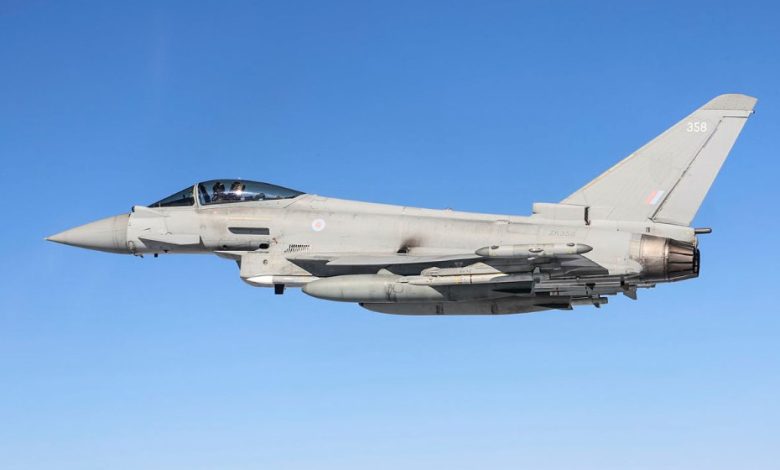
Driving the News: The British government stated that it would back Saudi Arabia with additional military support for defensive operations against the escalating Houthi attacks. This will include defensive counter-air missions to support the protection of Saudi cities and critical national infrastructure against drone and missile attacks.
The UK Defensive Support Will Include:
- RAF Typhoon fighter jets.
- An RAF A400M.
- UK military advisers.
Why It Matters: The Iranian-backed Houthi militia has escalated their attacks against Saudi civilian and energy facilities, including airports. Furthermore, the militia poses threats to commercial shipping in the Red Sea and the Bab al-Mandab Strait, through which 10% to 15% of all global trade passes annually. These attacks raise concerns over civil aviation and supply chain disruptions, undermining economic stability worldwide.
A Firm British Stance
The Big Picture: The British government strongly condemned the Houthi attacks on civilian targets, such as King Khalid International Airport, stressing Saudi Arabia’s right to self-defense. It also emphasized that the Houthis’ attempts to destabilize the region and undermine the security and stability of the Middle East are “unacceptable,” noting that it is in the UK’s national economic and security interest to counter these attempts.
State of Play: The expanded military support adds to the UK’s existing defensive military contribution to Saudi Arabia. This includes deploying air defense equipment to protect against missiles and drone attacks, as well as extending air-to-air refueling support through an RAF Voyager aircraft.
An Unshaken Trust: The additional military support underscores the depth of Saudi-British ties, driven by the Saudi-UK Strategic Partnership Council with its two core pillars: defense, security, and political; and economic and social. British Ambassador to Saudi Arabia Stephen Hitchen reiterated that the UK looks forward to more investment in the Kingdom.
In His Words: “I met with Mr [Abdulaziz] Al Boug, Governor of the General Organization for Social Insurance, followed by HRH Prince Rakan bin Salman Al Saud, Governor of Diriyah, to discuss further British investment in the Kingdom. Despite the attacks, we believe in the Kingdom’s future, and we will continue to stand alongside you as partners on this journey. ‘A mountain is not shaken by the wind’.” – Stephen Hitchen, British Ambassador to Saudi Arabia.
Standing Up to the Houthis
The Backstory: After four years of relative calm, the Iranian-backed Houthi militia escalated attacks against the Kingdom, targeting its civilians and civilian infrastructure with drones and ballistic missiles. Since July 2026, the terrorist militia has attacked Riyadh, Taif, Abha, Khamis Mushait, Jazan, and Najran. It also attempted to target the holy cities of Makkah and Madinah.
Most recently, the Houthis have repeatedly targeted Saudi Arabia’s airports, including King Khalid International Airport in Riyadh, King Fahd Airport in Dammam, as well as Abha, Jazan, and Najran airports, killing dozens of civilians and injuring hundreds.
Between the Lines: Saudi air defenses intercept and destroy drones and ballistic missiles targeting civilian infrastructure across Saudi cities around the clock. In support of Operation Dawn of Yemen, the Saudi-led Coalition to Restore Legitimacy in Yemen is tracing and foiling weapon-smuggling operations along Yemen’s Red Sea coast. The Coalition also neutralizes ballistic missile launch platforms.
Energy Security: A Global Concern
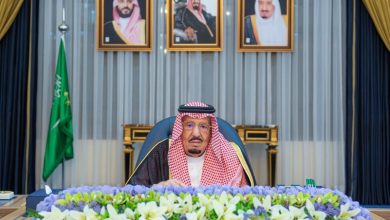
The Context: Chaired by Custodian of the Two Holy Mosques King Salman bin Abdulaziz on October 20, the Saudi Cabinet reaffirmed that global energy security, international trade, the sustainability of supply chains, and navigation are all a shared responsibility that requires international cooperation to prevent the global economy from facing risks that affect the entire world.
This message aligns with previous Saudi warnings against the direct threat posed by the Houthis to global maritime trade and international security, stressing that safeguarding international navigation and the sustainability of global supply chains is a shared global responsibility.
Go Deeper: The UN Security Council (UNSC) issued a presidential statement on October 15 strongly condemning the “reckless strikes” on Saudi airports, particularly King Khalid International Airport, and Saudi Aramco facilities.
It also denounced continued Houthi attacks and threats against commercial shipping in the Red Sea and the Bab al-Mandab Strait, which has become a vital artery for international trade and energy supplies after the partial closure of the Strait of Hormuz.
In light of this, the statement underscored the importance of implementing UNSC Resolution 2216 (2015), which demands an arms embargo on the Houthis and their unconditional withdrawal from seized territories such as Sanaa.
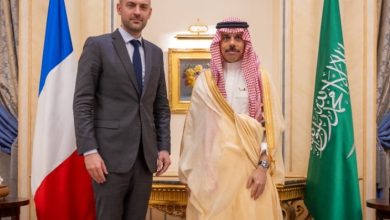
What to Watch: More allies and partners have backed Saudi Arabia against the Iranian-backed militia, pledging diplomatic, intelligence, and defense support to the Kingdom. These include Egypt, France, Türkiye, Pakistan, Italy, the US, as well as the European Union (EU).
The Bottom Line: Backing Saudi Arabia against Houthi threats not only safeguards the Kingdom’s skies and infrastructure, but also ensures the steady flow of energy supplies, maintaining the resilience and stability of the global economy.