
Partnership in Action: How Saudi-UK Defense Coordination Anchors Red Sea Stability
Amid the escalating Houthi drone and missile threats against Saudi Arabia, targeting civilian and energy facilities and maritime trade routes in the Red Sea, the UK announced it will provide the Kingdom with defensive support to counter the Iranian-backed militia.
This support is part of a decades-long strategic partnership built on two core pillars: defense, security, and political; and economic and social. The operational coordination between Riyadh and London highlights how Saudi Arabia’s defense ties are essential in protecting international routes that maintain the stability of the global economy.
Deterring the Threat
Driving the News: UK Prime Minister Andy Burnham said that Britain has agreed to provide defensive air-to-air refueling support to Saudi Arabia to deter Houthi attacks against energy infrastructure and protect the Bab al-Mandab Strait.
The Big Picture: Speaking to reporters as he headed for New York to participate in the UN General Assembly, Burnham cited “cost of living pressures,” regional stability, and the need to keep energy routes open as the main reasons behind the UK move.
This aligns with London’s stance on the recent tensions, condemning the Houthi attacks against Saudi Arabia and saying that the UK will “work with partners to support regional stability, protect civilians and support humanitarian access.”
In His Words: “We have received a request from Saudi Arabia for military support and … I agreed to that request for defensive air-to-air refueling.” – Andy Burnham, Britain’s Prime Minister.
Operational Coordination
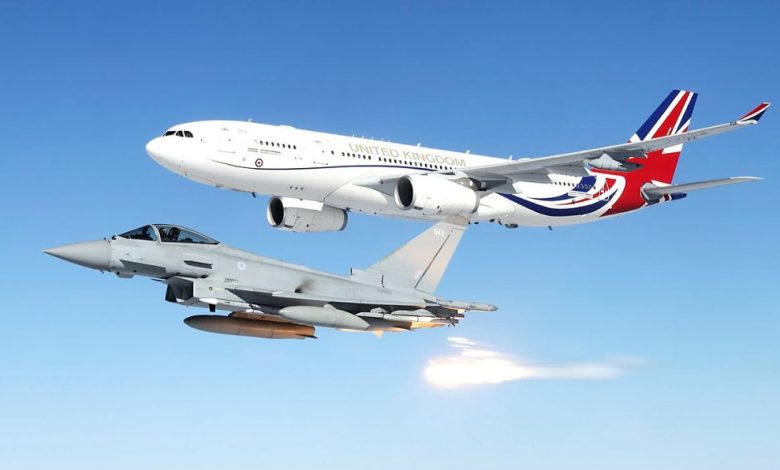
State of Play: According to the British Prime Minister, the deployment, which is estimated to last for weeks, will involve one RAF Voyager refueling Saudi planes on defensive missions. Burnham said the move comes on the advice of Defense Secretary Wes Streeting and Foreign Secretary Ed Miliband.
Between the Lines: The British Royal Air Force (RAF) has a core fleet of nine Voyager aircraft – eight registered as military and one registered as civilian. Five additional jets are available for military recall when needed. The RAF operational support adds to the Sky Sabre air defense system recently deployed to the Kingdom.
The Backstory: Anchored in a Military and Security Cooperation Agreement signed in 2017, the defense cooperation between Saudi Arabia and the UK has evolved into a domestic industrial partnership that involves Joint Ventures (JVs), local supply-chain integration, as well as technology transfer. This collaboration includes several programs including the In-Kingdom Final Assembly (IKFA) Program and Eurofighter Typhoon Integration.
Red Sea Stability
The Context: In recent weeks, the Iranian-backed Houthi militia has escalated threats around the Red Sea and the Bab al-Mandab Strait, seizing sites along Yemen’s western coast and threatening commercial shipping in the critical trade route.
Why It Matters: The Bab al-Mandab Strait connects the Red Sea and the Gulf of Aden, acting as a direct artery for maritime trade between Europe and Asia. It handles roughly 10% to 15% of all global trade annually. It has emerged as a key alternative route for trade and energy flows since the closure of the Strait of Hormuz, linking the Gulf countries to Europe (via the Suez Canal) and to Asia through Saudi ports.
The Saudi Initiative: In response to the Houthi threats, Saudi Arabia launched the Multinational Maritime Defense Coalition in late July 2026, alongside key partners, to address and deter the growing threats to maritime security, including attacks against commercial vessels, energy tankers, and naval infrastructure in the Bab al-Mandab Strait, the Red Sea, and the Gulf of Aden. The coalition expanded to a total of 15 countries signing the joint statement, in addition to 13 completing formal national accession procedures and signing the coalition charter.
Flashback: The UK, alongside the US, launched strikes against the Houthis in 2024, following attacks on commercial shipping in the Red Sea.
Partnerships in Action
Go Deeper: Saudi Arabia’s foreign policy of multi-alignment and global partnerships has proven effective as Riyadh’s key partners and allies voiced strong support for the Kingdom against the Houthi threats.
US F-35 Sale
The US approved a potential $24.3 billion sale of 48 F-35 Lightning II fighter jets and related equipment to Saudi Arabia. While the UK air-to-air refueling aircraft addresses immediate Houthi drone and missile threats, the F-35 package advances the Kingdom’s long-term strategic capabilities – strengthening homeland defense, deterring regional threats, and deepening operational interoperability with US and allied forces.
The Makkah Defense Alliance
Pakistan and Türkiye – Saudi Arabia’s allies under the Makkah Joint Defense Agreement – have underscored their commitment to the pact, expressing their readiness to provide military support for the Kingdom to defend itself against the Houthi threats.
A Strategic Red Sea Partner
During a high-level meeting in Cairo in mid-September, Saudi Arabia’s Crown Prince Mohammed bin Salman and Egypt’s President Abdel Fattah Al-Sisi underscored their aligned position on ensuring freedom of navigation and maritime security in the Straits of Hormuz and Bab al-Mandab, and the Red Sea. Moreover, the Egyptian President stressed Cairo’s support for the measures taken by Riyadh to safeguard the Kingdom’s security and stability.
Egyptian Border Guard Forces Commander Maj. Gen. Osama Dawood also emphasized ongoing security coordination between Riyadh and Cairo to secure their shared borders, the Gulf of Aqaba, and the Red Sea amid the mounting security challenges in the region.
The Bottom Line: The UK defensive support underscores the recognition that maintaining stability across key trade routes requires active, ongoing coordination among major regional and international players. Amid the evolving regional security dynamics, Saudi Arabia’s proactive strategy of coalition-building ensures its sovereignty and global supply chains remain secure.