Strategic Partners: How Saudi Arabia, the UK Champion Regional De-Escalation
Saudi Arabia and the UK have doubled down on maritime security and regional de-escalation, underscoring a strategic partnership built on mutual strategic interests.
A phone call between the top diplomats of the two countries stressed the solid alignment between Riyadh and London amid the Middle East’s mounting tensions, which have put regional security and trade flow at risk.
Saudi-UK Discussions
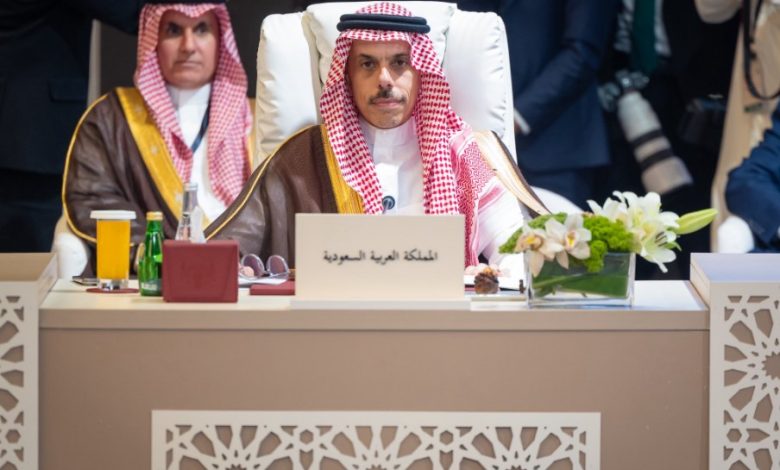
Driving the News: Saudi Arabia’s Foreign Minister Prince Faisal bin Farhan received a phone call from his British counterpart Ed Miliband on Saturday, September 12, 2026, during which they discussed the recent regional developments.
The Big Picture: The Saudi and British foreign ministers discussed the need to intensify joint efforts to ensure the security and freedom of navigation in international waterways. They also reaffirmed the importance of contributing to regional security and stability and protecting global trade and supply chains from the fallout of the current crisis.
The Context: The recent military escalation in the Middle East has turned two key waterways into flashpoints. The maritime disruption has extended to the Strait of Hormuz, which links the Arabian Gulf with the Gulf of Oman and the Arabian Sea, as well as the Bab al-Mandab Strait, which connects the Gulf to Europe via the Suez Canal, and Asia through Saudi ports.
UK Solidarity
Between the Lines: During their call, Miliband reiterated the UK’s solidarity and support for Saudi Arabia following Houthi attacks against the Kingdom, reaffirming Riyadh’s right to take all necessary measures to defend its security and capabilities in accordance with international law.

The Backstory: The Iranian-backed Houthi militia has launched several attacks targeting civilian and economic infrastructure in southern Saudi Arabia. These attacks have injured scores of civilians, including women and children, and caused damage to civilian buildings.
Securing Trade Routes
State of Play: Riyadh and London have been advocating for the security of maritime chokepoints, the freedom of navigation in international waterways, and the safety of trade routes to maintain global economic stability.
Logistics Bridge: In response to shipping disruptions in the Strait of Hormuz, Saudi Arabia has boosted maritime connectivity and enhanced supply chain resilience through the Red Sea, providing a lifeline for global markets.
- Launching the “Logistics Corridors Initiative” to reroute shipping from ports in the Arabian Gulf to the Kingdom’s Red Sea ports.
- Introducing new shipping services to the Jeddah Islamic Port.
- Launching a new multimodal land bridge connecting Europe, Egypt, Saudi Arabia, Iraq and the Gulf Cooperation Council (GCC) countries through the Port of NEOM.
- Utilizing the East-West Pipeline with its full operational capacity of 7 million barrels per day in the first half of 2026.
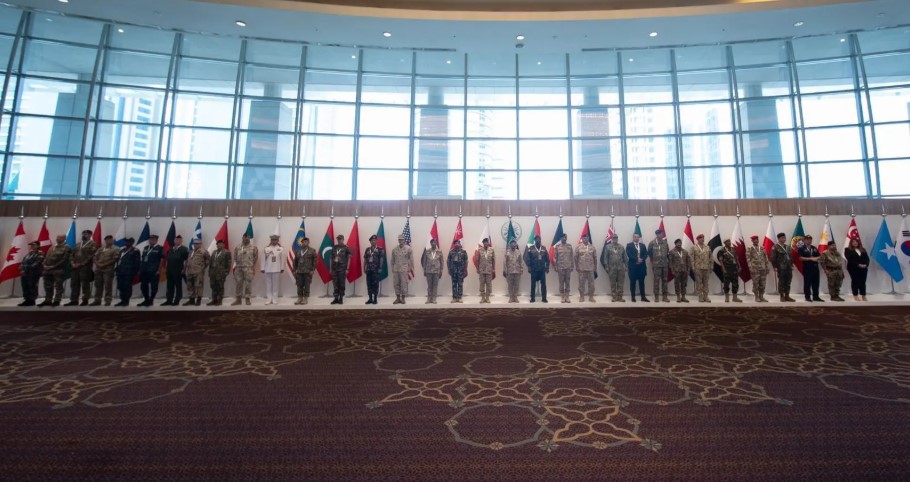
The Red Sea: As the Houthi threats extended to shipping in the Red Sea, the Kingdom, alongside 13 other nations, launched the Multinational Maritime Defense Coalition to address and deter growing threats to maritime security, including attacks against commercial vessels, energy tankers, and naval infrastructure in the Bab al-Mandab Strait, the Red Sea, and the Gulf of Aden.
The UK Approach: The UK, alongside France, launched a multinational naval mission to secure shipping through the Strait of Hormuz once conditions permit.
On the Red Sea front, London joined the US-led Operation Prosperity Guardian – a multinational naval coalition launched in 2023 to protect commercial shipping in the Red Sea and Gulf of Aden from Houthi attacks.
Middle East Conflicts
Zoom In: Saudi Arabia has been a steadfast supporter of Palestinian rights, most notably the establishment of an independent and sovereign Palestinian State along the 1967 borders (comprising the West Bank, East Jerusalem, and the Gaza Strip), with East Jerusalem as its capital.
This support has been evident in multiple initiatives launched by Riyadh to support the two-state solution and end the longstanding Palestinian-Israeli conflict.
- Arab Peace Initiative: Launched in March 2002, it called for the normalization of relations between Arab states and Israel in exchange for a complete Israeli withdrawal from territories occupied in 1967, a just solution for Palestinian refugees, and establishment of an independent Palestinian State with East Jerusalem as its capital.
- Global Alliance for the Implementation of the Two-State Solution: Launched in September 2024 in partnership with Norway and the European Union (EU).
- High-Level International Conference for the Implementation of the Two-State Solution: Co-chaired alongside France, it took place in July and September 2025 at the UN Headquarters, resulting in the landmark New York Declaration.
Settlement Rejection: Saudi Arabia has spearheaded Arab and Islamic nations’ rejection of Israel’s E1 settlement project which aims to divide the occupied West Bank into north and south, severing the territorial contiguity of a future Palestinian state. It will also separate East Jerusalem from the rest of the West Bank.
UK Alignment: Riyadh’s efforts to mobilize support for Palestinian statehood yielded a formal recognition of the State of Palestine by London in September 2025. Subsequently, the UK announced sweeping sanctions on trade with illegal Israeli settlements in the occupied West Bank, accusing settlers of committing “ethnic cleansing” against Palestinians living there. The British move prompted 11 Western nations to follow suit and reiterate their support for the two-state solution.
Saudi-UK Strategic Partnership
The Anchor: Established in 2018, the Saudi-UK Strategic Partnership Council serves as the cornerstone for strengthening relations between the two countries. The council focuses on two core pillars: defense, security, and political; and economic and social.
Defense & Security Pillar
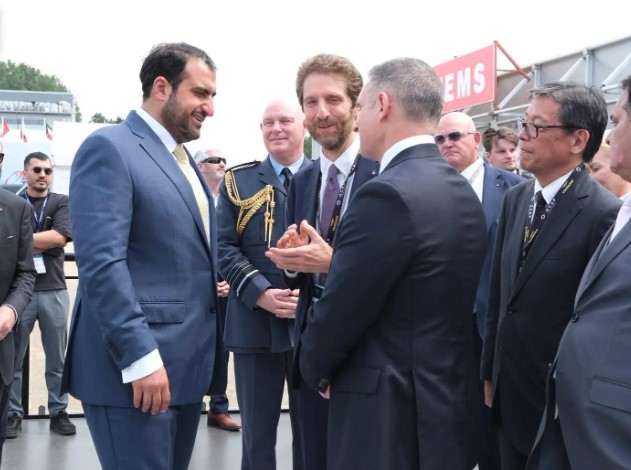
Beyond political alignment, Saudi Arabia and the UK have developed robust defense ties, anchored in a Military and Security Cooperation Agreement signed in 2017. Under this agreement, the defense cooperation between Riyadh and London has evolved beyond procurement into a domestic industrial partnership that involves Joint Ventures (JVs), local supply-chain integration, and technology transfer in line with Vision 2030.
Economic & Social Pillar
In September 2025, Riyadh and London charted a bilateral roadmap aimed at aligning Saudi Vision 2030 with the UK’s modern Industrial Strategy across trade, technological innovation, energy, and social development.
- Financial Connectivity: Agreeing on an accelerated roadmap to deepen financial market connectivity, focusing on unlocking growth capital, capital market policy alignment, fintech innovation, green finance, and carbon market trading.
- Life Sciences and HealthTech:Enhancing joint efforts in life sciences and biotechnology to advance shared ambitions for innovation, economic growth, and global health leadership.
- Industrial Growth: Boosting collaboration on Fourth Industrial Revolution technologies, advanced composite materials, sustainable materials, and critical mineral supply chains.
- Creative Industries: Deepening bilateral exchanges to develop cultural projects, fostering innovation and talent, and supporting major events such as the World Cup 2034 and Expo 2030.
- Driving Innovation in Education: Expanding education cooperation by introducing digital skills and AI technologies into curriculum innovation, digital learning, and future skills development in priority sectors.
By the Numbers:
- $21 billion: Total Saudi investment injected into the UK economy since 2017.
- $13 billion: Value of UK Foreign Direct Investment (FDI) stock in Saudi Arabia as of 2023.
- $3.5 billion+: Saudi capital invested directly into the Northeast of England.
- 52: UK companies that have established regional headquarters in Riyadh.
- 9: British independent schools licensed in Saudi Arabia, with a target of reaching 10.
- 7: Bilateral agreements and MoUs signed under the Saudi-UK Future Skills initiative spanning education and vocational training.
- 2: Major British universities licensed to open local branch campuses in the Kingdom.
The Takeaway: While defense ties remain a foundational pillar of Saudi-British relationship, political synergy, economic integration, and diplomatic coordination make their strategic partnership a key stabilizing force in an increasingly complex global landscape.