
Two Visions Aligned: Saudi Arabia, China Drive the Next Era of Economic Integration
Saudi Arabia and China have become more than trade partners, elevating their ties into a strategic investment partnership that leverages the Kingdom’s investment potential and Chinese industrial power.
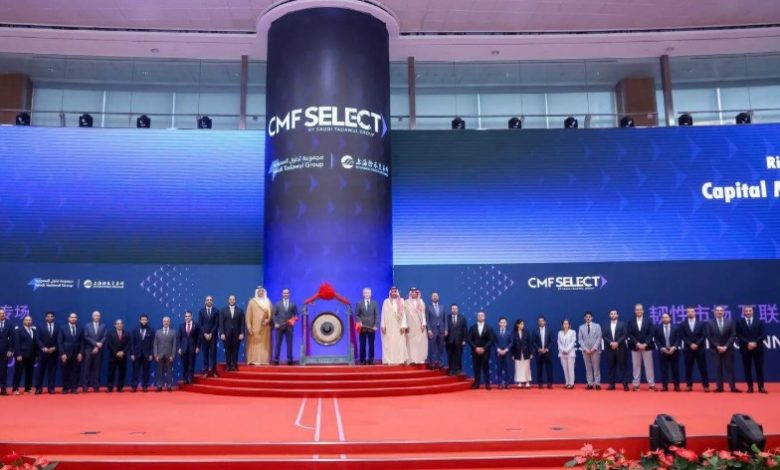
The Capital Markets Forum (CMF) Select Shanghai 2026 focused on highlighting the promising opportunities Saudi Arabia offers for Chinese companies to unlock a new era of industrial innovation and economic growth, driven by Saudi Vision 2030 and China’s Belt and Road Initiative.
The Trade Engine
Driving the News: The Saudi Deputy Minister of Investment for Economic Affairs and Investment Studies, Dr. Saad Alshahrani, addressed a Saudi-China strategic investment dialogue during the CMF Select Shanghai 2026, hosted by Saudi Tadawul Group, reported the Saudi Press Agency (SPA).
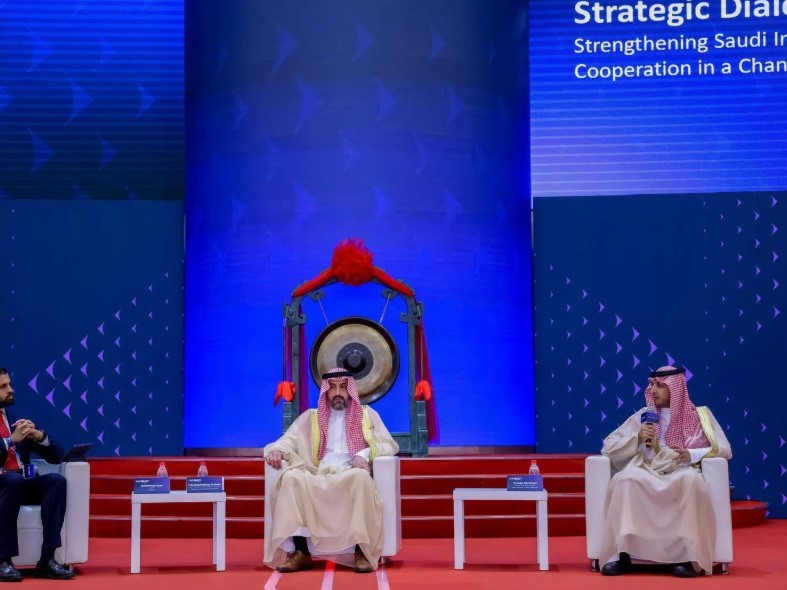
The Big Picture: Alshahrani highlighted how the trade dynamic of Saudi-Chinese relations has turned from oil-for-manufactured-goods into deep capital market integration and localized technology partnerships, underscoring China’s status as a strategic investment partner for the Kingdom.
The Saudi Investment Gateway
State of Play: Inviting Chinese companies to invest in next-generation industries such as manufacturing, logistics, technology, and emerging sectors, Alshahrani outlined Saudi Arabia’s economic and investment transformations under Vision 2030.
By the Numbers:
- 10x+: Increase in foreign companies operating in Saudi Arabia.
- 5x: Surge in annual foreign direct investment (FDI) inflows.
- Top 10: Saudi Arabia’s global ranking on the FDI Confidence Index.
- 50%: Reduction in the unemployment rate among Saudi citizens.
- 40%: Share of non-oil domestic investment relative to non-oil GDP (ranking 2nd in the G20, behind China).
- 100%+: The National Investment Strategy (NIS) has exceeded its domestic and foreign investment targets every year since its launch.
Other Highlights:
A series of key metrics doubled over the past decade:
- Total size of the Saudi economy.
- Gross fixed capital formation (total domestic investment).
- Private sector’s contribution to domestic investment.
- Total stock of FDI.
- Female participation in the labor force.
The Catalyst: Under Vision 2030, investment has become a primary engine for growth, with new opportunities unfolding across tourism, mining, manufacturing, logistics, technology, the digital economy, and other emerging sectors.
What’s Next: According to Alshahrani, the Kingdom prioritizes high-impact, productive investments that advance technology transfer, generate quality employment, and expand export reach globally.
Saudi-China Economic Ties
Between the Lines: Over the years, Saudi Arabia and China have boosted their trade and economic relations, powered by the alignment of their national agendas (Saudi Vision 2030 and China’s Belt and Road Initiative) which promote cooperation, connectivity, industrial diversification, and building resilient supply chains.
By the Numbers:
- $107.5 billion: Total bilateral trade in 2024, up from $42 billion in 2016.
- 29%: Year-over-year jump in Chinese FDI into Saudi Arabia in 2024, reaching $8.26 billion.
- >750: Active Chinese firms in the Kingdom across key sectors such as construction, tech, industrial manufacturing, and natural resources.
- #1: China’s rank as Saudi Arabia’s top trading partner globally, while Saudi Arabia ranks as China’s leading partner in the Middle East.
The Anchor: China secures Saudi crude and petrochemical products, while the Kingdom imports Chinese machinery, electronics, and industrial components.
Looking Ahead: Chinese firms are taking direct equity stakes and operational roles in Saudi giga-projects like NEOM, with growing emphasis on advanced manufacturing, supply chain localization, and clean energy transition projects.
Financial Interconnectivity
The Context: In 2023, the Saudi Tadawul Group signed memorandums of understanding (MoUs) with China’s Shanghai Stock Exchange and Shenzhen Stock Exchange to strengthen bilateral cooperation and link the Saudi and Chinese capital markets.
Key Mechanisms:
- Cross-Border ETF Listings: Facilitating joint index tracking and exchange-traded fund (ETF) cross-listings to allow Saudi and Chinese investors direct exposure to each other’s capital markets.
- Dual-Listing Frameworks: Establishing Depository Receipt (DR) mechanisms to enable Saudi corporates and Chinese industrial majors to execute dual listings on both Tadawul and Shanghai exchanges.
- Debt and Sukuk Markets: Expanding cross-border corporate bond and Sukuk issuance infrastructure to support infrastructure financing and capital formation in both Saudi Riyal (SAR) and Chinese Renminbi (RMB).
A Logistics Bridge
Zoom In: Located at the nexus of three continents, Saudi Arabia acts as a strategic logistics bridge connecting Asia, Europe, and Africa. Chinese firms leverage the Kingdom’s Special Economic Zones (SEZs), financial districts, and Red Sea industrial hubs to scale operations.
Jazan City for Primary and Downstream Industries
Located on the Red Sea coast, 70 km north of Jazan, the Jazan City for Primary and Downstream Industries (JCPDI) is an industrial and logistics giga-project designed to serve as a global trade corridor and manufacturing hub.
The JCPDI hosts the Jazan Port – a deep-water commercial port with berths capable of accommodating ultra-large container ships and heavy cargo vessels. The city also features industrial and economic zones.
Moreover, the JCPDI hosts a dedicated Chinese Enterprise Special Development Zone, driving operations across steel, petrochemicals, silicon, and shipbuilding sectors.
King Abdullah Economic City
KAEC boasts a strategic location on the Red Sea shore, 100 km north of Jeddah, connecting the East and West through King Abdullah Port – one of the fastest-growing deep-water ports globally. It features a dedicated SEZ offering streamlined customs, tax incentives, and 100% foreign ownership.
Furthermore, KAEC serves as a premier destination for Chinese automotive and green-tech investments, driving operations across electric vehicle (EV) manufacturing, supply chain assembly, logistics distribution, and renewable energy components.
The Bottom Line: The CMF Select Shanghai 2026 is the manifestation of a growing economic synergy between Riyadh and Beijing. Anchored in Vision 2030 and Belt and Road Initiative, the Saudi-Chinese economic ties are moving beyond oil to a new architecture powered by industrial innovation and technology partnerships.