Deterrence at the Core: Makkah Alliance Charts New Regional Defense Architecture

In a watershed moment, Saudi Arabia, Türkiye, and Pakistan have taken bold steps to institutionalize their defense partnership under the Makkah Joint Defense Agreement.
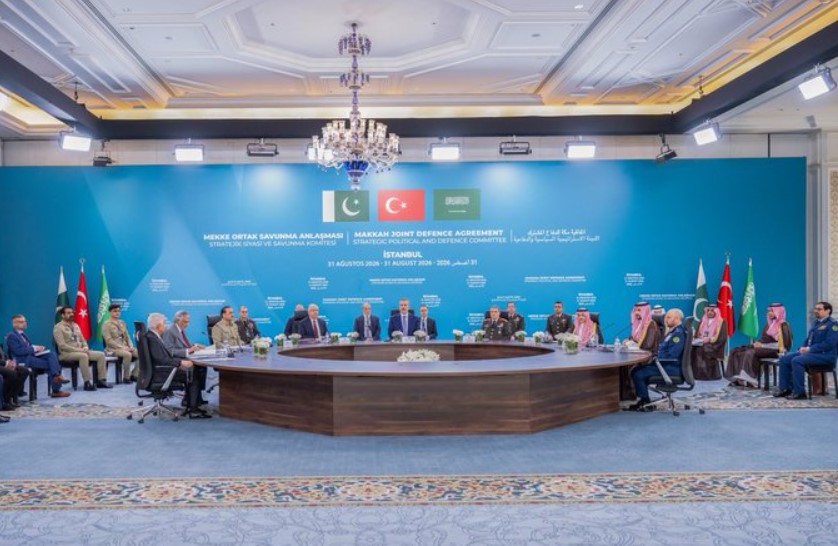
The Istanbul meeting that convened the foreign and defense chiefs of the three countries has turned vision into action, operationalizing the pact and laying the framework for a new regional security architecture.
A Regional Milestone
The Big Picture: The Strategic Political and Defense Committee of the Makkah Joint Defense Agreement held its first meeting in Istanbul on Monday, August 31, 2026. The three countries agreed to institutionalize cooperation and strengthen collective deterrence and defense.
Between the Lines: Saudi Arabia’s delegation was led by Defense Minister Prince Khalid bin Salman. The delegation also included Saudi Foreign Minister Prince Faisal bin Farhan and Chief of the General Staff General Fayyadh bin Hamed Al-Ruwaili. Speaking at the meeting, Prince Khalid highlighted the importance of political coordination, defense integration, and collective military readiness to confront shared challenges.
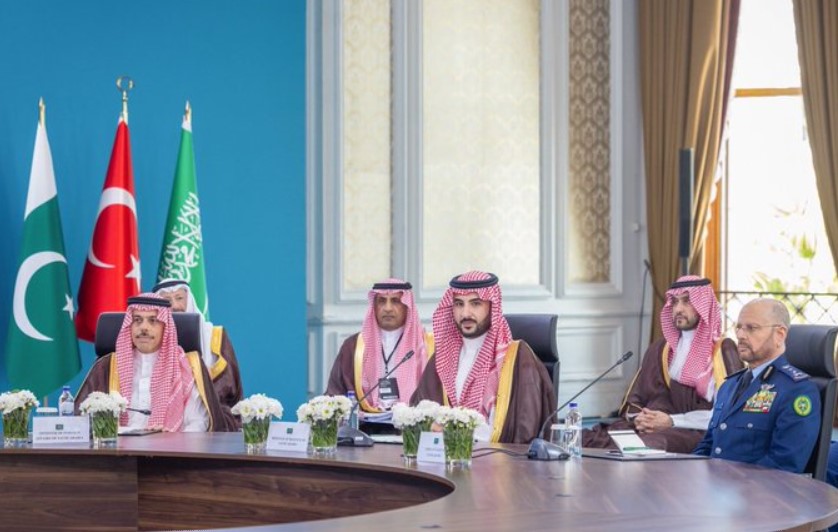
What He Said: “We affirmed our commitment to activating the Makkah Joint Defense Agreement pathways in a way that strengthens integration and advances security and stability.” – Prince Khalid bin Salman, Saudi Arabia’s Defense Minister.
The Riyadh Secretariat
State of Play: In a joint statement, Saudi Arabia, Türkiye, and Pakistan announced that a permanent secretariat will be established in Riyadh, with a Secretary-General from Pakistan appointed at the helm of the body for a three-year term.
What to Know: The three countries agreed to name the pact “Makkah Defense Alliance,” Turkish Foreign Minister Hakan Fidan said in a press conference following the meeting.
The Outcomes: Riyadh, Ankara, and Islamabad reaffirmed their commitment to boosting their defense capabilities and the cohesion of their armed forces through robust cooperation in defense industries and the development of joint production and technologies, with the aim of raising the effectiveness of collective deterrence and defense as well as promoting regional peace and stability.
Makkah Defense Triad
Zoom In: During the Istanbul meeting, officials from the three countries discussed security issues and explored avenues for strengthening defense cooperation.
Areas of Cooperation:
- Military interoperability
- Joint exercises
- Defense industrial cooperation
- Counterterrorism coordination
Flashback: Following a trilateral summit in Makkah on August 7, Saudi Crown Prince and Prime Minister Mohammed bin Salman, Turkish President Recep Tayyip Erdogan, and Pakistani Prime Minister Mohammed Shehbaz Sharif signed the Makkah Joint Defense Agreement.
The Deep Dive: The defense pact establishes that “any armed attack against any one of the three states shall be regarded as an attack against them all.” Moreover, the three countries stressed that it is an open, cooperative security framework designed to stabilize the Middle East through collective deterrence rather than conflict.
Defense Integration
The Context: The Makkah Defense Alliance merges the economic power and regional influence of Saudi Arabia, the technological innovation of Türkiye, and the military and nuclear capabilities of Pakistan, creating an integrated defense architecture that supports long-term regional stability.
Why It Matters: Defense co-production directly supports Saudi military modernization efforts by leveraging Turkish technical know-how and Pakistani manufacturing experience to build the Kingdom’s local defense industry. This aligns with Saudi Vision 2030 objectives targeting the localization of more than 50% of the Kingdom’s military spending by the end of the decade.
Regional Security Umbrella
What to Watch: Saudi Arabia, Türkiye, and Pakistan have reiterated that the Makkah Alliance is purely defensive and does not target any particular state. They have also signaled that the defense pact is open to all brotherly countries that aim for the peace, prosperity, and stability of the region.
In his Words: “This alliance is founded on international principles such as respect for the sovereignty and territorial integrity of states and non-interference in their internal affairs. The alliance is not against any state and is open to all states in our region that adhere to these fundamental principles.” – Hakan Fidan, Turkish Foreign Minister.
The Outlook: Fidan suggested that the Alliance could expand to include other members after the completion of the institutionalization stage. Earlier reports pointed to Egypt and Bangladesh as potential candidates.
The Bottom Line: The Makkah Alliance marks a turning point for regional defense and deterrence. By laying the foundations of the Makkah Pact, Saudi Arabia, Türkiye, and Pakistan are establishing a central security architecture for the Middle East and West Asia.