Lebanon-Israel Talks to Start as Beirut Pushes for Track Independent of US-Iran Deal
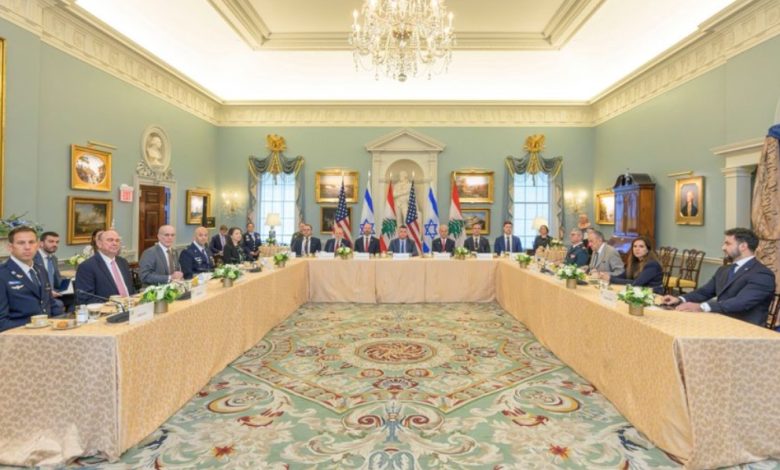
A new round of direct talks between Lebanon and Israel is set to begin Tuesday in Washington as Beirut attempts to pursue a negotiation track independent of the ongoing US-Iran talks.
However, the recently signed memorandum of understanding (MoU) between Washington and Tehran looms large over the talks as the deal stipulates an end to fighting on all fronts, including Lebanon.
The negotiations are further complicated by Israel’s opposition to withdrawing its troops from the territory it has occupied in southern Lebanon.
Lebanon-Israel Talks
Representatives from the Lebanese and Israeli governments will hold their fifth round of US-mediated direct talks in Washington from June 23–25, 2026, aiming to make progress towards a lasting peace.
Lebanon was dragged into the US-Israeli war with Iran in early March following Hezbollah’s decision to retaliate for the killing of the Iranian Supreme Leader Ayatollah Ali Khamenei by sending barrages of missiles and drones towards Israel.
Israel responded by launching heavy airstrikes and ground operations into southern Lebanon, seizing control of large swaths of the country.
The US has mediated to end the fighting in Lebanon in parallel to broader diplomatic efforts to resolve the conflict with Iran, hosting four rounds of direct talks between Lebanese and Israeli delegations in Washington.
Sovereignty vs. Security
The irreconcilable demands of Beirut and Tel Aviv add to the complexity of the talks. Lebanon seeks to secure a complete Israeli withdrawal from occupied territory in the south as a primary goal of the talks.
According to Reuters, citing a Lebanese official, Beirut will ask for a “reasonable” timetable for Israeli military withdrawal from Lebanon. “This is the only chance we have to generate momentum in these talks, and in this tug-of-war with Iran,” the official noted.
However, Israel rejects withdrawal, insisting its troops will keep their “freedom of action” against Hezbollah in southern Lebanon.
“The (Israeli military) will continue to act decisively to thwart threats to our soldiers and civilians, destroy terror infrastructure, and continue maintaining the security zone in southern Lebanon,” Israeli Prime Minister Benjamin Netanyahu, Defense Minister Israel Katz and Military Chief of Staff Eyal Zamir said in a joint statement on Monday.
Israel’s ultimate goal in the upcoming talks is the disarmament of Hezbollah and securing a genuine peace agreement, Israeli government spokesperson David Mencer said in a briefing.
He noted that the only obstacle to achieving that agreement is Hezbollah, “which is why we believe that they should be disarmed and dismantled.”
Hezbollah rejects disarmament without the withdrawal of Israeli troops from Lebanese territory. It also opposes the government’s direct talks with Israel.
Lebanon in US-Iran Deal
Iran has long insisted that Lebanon must be included in any deal to end the war with the US. The first clause of the recently signed US-Iran MoU states that military operations should end on all fronts, including in Lebanon.
However, Lebanese President Joseph Aoun insisted that Lebanon‘s negotiation path is independent of the US-Iran deal, warning Tehran against using Beirut as a bargaining chip in its talks with Washington.
“We negotiate for ourselves, and we do not accept any other party doing so for us,” Aoun said on Monday.
“We welcome any assistance that comes from any country to end the war, particularly as the situation in the region is interconnected. But there is a big difference between trying to help us and interfering in our internal affairs,” he added, hinting at Iran.
De-confliction Cell
In line with the newly signed deal, the first round of US-Iran negotiations, which took place Monday in Switzerland, concluded with an agreement to establish a mechanism to end the fighting in Lebanon.
This includes the creation of a “de-confliction cell” involving the US, Iran and the Lebanese government, and facilitated by mediators Pakistan and Qatar, to “ensure the adherence to the termination of military operations in Lebanon as per the MoU.”
In a phone call, Aoun discussed the de-confliction mechanism with US Vice President JD Vance, US senior adviser Jared Kushner and Qatari Prime Minister Sheikh Mohammed bin Abdulrahman Al Thani, according to a statement by the Lebanese Presidency.
Their discussions addressed “the issue of consolidating the ceasefire in Lebanon, stopping the Israeli military escalation and steps that should be taken in this regard, including the possibility of forming a cell for this purpose.”
During a press conference in Switzerland, Vance said that the de-confliction mechanism aims to ensure that things do not spiral into a broader escalation.
“We do believe… that we can get to a place where Lebanon’s territorial integrity and sovereignty is protected, Israel’s security is protected. That’s going to require some coordination with the Lebanese armed forces, and also it’s going to require the Iranians to rein in Hezbollah,” he noted.