“The war in Gaza is over,” the US President, Donald Trump, declared on Monday, October 13, 2025, from the Egyptian Red Sea resort of Sharm Al-Sheikh.
Trump’s announcement followed the signing of the ceasefire agreement document to mark the implementation of the 20-point plan for peace in Gaza proposed by the US President and endorsed by several world leaders.
The two-year long war in Gaza between Hamas and Israel, which brought the region to the brink of an all-out conflict, has claimed the lives of tens of thousands of Palestinians and turned the enclave into rubble.
Now, amid cautious optimism, the first phase of the agreement has taken effect, and negotiations for the next phase are underway.
Trump Peace Agreement
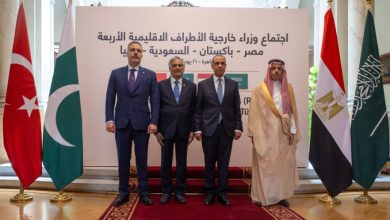
The Sharm Al-Sheikh Peace Summit in Egypt, which convened leaders from 31 countries, culminated in the “Trump Declaration for Enduring Peace and Prosperity” – signed by the US President, Egyptian President Abdel Fattah Al-Sisi, Qatar’s Emir Sheikh Tamim Al-Thani, and Turkish President Recep Tayyip Erdoğan.

In this document, the signatories “welcome the truly historic commitment and implementation by all parties to the Trump Peace Agreement, ending more than two years of profound suffering and loss.”
They commit to supporting Trump’s efforts to end the Gaza war and bring enduring peace to the Middle East. “Together, we will implement this agreement in a manner that ensures peace, security, stability, and opportunity for all peoples of the region, including both Palestinians and Israelis,” they pledge.
Moreover, the four leaders emphasize that they “pursue a comprehensive vision of peace, security, and shared prosperity in the region, grounded in the principles of mutual respect and shared destiny.”
“In this spirit, we welcome the progress achieved in establishing comprehensive and durable peace arrangements in the Gaza Strip, as well as the friendly and mutually beneficial relationship between Israel and its regional neighbors.
“We pledge to work collectively to implement and sustain this legacy, building institutional foundations upon which future generations may thrive together in peace,” they say.
Gaza Ceasefire Deal
Following days of indirect negotiations in Sharm Al-Sheikh, mediated by Egypt, the US, Qatar and Türkiye, both Hamas and Israel agreed on October 8, 2025 to the first phase of Trump’s peace plan.

It involves a ceasefire and Israeli military withdrawal to agreed-upon lines, in addition to Hamas handing over all the hostages, alive and deceased, to Israeli security forces within 72 hours of military redeployment.
In return, Israel releases 250 Palestinian convicted or suspected of security crimes, in addition to 1,700 adults and 22 minors detained in Gaza during the war, and the bodies of 360 fighters.
On Monday, Hamas handed over the 20 remaining living hostages and the remains of four deceased hostages to Israel. Meanwhile, Israel released 250 Palestinian prisoners and more than 1,700 detainees from Gaza.
Humanitarian Aid
Since a short-lived truce collapsed in March 2025, Israel has imposed a total blockade on humanitarian aid entry into Gaza and intensified its military operations, exacerbating the dire conditions in the Strip and triggering famine.
Under the peace plan, humanitarian aid flow to the Strip will increase, with 600 trucks expected to enter Gaza daily and move freely between the enclave’s north and south.
Within this context, UN aid agencies pointed to positive developments in humanitarian aid delivery. “Our humanitarian scale-up in Gaza is well underway,” the UN OCHA noted, adding that it had secured Israeli approval for 190,000 tons of food, shelter items, medicine and other supplies to enter the Strip.
It also said that “more tents for displaced families, frozen meat, fresh fruit, flour and medicines also crossed into Gaza throughout the day on Sunday,” with its workers and partners able to move easily “into multiple areas.”
“This is just the beginning. As part of our plan for the first 60 days of the ceasefire, the UN and our partners will expand the scale and scope of our operations to deliver life-saving aid and services to virtually everyone across Gaza,” the UN agency said.
Furthermore, the UN said it will allocate an additional $11 million from an emergency fund to scale up humanitarian aid in Gaza ahead of the winter months.
Ending Gaza War
During his one-day trip to the Middle East, which included a stop in Israel before landing in Sharm Al-Sheikh, Trump hailed the ceasefire agreement, declaring it marks the end of Gaza war.
“This is not only the end of a war. This is the end of the age of terror and death and the beginning of the age of faith and hope and of God,” Trump said, addressing Israeli Knesset.
“It’s the start of a grand concord and lasting harmony for Israel, and all the nations of what will soon be a truly magnificent region. I believe that, so strongly. This is the historic dawn of a new Middle East,” he added.

As of October 13, 2025, the war in Gaza killed 67,869 Palestinians and injured 170,105 others, according to the Strip’s health authorities. Furthermore, 463 people, including 157 children, have died of starvation and malnutrition.
The war has also destroyed or damaged 90% of homes in Gaza, internally displacing 1.9 million of the enclave’s 2.1 million people, according to the International Organization for Migration.
In his address at Sharm Al-Sheikh Summit, Egypt’s Al-Sisi praised Trump’s peace plan and the ceasefire agreement to end the war in Gaza. “Let the war in Gaza be the last war in the Middle East,” he said.
“This achievement heralds the birth of a genuine ray of hope, which promises to close a painful chapter in human history, usher-in a new era of peace and stability in the Middle East, and secure a better future for the peoples of the region, who have been ravaged by conflict,” he added.
The Road to Peace
The war in Gaza has sparked regional tensions, putting the Middle East on the brink of an all-out conflict. During the war, Israel escalated its military operations to include strikes on Houthis in Yemen, who launched drone and missile strikes against Israel in solidarity with Gaza. Israel also eliminated senior officials of the Lebanese group Hezbollah, including its leader, Hassan Nasrallah.
Moreover, the war has seen unprecedented rounds of escalation between Israel and Iran, culminating in the 12-day war in June 2025, in which the US intervened and struck three Iranian nuclear facilities.
In September 2025, the Israeli military launched airstrikes on a residential compound housing a number of Hamas leaders in Doha, as they gathered to discuss a US proposal for a ceasefire in Gaza. The attack killed five group officials, including Khalil Al-Hayya’s son and the director of his office, in addition to a Qatari security serviceman.
The attack has sparked regional and global outrage as a flagrant violation of Qatar’s sovereignty and a threat to peace negotiations as Doha is a key mediator in Gaza ceasefire talks, alongside Egypt and the US, ramping up international pressure on the Israeli government.
In his remarks, Trump suggested that the US strike on Iran has paved the way for the Gaza deal. He also added that the US is open to a peace deal with Iran.
“To Iran, and as you know, this is not said out of weakness. There’s no weakness. But I’m going to say this, that we are ready when you are, and it will be the best decision that Iran has ever made,” he said.
Arab Diplomatic Efforts
Since the eruption of the Gaza war in October 2023, regional and international leaders have made intensive diplomatic efforts to push for a ceasefire to bring the war to an end.
This included multiple rounds of negotiations, mediated by Egypt, Qatar and the US, in addition to Arab and regional summits to end the conflict. As a result, the war saw two shortly-lived truces – in November 2023 and in January 2025 – both of which rapidly collapsed.

Moreover, Saudi Arabia has spearheaded a diplomatic push to advance the two-state solution as the only viable path for achieving peace and resolving the Palestinian-Israeli conflict.
This has led to many countries officially recognizing the State of Palestine and endorsing the New York Declaration for implementing the two-state solution.
In the light of this, the US President thanked Egypt, Qatar and Türkiye for their mediation efforts that led to Hamas accepting the peace plan.
He also thanked the Saudi Crown Prince and Prime Minister, Mohammed bin Salman. “I want to thank Crown Prince Mohammed bin Salman of Saudi Arabia, he’s a special friend of mine… he’s doing a fantastic job,” Trump said.
Two-State Solution
Egyptian President Al-Sisi stressed support for the two-state solution, which envisions the establishment of an independent Palestinian State along the 1967 borders, allowing Palestinians and Israelis to live side by side in two independent nations.
“I restate our full support for and commitment to the implementation of this plan, thereby generating the necessary political horizon to realize the “Two-State Solution”, as it remains the sole viable path to achieving the legitimate aspirations of both the Palestinian and Israeli peoples to turn the chapter of conflict and live securely,” the Egyptian President said.

Al-Sisi added that the Palestinian people “possess the inalienable right to self-determination and to envisage a future devoid of the specter of war. They hold the fundamental right to enjoy freedom and live within their own independent state; a state living side by side with Israel in peace, security, and mutual recognition.”
Trump did not mention the two-state solution during the peace summit in Egypt. On his way to Washington, the US President said: “I’m not talking about single state or double state or two state, we’re talking about the rebuilding of Gaza.”
“A lot of people like the one-state solution. Some people like the two-state solutions. We’ll have to see. I haven’t commented on that,” he told reporters aboard Air Force One.
Gaza Reconstruction
In his speech in Sharm Al-Sheikh Peace Summit, Trump spoke about the next steps in Gaza, including reconstruction efforts.
“Now the rebuilding begins. Rebuilding is maybe going to be the easiest part. I think we’ve done a lot of the hardest part because the rest comes together. We all know how to rebuild, and we know how to build better than anybody in the world,” he said.

He also thanked Arab and Muslim countries for their readiness to contribute to Gaza rebuilding.
“I’m pleased to announce that numerous countries of great wealth and power and dignity have come forward to me just today and over the last week to say they want to help in the reconstruction of Gaza, putting up whatever money is necessary,” Trump said.
However, rebuilding Gaza will be a tall order, requiring years and tens of billions of dollars. According to the UN estimates, 92% of housing units have been damaged or destroyed, 91% of schools need full reconstruction or major rehabilitation to be fully functional again, and 86% of cropland is damaged.
In February 2025, the UN Interim Rapid Damage and Needs Assessment (IRDNA) estimated that Gaza and the West Bank would require $53.2 billion for recovery and reconstruction over the next ten years.
Furthermore, the World Health Organization (WHO) said that rebuilding Gaza’s health system will cost over $7 billion, covering humanitarian response, early recovery and long-term rebuilding.
Int’l Support for Rebuilding Gaza
In the light of this, the Egyptian President said that Cairo will host a conference for advancing Gaza reconstruction efforts, inviting Trump to support it.
“We intend to host the “Conference for Early Recovery, Reconstruction, and Development”, which will build upon your plan for ending the war in Gaza, with the ultimate goal of providing essential livelihoods for the Palestinians on their land and restoring their hope. Indeed, peace is only complete when the hand of reconstruction extends after the devastation,” Al-Sisi said.
The UK has voiced support for the Arab Reconstruction Plan, pledging £20 million ($27 million) humanitarian aid package to deliver essential water, sanitation, and hygiene services to tens of thousands of civilians across Gaza.

Moreover, it is hosting a three-day conference on Gaza’s recovery and reconstruction at Wilton Park, with the participation of Middle Eastern and European officials.
Similarly, Germany pledged at least €100 million ($116 million) for supporting reconstruction efforts in Gaza, according to German Development Minister Reem Alabali-Radovan. She also reaffirmed that Germany, alongside Egypt, will invite nations for a reconstruction conference for Gaza.
Maintaining Security in Gaza
Trump’s peace plan proposes the demilitarization of the Gaza Strip and the establishment of a temporary International Stabilization Force (ISF) for immediate deployment in Gaza, in collaboration between the US, Arab and international partners.
At Sharm Al-Sheikh Peace Summit, Trump mentioned the formation of a new police force in Gaza and the demilitarization of the Strip. “We’ve also agreed that Gaza’s reconstruction requires that it be demilitarized and that a new, honest civilian police force must be allowed to create a safe condition for the people in Gaza,” he said.
With regards to this, the European Council President, Antonio Costa, expressed readiness for taking part in implementing Trump’s peace plan.
“The EU fully supports its principles and stands ready to contribute to the next steps—in the transitional governance, the security, and the reconstruction of Gaza. As soon as the conditions allow it, we will expand our humanitarian assistance,” he said in a statement.

Upon his arrival to Sharm Al-Sheikh, French President Emmanuel Macron called for establishing an international legal framework for the international force in Gaza to be deployed in the enclave.
“There must be a legal international framework for any international force in Gaza. France is coordinating closely with the US regarding Gaza’s future, and the Palestinian Authority must play a central role,” he said.