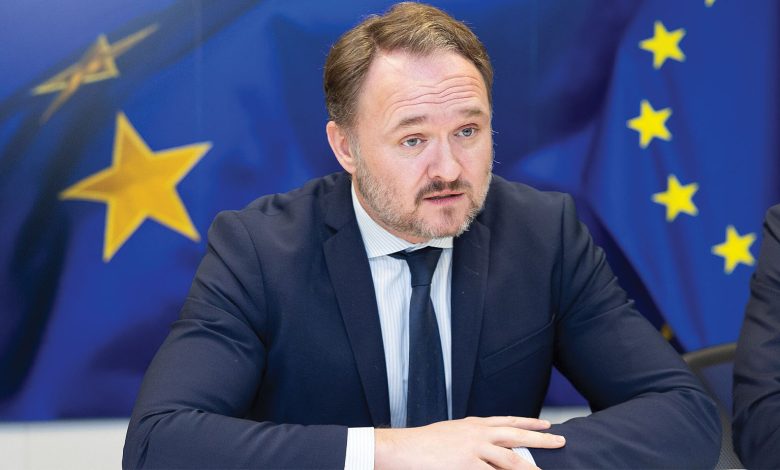
The European Union is evaluating “all possibilities,” including fuel rationing and the release of additional oil from emergency reserves, as it prepares for a “long-lasting” energy shock from the Middle East conflict, according to Reuters.
EU Energy Commissioner Dan Jorgensen noted that the crisis will be a long one, indicating that energy prices will be higher for a very long time.
He also mentioned that for certain “critical” products, conditions are expected to deteriorate further in the coming weeks.
On February 28, the United States and Israel launched strikes on Iran, targeting its leadership and triggering a new conflict in the Middle East. These strikes have killed Iranian Supreme Leader Ali Khamenei and top security and defense officials in the country.
Iran has been responding with a retaliatory counterattack in Bahrain, Kuwait, Saudi Arabia and Abu Dhabi as a retaliatory move, while launching barrages of missiles and drones toward Israel.
The conflict has spread across the Middle East, leaving thousands dead, triggering unprecedented disruptions to energy supplies especially after the blockade of the Strait of Hormuz.
As a critical waterway, the Strait of Hormuz handles approximately a quarter of the world’s seaborne oil and roughly one‑fifth of all liquefied natural gas flows.
Due to the escalating tensions, Iran’s Islamic Revolutionary Guard Corps declared that the waterway was unsafe. Therefore, the authorities halted ship movements, causing a worldwide energy crisis.
Bangladesh, for instance, has taken several measures to conserve power, instructing civil servants to switch off lights and turn down air conditioning as the War in Iran has deepened the country’s energy strain.
Related Topics:
Trump Extends Iran Energy Strike Deadline Amid Regional Turmoil
Gulf Energy Crisis: Iran Threatens Oil Targets after Pars Gas Strike
Washington Threatens to Exit International Energy Agency