The US and Iran prepare for pivotal peace talks in Islamabad on Saturday, yet Tehran casts serious doubt by demanding prior commitments on Lebanon and sanctions relief before negotiations officially begin.
Vice President JD Vance led the American delegation, which includes special envoy Steve Witkoff and Jared Kushner that travelled to the Pakistani capital following a brief stop in Paris for refueling. Meanwhile, the Iranian team, headed by Speaker Mohammad Baqer Qalibaf and Foreign Minister Abbas Araqchi, arrived on Friday afternoon.
Iranian officials insist that Washington previously pledged to unblock frozen assets and secure a ceasefire in Lebanon. Qalibaf stated on X that “talks would not start until those pledges were fulfilled.” Consequently, the disagreement over whether the Lebanon conflict is part of the bilateral ceasefire remains a primary sticking point.
The White House has not issued a formal response to these demands, but President Donald Trump shared a blunt assessment on social media. Trump claimed that the Iranians have “no cards” other than the “short term extortion” of international waterways. “The only reason they are alive today is to negotiate!” he added.
As he traveled toward the summit, Vice President Vance echoed this firm stance. “If they’re going to try to play us, then they’re going to find the negotiating team is not that receptive,” Vance warned.
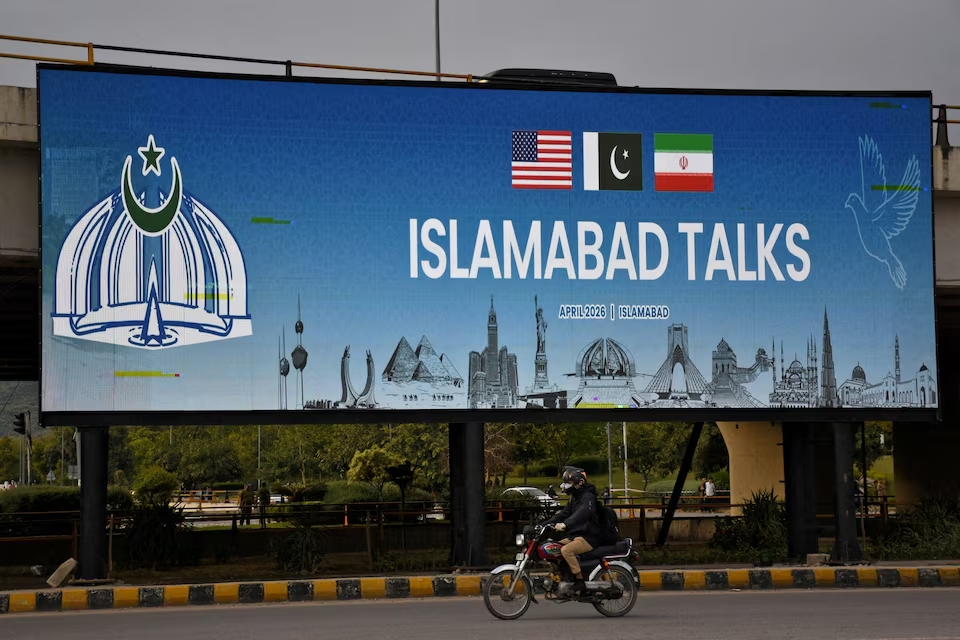
Obstacles to Regional Stability
Despite the two-week ceasefire that halted airstrikes on Tuesday, the blockade of the Strait of Hormuz continues to cripple global energy supplies. Furthermore, the parallel conflict between Israel and Hezbollah in Lebanon shows few signs of slowing down. While the Lebanese presidency seeks a ceasefire, the Israeli embassy maintains that they refuse to discuss such a move with Hezbollah.
Tehran’s agenda remains ambitious, including the removal of all crippling sanctions and the acknowledgment of Iranian authority over the Strait of Hormuz. Additionally, the new Supreme Leader, Ayatollah Mojtaba Khamenei, demanded compensation for wartime damage in a defiant message. “We will certainly not leave unpunished the criminal aggressors who attacked our country,” Khamenei declared.
Although the war degraded Iranian military capabilities, the clerical rulers still possess significant drone and missile stockpiles. Negotiators now face “make-or-break” talks in a city under unprecedented military lockdown.