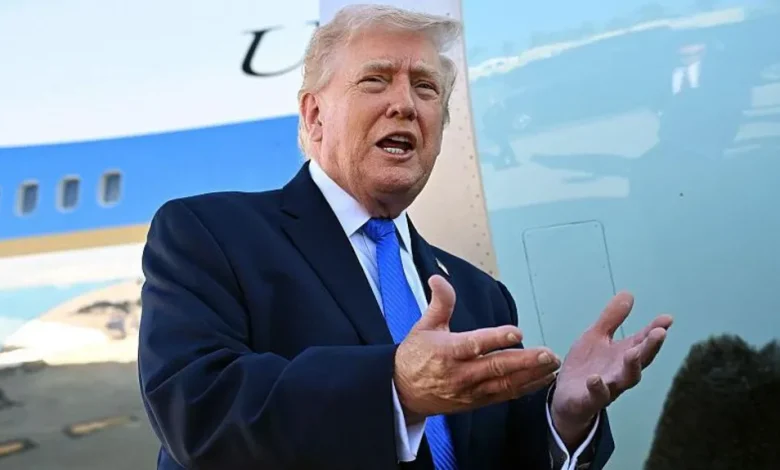
US President Donald Trump has extended the deadline for Iran to reopen the Strait of Hormuz or face the destruction of its energy infrastructure, pushing the threat into April as the administration seeks a breakthrough in the four-week war.
On Thursday, the President announced a 10-day pause on planned strikes against Iranian energy plants, setting a new deadline for 6 April, following a previous five-day halt that failed to produce a formal agreement with Tehran. Despite the escalating violence, Trump remains optimistic about the diplomatic channel.
“Talks are ongoing and, despite erroneous statements to the contrary by the Fake News Media, and others, they are going very well,” the President shared on Truth Social.
However, Tehran denies participating in direct negotiations. The Iranian government recently rejected a 15-point US proposal, labeling the terms as unfair and biased toward American interests. This deadlock persists even as the conflict ravages the global economy and fuels significant inflation fears.
Economic Impact and Military Escalation
The war has caused crude oil prices to surge by 40% due to the blockade of the Strait of Hormuz. Consequently, global financial markets remain volatile while investors worry about a prolonged military engagement, with international shipping slowing to a crawl, and the price of nitrogen-based fertilizers has spiked by nearly 50%.
While Trump discusses peace, the Israeli military continues to target ballistic missile sites and air defense systems across Iran. Recent strikes hit residential areas in Tehran and Qom, resulting in civilian casualties and significant property damage. Iran has vowed to retaliate against Gulf energy facilities if the US follows through on its infrastructure threats.
Strategic Shifts in the Middle East
The Pentagon is currently considering the deployment of 10,000 additional ground troops to the region to bolster security. Furthermore, Washington recently confirmed the use of uncrewed drone speedboats for active patrols for the first time in history.
Diplomacy remains fragile as the United Arab Emirates considers joining a multinational taskforce to reopen the vital waterway. Meanwhile, some analysts remain skeptical of the administration’s claims regarding productive negotiations. Sean Callow, a senior analyst at ITC Markets, noted that “Many see the Iranian regime as holding the upper hand and doubt that there are indeed productive negotiations with the US in process.”