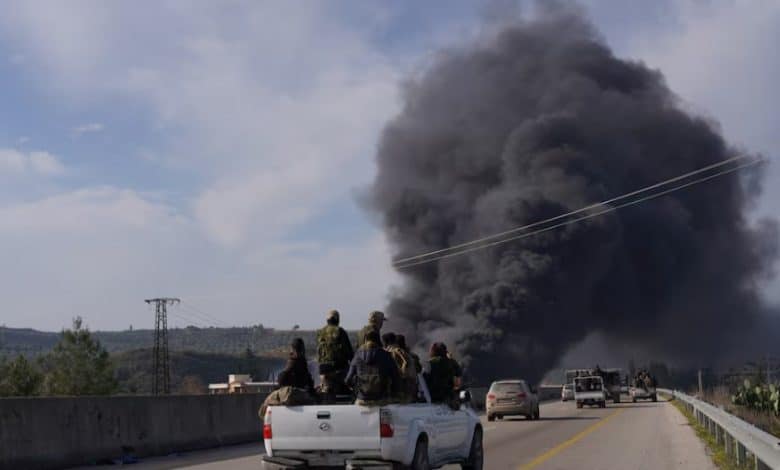
The Syrian security forces have restored control over the coastal region of Syria after the worst clashes since the collapse of Bashar Assad’s regime in early December 2024.
On Thursday, fighting broke out in the Latakia and Tartous regions on the Mediterranean coast after armed groups launched what the Syrian authorities called “a deadly and well-planned attack” on their forces, reported Reuters.
This comes amid Damascus’ endeavors to reintegrate regionally and internationally and rebuild relations with Arab and Western countries to build a stable future and promote regional security and stability.
Violence Outbreak
The violence began when armed groups targeted security patrols and checkpoints in the Jableh area and surrounding countryside, killing several members of the police and security forces. The attack soon spread to other areas, including the towns of Qardaha and Baniyas.
This drove unorganized crowds to head to the coastal region where “individual violations” were committed, the Syrian state news agency SANA reported, citing an unnamed security source.
The source said that these violations do not represent the majority of the Syrian people, adding that “we are working to stop these violations.”
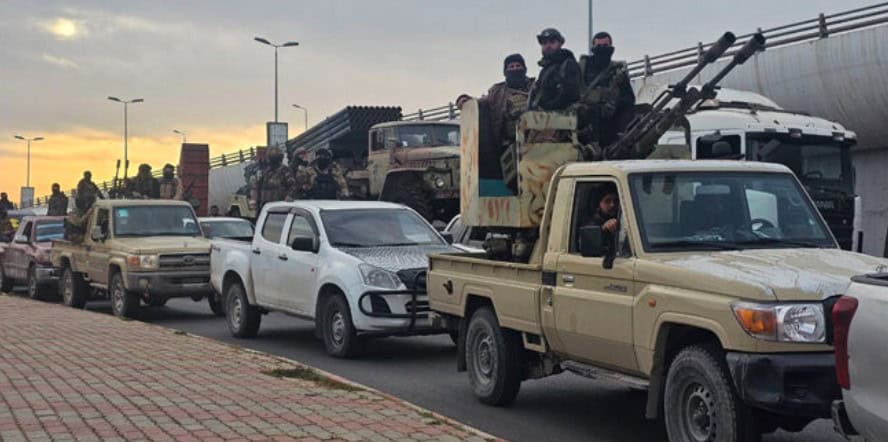
As a result, the Syrian government sent security reinforcements to restore order and imposed curfews across the coastal cities of Latakia, and Tartous.
The clashes have left more than 180 people killed, Reuters reported, citing the UK-based Syrian Observatory for Human Rights (SOHR). Meanwhile, Syrian Network for Human Rights (SNHR) puts the number of victims at 240, including 100 Syrian security forces and 15 civilians, according to the Guardian.
Restoring Control
On Friday, the Syrian Ministry of Defense (MoD) declared it reasserted control over the coastal area and that the situation is “under complete control,” according to SANA.
“The Ministry has achieved rapid field progress and re-imposed control over the areas that witnessed treacherous attacks against public security personnel,” the Syrian MoD spokesperson, Hassan Abdul Ghani, said.

He added that the Syrian security forces carried out strict encirclement operations, tightening the noose on the armed groups. He also emphasized that the Ministry continues to “deal with the remaining hotbeds of criminals, and is handing over all those involved to the competent security authorities to ensure that they are held accountable according to the law.”
Abdul Ghani warned of “dire consequences” for those who commit such crimes, adding that “anyone who refuses to hand over his weapon to the state will face a decisive response without compromise.”
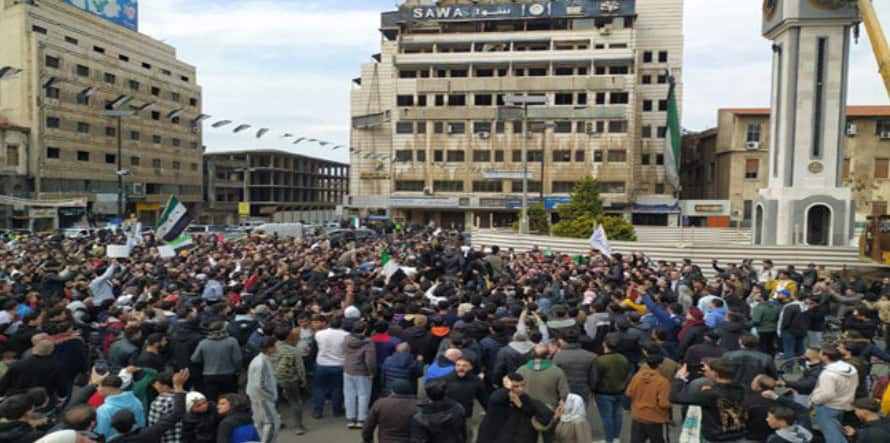
On Friday, Syrians took to the streets in Damascus and other cities to show support for the government, according to Reuters.
A Call to Lay Down Arms
In response to the clashes, Syria’s transitional President, Ahmed Al-Sharaa, called on those armed groups to lay down their arms and turn themselves in “before it is too late,” according to SANA.
In a televised address, Al-Sharaa said that the Syrian State will pursue “those who committed crimes against the people and seek to undermine security and civil peace.”

He addressed the gunmen, saying “by your heinous act of killing those who protect Syria and stay up to serve it, storming hospitals and terrorizing the innocent, you have attacked all Syrians, by doing so, you have committed a great and unforgivable sin, and you have received a response that you cannot bear.”
Al-Sharaa vowed to hunt these armed groups and hold them accountable. “We will bring the criminals into a fair court and we will continue to restrict weapons to the state, and there will be no loose weapons in Syria.”
Arab Support for Syria’s Stability
Arab countries have reiterated their support for Syria’s security and stability. On Friday, Saudi Arabia condemned the “crimes committed by outlaw groups” against the Syrian security forces.
In a statement, the Saudi Foreign Ministry said: “The Kingdom affirms its support for the Syrian government in its efforts to maintain security and stability and preserve civil peace.”
Meanwhile, the UAE condemned the attacks by armed groups against Syrian security forces, reaffirming its firm position in supporting Syria’s stability, sovereignty and territorial integrity.
Moreover, Egypt voiced concern over the recent clashes in Syria’s coastal region, reiterating its supportive stance towards Syria and its national institutions to overcome security challenges.
Other Arab countries, including Jordan, Qatar, Kuwait, Bahrain and Iraq as well as the Muslim World League (MWL), condemned the recent attacks, expressing their solidarity with the Syrian government and their support for Syria’s security and stability.
The Gulf Cooperation Council (GCC) also condemned all acts of violence aimed at destabilizing Syria. The GCC Secretary General, Jasem Al-Budaiwi, reaffirmed the Council’s unwavering support for Syria in its ongoing efforts to preserve its stability and ensure security of its people, reported the Saudi Press Agency (SPA).
Regional Re-engagement
The recent developments come as Syria reintegrates with the Arab and Islamic worlds. On Friday, Syria restored its membership in the Organization of Islamic Cooperation (OIC) after a 13-year suspension.
The announcement came during the OIC Extraordinary Ministerial Meeting in Jeddah. The Saudi Foreign Minister, Prince Faisal bin Farhan, welcomed the move, expressing hope that Syria’s return to the OIC would contribute to and engage with OIC member states in advancing the organization’s work.
Furthermore, the Syrian transitional President, Ahmed Al-Sharaa, participated in the emergency Arab Summit for Palestine, held on March 4, 2025 in Cairo, at the invitation of the Egyptian President, Abdel Fattah Al-Sisi.

After the fall of Assad’s regime on December 8, 2024, Syria’s new administration has pledged to unite Syria, build a prosperous and stable future for the nation, and restore ties with the Arab world. Syria is also making efforts to lift US and Western sanctions imposed on the country to accelerate economic recovery.
In the light of this, Al-Sharaa has embarked on several visits to neighboring countries, including Saudi Arabia, Jordan and Türkiye. The visits aim to boost Syria’s engagement in regional and international issues and enhance cooperation across various fields to promote peace and stability in the region.