Aramco President: Rebuilding Global Oil Inventories Could Take Two Years
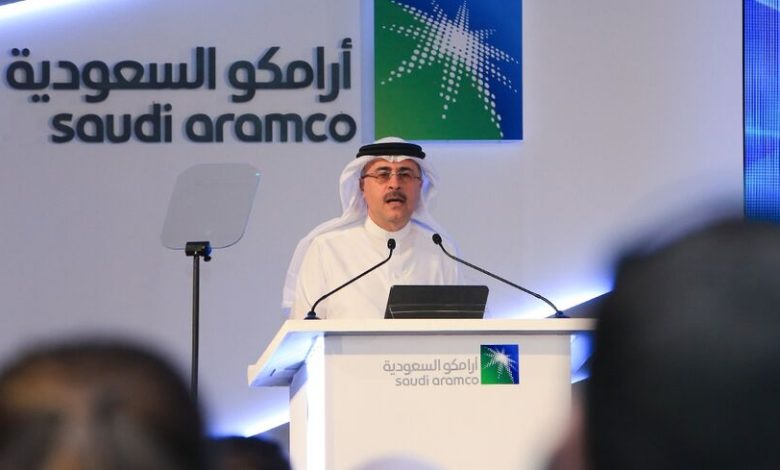
The global oil market could need up to two years to rebuild its inventories while sustaining demand after the Strait of Hormuz fully reopens and market confidence recovers, Aramco President and CEO Amin H. Nasser has said.
Speaking at the Energy Intelligence Forum in London, Nasser urged governments, oil suppliers and consumers to reinforce their coordination to manage geopolitical shocks, underscoring the significance of collective action in safeguarding global energy resilience.
The Weight of Hormuz
The conflict in the Middle East has revealed the vulnerability of global energy supplies to disruptions along critical shipping routes, according to Arab News.
Oil flows through the Strait of Hormuz have faced notable disruption, affecting energy infrastructure and maritime traffic while highlighting the fresh concerns about the security of international supply chains.
The Strait handled an average of 20 million barrels per day in 2024, accounting for approximately 20 percent of global petroleum liquids consumption, according to the US Energy Information Administration.
A Heavy Saudi Stake in Hormuz
Saudi Arabia also holds a significant position in the flows moving through the strategic waterway. Its crude and condensate exports represented around 38 percent of crude passing through Hormuz, equivalent to approximately 5.5 million barrels per day.
In this context, Nasser warned that the disruption could place mounting pressure across the oil market until the waterway fully reopens and confidence returns.
“Until Hormuz fully re-opens and confidence returns, the crude reality is that pressure at both ends of the barrel will intensify,” he said, emphasizing that rebuilding inventories while meeting demand could take up to two years.
What Could Disrupt the Energy Transition?
Despite the global shift toward alternative energy, Nasser said oil and gas continue to remain critical to the world economy, describing them as “the lifeblood of modern civilization.”
He also pointed to the vulnerabilities within the energy transition itself, arguing that renewable technologies and electric vehicles remain exposed to supply shocks.
From aluminum and sulfur to helium and petrochemicals, shortages of essential inputs can ripple through the supply chains supporting solar, wind and electric vehicles.
Nasser added that the region’s strategic weight is also rooted in the depth of its resources. Half of the world’s proven oil reserves lie in the Middle East, alongside most of its spare production capacity.
That strategic position could become even more significant as other resource bases mature and new supplies become harder to find and more costly to develop.
How Does Aramco Build Resilience?
For Aramco, navigating the disruption has meant relying on a network of safeguards rather than a single line of defense.
Nasser said the company’s resilience rests on multiple layers working together, from global strategic storage and spare production capacity to a diverse range of crude grades, domestic gas storage and a tanker fleet operated through Bahri.
Aramco’s financial strength also forms part of that resilience, while its local supply chain has played a critical role in restoring damaged assets. More than 90 percent of the materials used in those restoration efforts have come from local suppliers, Nasser said.
Resilience Requires Cooperation
Looking ahead, Aramco is exploring additional crude-export routes and overseas storage capacity to limit the effects of short-term disruptions.
The company has also drawn on its East-West pipeline and existing storage infrastructure to sustain business continuity throughout the regional crisis.
But Nasser said resilience cannot rest on individual companies alone.
Therefore, he called for closer cooperation between producers and consumers on emergency response, supply planning, joint stockpiling, refinery and petrochemical flexibility, supply chains and cybersecurity.
“The international community must stand together to safeguard the free flow of energy and goods,” he said.
Related Topics:
Saudi Mining Expansion: Aramco, Ma’aden Join Forces in Multi-Billion Dollar Mineral Push
Arab, Regional Leaders Offer Condolences to Saudi Arabia after Aramco Helicopter Crash
Against Headwinds: Saudi Aramco’s Resilience Drives Record Surge in Crude Exports