Saudi Arabia is considering a new oil pipeline to bypass maritime chokepoints, with Oman’s Duqm Port emerging as a preferred destination.
This potential new route is part of the Kingdom’s efforts to reinforce its logistics network and maintain the flow of global energy supplies amid disruptions and threats to critical waterways, including the Strait of Hormuz and the Bab al-Mandab Strait.
A Cross-Peninsula Pipeline
Driving the News: Saudi Arabia has embarked on plans to develop a new pipeline linking the Kingdom’s oil fields to Oman’s Duqm Port, AGBI reported, citing French oil giant TotalEnergies CEO Patrick Pouyanne. According to Vice President at Rystad Energy Rahul Choudhary, the project is at the feasibility-study phase.
The Big Picture: The proposed pipeline could mitigate maritime shipping risks, transporting Saudi energy exports directly to the Arabian Sea and the Indian Ocean, without transiting the Strait of Hormuz or the Red Sea.
Technical Specifications: Choudhary put the estimated cost of the pipeline at $7 billion, with a total length of about 1,000 km.
Duqm: The Strategic Choice
The Backstory: Recent military tensions have caused disruptions to shipping in the Strait of Hormuz – through which around 20% of daily global oil and LNG supplies pass. Shipping through the Red Sea’s Bab al-Mandab Strait has also come under threat. This has necessitated an alternative route for energy supplies.
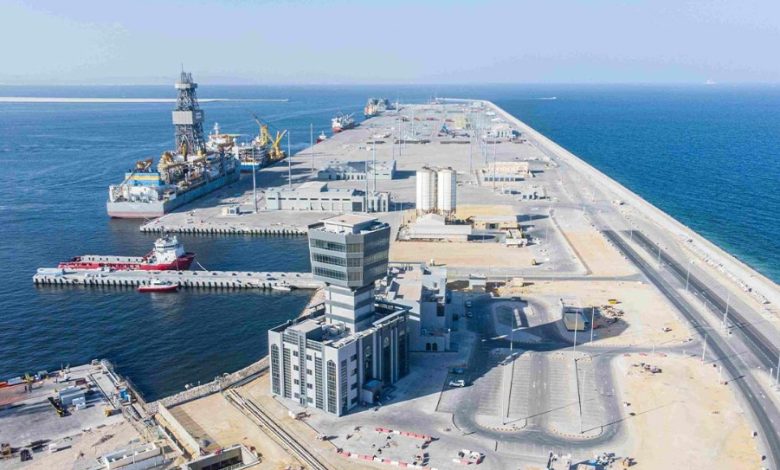
Zoom In: Strategically located along the Arabian Sea, the Omani Duqm Port is a deep-water multi-purpose port handling commercial cargo, logistics, and maritime services. It hosts several industrial projects, including the Duqm Refinery, Ras Markaz oil storage terminal, a large dry dock for ship repair, and ongoing energy expansions.
What to Watch: Choudhary suggested that Ras Markaz could be a possible destination for Saudi exports, where Oman’s state-backed oil firm OQ intends to purchase offshore storage vessels to offer for lease.
What He Said: “Ras Markaz is roughly 650-700 km from Iran, which reduces the risk of Iranian attacks, making the port a viable alternative.” – Rahul Choudhary, VP at Rystad Energy.
Aramco’s Expanding Infrastructure
State of Play: In remarks to Nikkei Asia in late September, Saudi Aramco CEO Amin Nasser said that the company was considering the establishment of “a fourth and a fifth route” for exporting crude, as well as the expansion of its overseas storage capacity to ensure sustainable supplies to global markets.
Between the Lines: Aramco has three main crude oil export routes: the Strait of Hormuz, the Bab al-Mandab Strait route, and the SUMED pipeline which connects the Red Sea to the Mediterranean through Egypt.
Flashback: Following the effective closure of Hormuz, Saudi Arabia leveraged the East-West Pipeline to maximum capacity of 7 million barrels per day (bpd) to transport oil through the Red Sea. However, Iranian-backed Houthi threats and a drone attack on the East-West Pipeline caused its temporary closure.
Unmatched Resilience
The Context: Aramco has rapidly restored the East-West Pipeline’s operational capacity, underscoring the company’s resilience and logistics capabilities to fulfill its commitments and reinforcing the Kingdom’s status as the global anchor of energy security.
Go Deeper: Saudi Arabia’s exports have reached their highest level since the Iran war began. The Kingdom’s oil exports in September stood at 5.28 million bpd. Furthermore, Saudi crude shipments to Asia climbed to nearly 100 million barrels in mid-September, according to Bloomberg.
Saudi-Omani Logistics Network
Between the Lines: Saudi Arabia and Oman have boosted cooperation to maintain the stability of supply chains and accelerate trade flows across the Gulf region.
Secure Green Land Corridor
In early August 2026, Oman-based Arkan Logistics and Saudi Arabia’s SPARK Logistics signed a strategic partnership agreement to launch the Secure Green Land Corridor – an overland logistics corridor connecting the SOHAR Port in Oman with the SPARK Dry Port in Saudi Arabia.
It acts as an operational expressway connecting Omani ports (such as SOHAR, Salalah, and Duqm) on the Gulf of Oman and Arabian Sea directly to Saudi industrial and dry-port hubs in the Eastern Region, including SPARK.
Saudi-Oman Highway
Inaugurated in 2021, the Saudi-Oman Highway is a critical 740-km land link connecting Saudi Arabia and Oman. It runs 540 km on the Saudi side, from the Batha Haradh intersection, reaching the Shaybah oil field and then extending to the Empty Quarter on the Saudi-Omani borders. Inside Oman, it covers a distance of 161 km from the borders to the Ibri Governorate.
The Bottom Line: By expanding crude export routes, Saudi Arabia is building an extended network that insulates energy flows from geopolitical shocks, establishing the Kingdom as the world’s most reliable energy supplier.