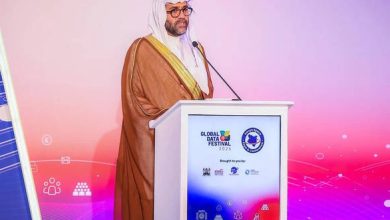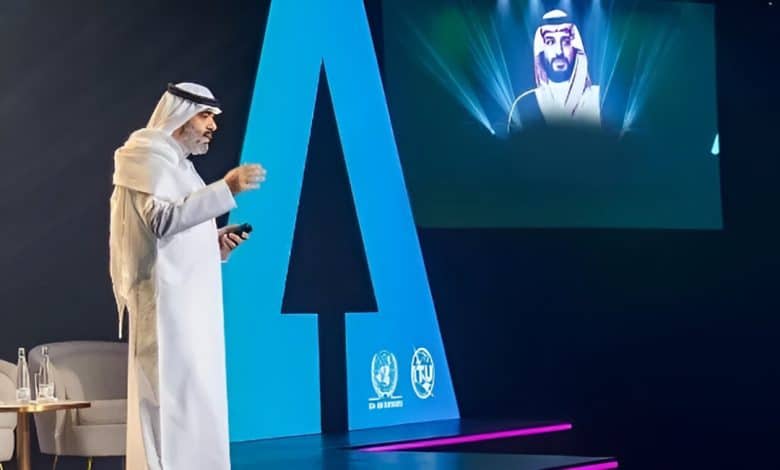
Saudi Arabia’s Minister of Communications and IT, Abdullah Al-Swaha, has urged decisive international collaboration to tackle the AI divide. Speaking at the 160th anniversary of the International Telecommunication Union (ITU) in Geneva, he highlighted the concentration of computing power in few regions and the limited AI infrastructure in many countries.
Al-Swaha pointed out the lessons from past technological eras, since the analog era took over a century to connect 800 million people, while the digital era linked 5.5 billion individuals in just 50 years, leaving 2.6 billion unconnected. In the AI era, gaps in computing infrastructure, data availability, and algorithms could hinder progress.
Saudi Arabia’s Commitment
Saudi Arabia is committed to leading international efforts to close these technological divides as the minister highlighted Saudi Arabia’s efforts, including the digital empowerment of women, who now have a participation rate of about 35%, with the Kingdom ranks top globally in digital competitiveness for two consecutive years.
Moreover, Al-Swaha praised researchers at King Abdullah University of Science and Technology (KAUST), who rank among the top one percent globally in scientific citations in an achievement that signals a promising future for AI development in the Kingdom. He also highlighted advancements in data protection regulations and the creation of language models that ensure inclusive access to technology.
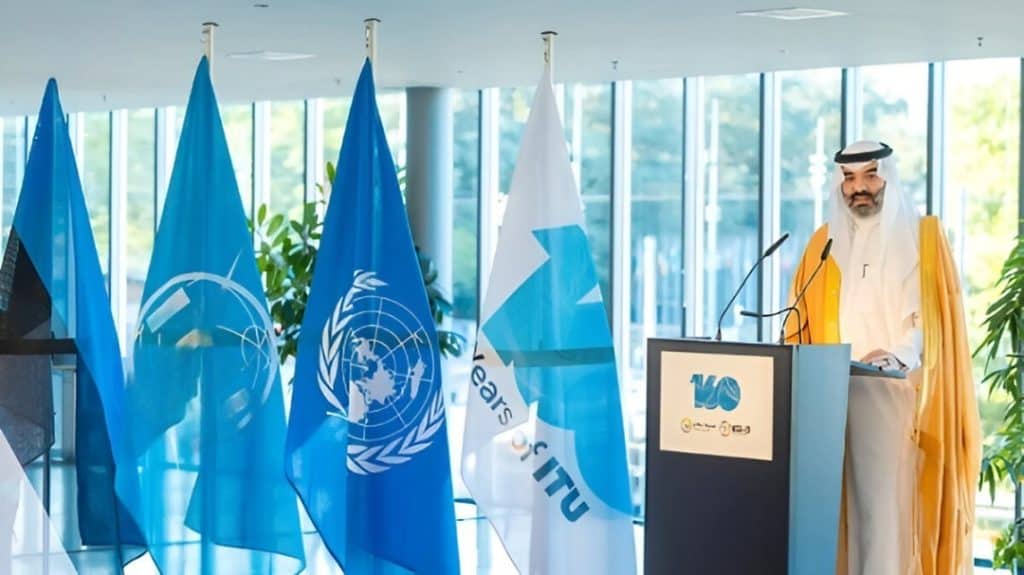
He cited the HUMAIN project, launched by Crown Prince Mohammed bin Salman, to provide a full spectrum of AI capabilities, positioning the Kingdom as a global AI pioneer. Al-Swaha stressed the importance of the next decade and called for multination partnerships under the ITU to build a fair, safe, and inclusive AI ecosystem.
Al-Swaha emphasized that bridging the AI divide is critical and requires urgent global cooperation, calling for partnerships under the ITU to build a fair, safe, and inclusive AI ecosystem that supports sustainable development and enhances human well-being.