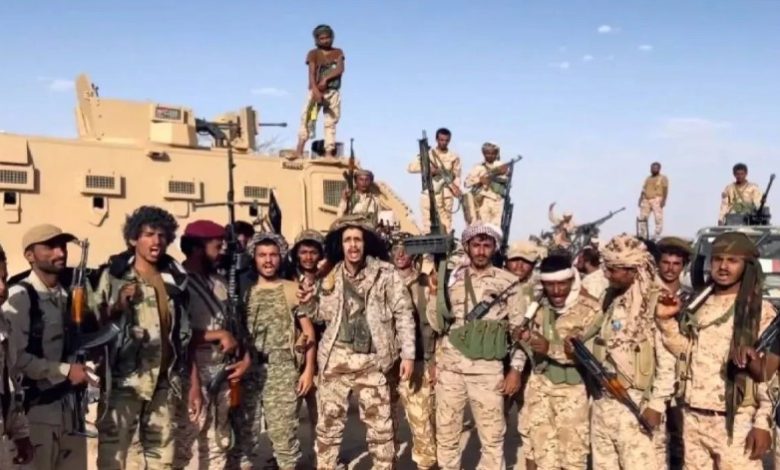
In a watershed moment for regional security, the internationally recognized government of Yemen announced the launch of Operation “Dawn of Yemen” – a military counteroffensive aimed at recapturing the remaining Houthi-controlled territories and restoring state authority.
The operation is backed by the Saudi-led Arab Coalition to Restore Legitimacy in Yemen, providing air support for the Yemeni Armed Forces with over 100 fighter jets to restore government control over Yemen and end the Houthi threat to shipping in the Red Sea and the Bab al-Mandab Strait.
Protecting International Waterways
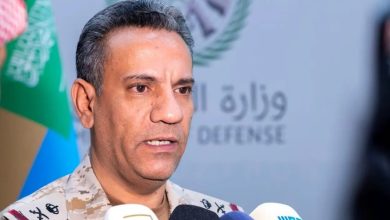
Driving the News: The Spokesperson for the Coalition, Major General Turki Al-Malki, announced that the Coalition’s naval forces conducted a military operation in Hodeidah along the Red Sea coast.
The Big Picture: During the operation, the Coalition forces struck Houthi military targets, destroying weapons depots, storage facilities for explosive-laden boats, and naval mines. Al-Malki also noted that the operation thwarted planned attacks against waterways in the southern Red Sea.
The Dawn of Yemen
State of Play: The Chairman of Yemen’s Presidential Leadership Council Rashad al-Alimi launched Operation Dawn of Yemen on Monday, October 5, 2026, to restore state institutions, liberate the capital Sanaa, and end the Iranian-backed Houthi coup. It came one day after al-Alimi announced the start of military operations to recapture territory seized by the terrorist militia during its September offensive along Yemen’s western coast.
Between the Lines: The Saudi-led Coalition supports the Dawn of Yemen operation with 100 fighter jets, destroying 324 high-value targets and providing air cover over the Bab al-Mandab Strait.
Strategic Gains: Pro-government forces regained control over the Bab al-Mandab area, Dhubab district, and its airport, cutting the road between Dhubab and Mokha. The forces also seized control over the strategic Red Sea port city of Mokha, according to Yemen’s state news agency SABA, citing military sources.
Why It Matters: Located in western Taiz Governorate, Mokha lies in close proximity to the Bab al-Mandab Strait – an international maritime chokepoint connecting the Red Sea and the Gulf of Aden and a critical trade route through which 10% to 15% of all global trade passes annually.
The Battle for Sanaa
Zoom In: The Spokesperson for Yemen’s armed forces, Majed al-Nuzaily, announced the start of a strategic offensive to recapture the capital Sanaa, using advanced capabilities.
Meanwhile, the Saudi-led Coalition Spokesperson said that the coalition forces destroyed a ballistic missile launch platform in Sanaa and a ballistic missile storage facility at a mountainous site in Saada containing 20 ballistic missiles.
Flashback: The Iranian-backed Houthis seized the capital Sanaa in 2014. The Saudi-led Coalition supports the internationally recognized government in Yemen, aiming to restore legitimacy to the country and alleviate the suffering of the Yemeni people.
Houthi Rejection of Peace
The Context: Saudi Arabia has prioritized Yemen’s stability and security, making sustained efforts to support a comprehensive and lasting political solution in Yemen. However, the Houthis have repeatedly rejected peace and chosen military escalation, dragging Yemen into further humanitarian and economic suffering that serves external agendas.
The Deep Dive: The Iranian-backed militia has targeted Saudi civilian and economic facilities in Riyadh, Abha, Khamis Mushait, Jazan, Najran, Taif, and Yanbu, as well as the two Islamic holy cities of Makkah and Madinah, with drone and ballistic missile attacks. The group has also targeted commercial vessels in the southern Red Sea and the Bab al-Mandab Strait.
Civilian Infrastructure Targeted: In response to the strategic gains made by the Yemeni forces, the Houthis retaliated by attacking the King Abdullah bin Abdulaziz International Airport in Jazan and Najran International Airport in Najran, near the Yemeni border. The attacks resulted in three minor injuries and property damage, according to the Saudi General Authority of Civil Aviation (GACA).
Sovereignty & Security: Saudi Arabia’s Red Line
The Red Line: Saudi Arabia’s Foreign Ministry reiterated the Kingdom’s inherent right to defend its territory, resources, sovereignty, and the safety of its citizens and residents. It also stressed its right to take all necessary measures to protect its security in accordance with international law, renewing its full political and military support for the Presidential Leadership Council, the Yemeni government, and the brotherly Yemeni people in ending the Houthi coup.
The Strategy: In line with Saudi Arabia’s balanced foreign policy, Riyadh adopts a dual-track approach of deterrence and diplomacy.
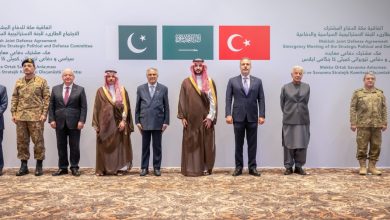
Deterrence: In the wake of recent Houthi escalations, Saudi Arabia, Türkiye, and Pakistan activated the collective deterrence measures under the Makkah Defense Alliance, including the rapid deployment of the agreed military forces and capabilities in the Kingdom.
Diplomacy: The Saudi Foreign Ministry urged the international community, particularly the UN Security Council’s permanent members, to fulfill its responsibilities, implement the relevant resolutions, and provide full support to Yemen’s legitimate government in confronting the Houthi threat.
The Bottom Line: While championing political solutions for Yemen’s long-term stability, Saudi Arabia has demonstrated in practice its unwavering resolve to defend its sovereignty and firmly deter any threats to its national security.