The Regional Four: A New Alliance in the Making (2-2)
What Role Can Saudi Arabia, Egypt, Pakistan and Türkiye Play to Resolve Regional Crises?
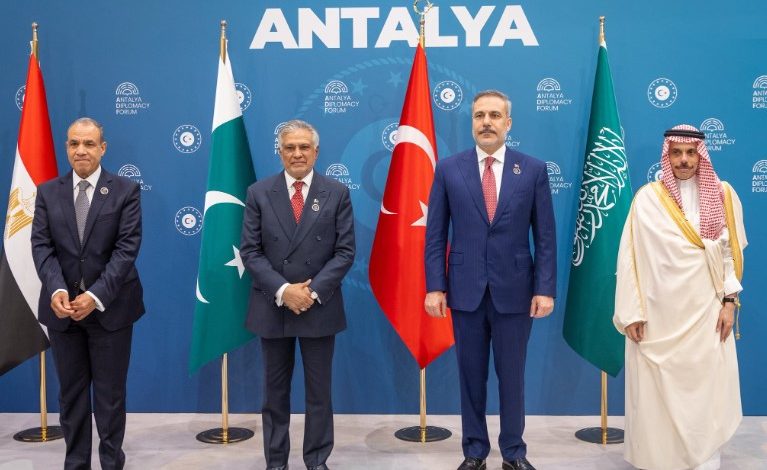
The overlapping crises stretching from Gaza to the Horn of Africa have exposed the limitations of traditional, unilateral diplomacy. In response, the emerging Regional Four (R-4) framework offers a viable path toward sustainable conflict management through an unprecedented toolset that can shape the future of the region.
In exclusive comments to Leaders MENA Magazine, analysts highlighted how the R-4 can translate their immense collective capabilities into an operational roadmap for crisis resolution, detailing the specific, coordinated roles the quartet can play to stabilize volatile flashpoints from Sudan to the critical corridors of the Red Sea.
Translating Power into Diplomatic Action
The Middle East is mired in conflicts, from the US-Israeli war with Iran to the war in Gaza and the Sudan crisis. The R-4 group is positioned to play a crucial role in navigating regional tensions.
Navigating the US-Iran MoU
In light of the recently signed Memorandum of Understanding (MoU) between the US and Iran and the ongoing negotiations to reach a final agreement, analysts highlighted how the R-4 group can ensure that the deal is fully implemented and addresses the security concerns of the Gulf States.
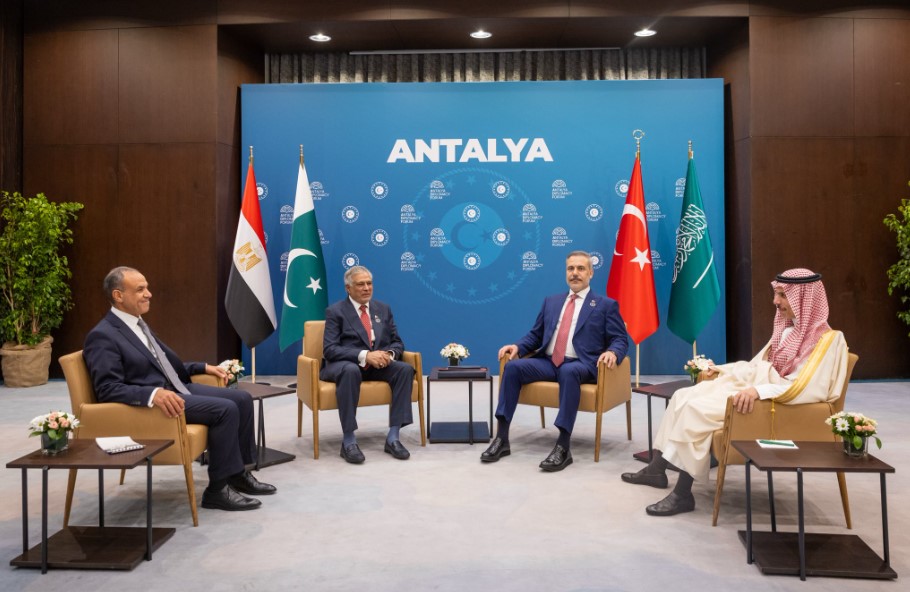
“At this stage, the MoU is non-binding until a final and formal agreement is signed. However, the issue is not in the deal but in the implementation and monitoring mechanisms,” Faisal Alhamad, a Saudi military and strategic expert, said.
Alhamad highlighted six steps the quartet can take to ensure the full implementation of the deal.
- Establishing a consultative mechanism to monitor violations.
- Supporting confidence-building measures in the region.
- Developing channels of communications to avoid escalation.
- Creating a mechanism for data exchange and maritime coordination to support the freedom of navigation in the Gulf and the Red Sea.
- Participating, at the request of the relevant parties, in any mechanism to monitor compliance with security obligations.
- Supporting Pakistan’s mediation efforts.
Importantly, Alhamad said that the quartet must transform into a guarantor of regional stability, given that these four countries have successfully managed to avoid polarization.
Gaza Crisis and Stability in Palestine
Gaza remains one of the most pressing regional issues. The R-4 members, especially Saudi Arabia and Egypt, have been heavily involved in efforts to address the crisis.
The Kingdom has long advocated for the two-state solution and the establishment of an independent Palestinian state, leading a wave of international recognition of Palestinian statehood. Meanwhile, Egypt is a primary mediator and guarantor of the Gaza ceasefire agreement, hosting talks to advance the implementation of the US-brokered deal.
In this context, Alhamad detailed the role each R-4 country could play, based on its unique strengths, to impact the situation there:
- Saudi Arabia maintains expansive international relations as well as significant political weight, which it actively deploys to diplomatically champion the Palestinian cause as demonstrated by its leadership role in the New York Declaration on the Palestinian State and the two-state solution.
- Egypt – the most involved in this file – shares direct borders and controls key crossings into the Gaza. Crucially, Cairo has successfully thwarted Israel’s plans for the forced displacement of Gaza’s population.
- Türkiye maintains diverse, active communication channels with both sides of the conflict.
- Pakistan offers extensive military expertise in supporting humanitarian relief operations.
By aligning these efforts, the R-4 can act across a range of fields, including:
- Supporting the two-state solution through international diplomatic action and advancing efforts to reach this solution.
- Preventing forced displacement and pressuring Israel through the UN and other political blocs to stop the bloodshed in Gaza and the West Bank, and to prevent the confiscation of land for the settlement project.
- Establishing an international mechanism for humanitarian aid.
- Preparing for and supervising reconstruction projects, with the participation of blocs such as the European Union.
Preserving Sudan Territorial Integrity
Entering its fourth year, the war in Sudan has become what the UN labeled as “the world’s largest humanitarian and displacement crisis.” Saudi Arabia, Egypt and Türkiye have made extensive efforts to end the conflict and initiate a Sudanese-Sudanese dialogue to bring stability to the country and alleviate the suffering of its people.
Dr. Samir Ramzy, researcher in international relations and political science, noted that the R-4 members have several leverage points to influence the crisis in Sudan.
As members of several initiatives aimed at resolving the conflict, such as Neighboring Countries of Sudan Initiative, the Jeddah Declaration and the Quad, Saudi Arabia and Egypt have gained a deep understanding of the root causes of the conflict, including the core contradictions between the Sudanese factions.
Consequently, Riyadh and Cairo are well-positioned to launch a pragmatic diplomatic initiative to end the war while preserving Sudan’s sovereignty. Furthermore, because the R-4 members diplomatically back Sudan’s national state institutions, their stance is highly favorable for preventing further territorial fragmentation.
Ramzy added that Türkiye, in particular, maintains strategic military relations with the warring parties. Taken together, the R-4 members are uniquely situated to shape the trajectory of the crisis.
“By combining coordinated diplomatic efforts with targeted military leverage, they can help end the conflict in a manner that preserves Sudanese unity and fosters a sustainable peace,” Ramzy said.
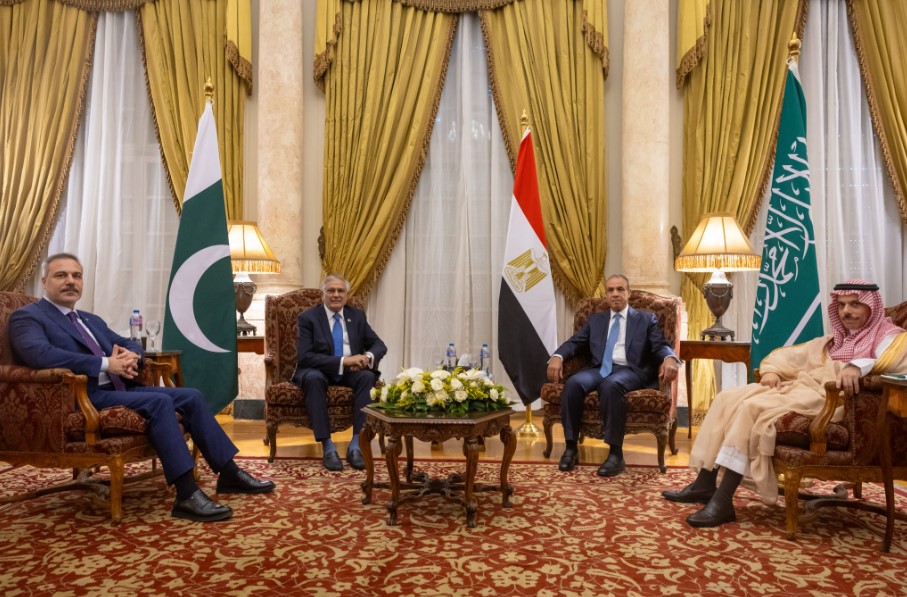
For Faisal Alhamad, the quartet members can distribute roles to encompass political mediation, backing Sudanese national institutions, delivering humanitarian assistance and reconstruction, in addition to aligning efforts with regional and international organizations.
Securing the Red Sea & Horn of Africa
This region has emerged as an area of international competition where several parties are involved. The situation was further complicated by Israel’s recognition of the breakaway Somaliland, posing a direct threat to the sovereignty of Somalia and the safety of maritime navigation in the Red Sea.
With respect to the Red Sea and Horn of Africa, Alhamad envisioned R-4 collaboration in establishing an information-sharing mechanism, conducting regular joint military exercises, and coordinating efforts to combat piracy and terrorism.
Alhamad also noted that this cooperation could involve participating in the protection of maritime trade routes and related infrastructure, jointly investing in logistics and port projects in the Red Sea and the Horn of Africa, and coordinating positions within international and regional organizations.
Bolstering Security
Meanwhile, Ahmed Adel Abdel-Aal, a military affairs analyst and doctoral researcher in strategic sciences at the Military Academy for Postgraduate and Strategic Studies, viewed the Red Sea as a promising avenue for cooperation between Saudi Arabia and Egypt, in terms of maritime security, the development of marine resources, and lucrative international tourism opportunities along their coasts.
He also added that promising prospects exist to position the Red Sea as an alternative to the Bab al-Mandab Strait via a land-sea connection, streamlining oil and general trade between Europe and Asia.
However, “cooperation in the Horn of Africa remains more limited across most sectors, except for regional security, particularly in countering terrorism,” Abdel-Aal noted.
Expanding on this geopolitical outlook, Ramzy highlighted the defensive and strategic consensus underpinning this cooperation. He pointed out that Egypt and Saudi Arabia maintain a consistent approach toward the Red Sea, firmly opposing the intervention of external powers in its security governance.
Building on this stance, the R-4 can coordinate efforts to defend this principle and counter any attempts to undermine it. “This involves deepening military and political coordination, resisting structural changes to the Red Sea status quo, and containing Ethiopian and Somaliland ambitions to secure access to the coast,” Ramzy said.