Finally, the United Nations Security Council on Monday passed a resolution calling for an immediate ceasefire in Gaza. This came after several negotiations over a period of five months, all of which failed. Finally, the United States, which was the only obstacle to the decision, agreed.
The vote came as a shock to Israel, which saw its decades-long American ally abstain from voting rather than veto the move, as it has consistently done over the years in its diplomatic support for the Jewish state.
Israel criticized the language of the resolution, saying it did not firmly link the ceasefire to the release of hostages held in Gaza. The resolution demands “an immediate ceasefire… and also demands the immediate and unconditional release of all hostages.” A failed resolution proposed by the United States last week called for a ceasefire directly linked to the release of the hostages.
While the United States says the latest resolution is non-binding, experts disagree on whether this is the case or not. They say that the key is in the language of the document.
Decision’s Impact on Ground
Israel responded to this decision by continuing its attacks on Gaza on Tuesday, ignoring the decision.
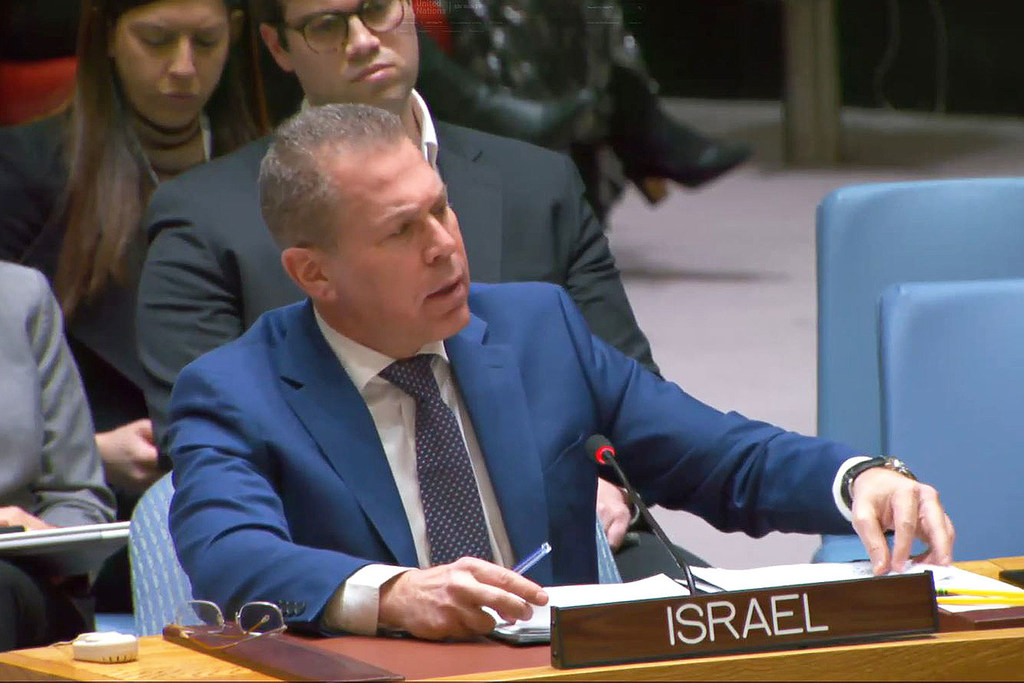
Israeli Ambassador to the United Nations Gilad Erdan criticized the Security Council for passing a measure that called for a ceasefire “without conditioning it on the release of the hostages.”
“It undermines the efforts to secure their release,” he said at the United Nations.
Foreign Minister Israel Katz meanwhile said on X that his country would not abide by the resolution.
“The state of Israel will not cease fire,” Katz said. “We will destroy Hamas and continue to fight until the last of the hostages returns home.”
Israeli Prime Minister Benjamin Netanyahu retaliated for the US abstention by canceling a scheduled trip to the US by two of his top advisers. Israeli national security adviser Tzachi Hanegbi and Ron Dermer, a member of the war cabinet, had been scheduled to travel to Washington Monday night to discuss alternatives to a planned Israeli offensive in the southern Gaza city of Rafah. The meeting had been requested by US President Joe Biden.
“On the ground right now… I think there is no immediate effect,” said Gabriela Shalev, a former Israeli ambassador to the UN and an emeritus professor at the Hebrew University’s faculty of law. “But of course it has a moral and a general effect.”
Is Resolution Binding on Israel?
After the resolution passed, US officials emphasized its non-binding nature, leaving the technical determination to international lawyers. China’s UN ambassador argued it was binding, citing Security Council resolutions as international law. The debate hinges on the resolution’s language, with ambiguity leading to varied interpretations regarding its classification under UN charter chapters.
Maya Ungar, an analyst at the International Crisis Group, notes that the US, following a narrow legal interpretation, contends the resolution lacks the term “decides” or reference to Chapter VII, making it non-binding. However, others argue that demanding action implies a Council decision. The disagreement stems from varying interpretations of the resolution’s language and the UN charter. Ungar suggests the US aims to balance criticism and support for Israel by asserting the resolution’s non-binding nature, potentially avoiding Israeli backlash while abstaining from a veto.
Yossi Mekelberg, an associate fellow at Chatham House, raises concerns over enforcement logistics should legal experts determine the resolution binding.
“The answer is no one,” Mekelberg told CNN, especially as the one country that can enforce the resolution – the US – was quick to announce that it is non-binding.
Will Decision Isolate Israel Globally?
Israel’s Western allies, especially the United States, have long shielded it from criticism at the United Nations. Their support was on full display shortly after the Hamas-led massacre on October 7.
But as the war in Gaza continues and the death toll there rises, that support has begun to wane, even from some of Israel’s most committed allies, leaving the United States as its only supporter at the United Nations for the past few months until the vote on Monday.
Shalev, the former Israeli ambassador, said that by abstaining, the US took a “middle way,” but one that shows the extent to which the White House is “very worried and concerned about what is happening.”
Biden administration officials have come to believe that Israel risks becoming an international pariah if the humanitarian crisis in Gaza worsens or persists for an extended period of time.
Vice President Kamala Harris said last weekend that the invasion would be a “mistake” and refused to rule out consequences for Israel should it go ahead.
Netanyahu’s decision to cancel official meetings in Washington in protest of the US’ abstention has left American officials perplexed. Kirby said the US was “very disappointed that they will not be coming” but insisted that the abstention was not a shift in US policy towards Israel.
“He is picking a fight with Washington, at the worst time that any Israeli prime minister can pick a fight with Washington,” Mekelberg said.
Shalev said Israel was facing “a very low point in our relations with the US,” noting that while tension exists on a governmental level, most of the people of Israel want ties to improve.
He added, “(This time) the United States wanted to confirm its point of view regarding the humanitarian aspects of Israel’s actions on the ground in Gaza, as well as regarding the unconditional release of all hostages.”
Related Topics :
Saudi Arabia Welcomes Security Council Gaza Ceasefire Resolution
Arab Ministers Meet to Discuss Ceasefire in Gaza
Arab-Islamic Ministerial Committee Object U.S Veto Blocking Calls for Gaza Ceasefire