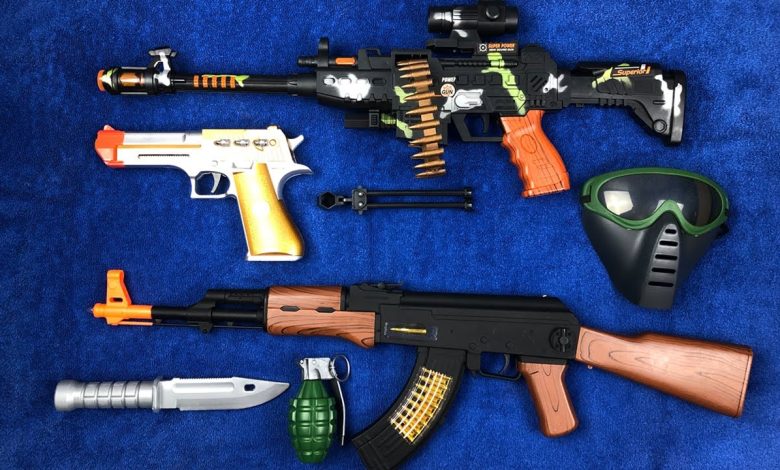
Saudi Arabia is tightening oversight of recreational weapons, with 12 government entities setting a unified regulatory framework for their import, storage, and transportation.
The new requirements define the approvals, permits, and documentation required to bring toy weapons and air rifles into the Kingdom, placing greater emphasis on safety, security, and accountability.
Who Gets the Green Light?
The new framework builds on a coordinated framework involving 12 government entities, extending regulatory oversight across security, commerce, industry, environmental protection, communications, media, and wildlife.
For individual and air rifles, the requirements begin with formal business credentials. Importers must secure a valid Ministry of Sports business license and commercial registration, then provide detailed information on the quantities to be released, product catalogs, port of entry, and storage facilities.
The application is then referred by the Ministry of Sports to the Public Security Directorate’s Weapons and Explosives Department, which reviews the request and issues the import permit.
Stricter Rules for Air Rifles
More significantly, the requirements become more specific for air rifles, with eligibility tied to both the applicant and the safeguards surrounding storage and monitoring.
Applicants must be at least 25, have no criminal record or security restrictions, and use a storage facility approved by Public Security.
They must also secure Civil Defense approval, submit an unconditional SR500,000 bank guarantee, and maintain an electronic system capable of tracking inventory, resources, and expenditures.
Antique firearms follow a different path. Applicants must be at least 22 years old, while each firearm must have been manufactured before 1900, with official documentation required to verify their age.
What Does Display Require?
As for fireworks, the framework combines importer eligibility with strict requirements for transportation, storage, and use.
Importers, therefore, must be Saudi nationals with no security restrictions and hold a valid commercial registration, while also providing insurance or a guarantee covering employees and third parties.
Dedicated trucks and warehouses are required, alongside an electronic inventory monitoring system.
Crucially, the rules also require approval from the General Directorate of Weapons and Explosives before the sale or use of fireworks for display purposes.
Controlled From Sale to Storage
According to security expert Maj. Gen. Misfer Al-Juaid, the guidelines set clearer standards for importing personal firearms and hunting weapons, while placing defined limits on their sale.
Speaking to Okaz, Al-Juaid noted that weapons and ammunition may only be sold during temporary events, reinforcing the framework’s focus on controlled and regulated use.
Al-Juaid also said that weapons and ammunition must be stored at locations approved by Public Security, while the sale of fireworks requires prior approval from the General Directorate of Weapons and Explosives.
Related Topics:
Localization Leap: Saudi Arabia’s Steady Strides Toward Defense Autonomy
Aerial, Naval Displays, Fireworks to Celebrate Saudi Arabia’s 95th National Day
Eid Al-Fitr 2025: Unparalleled Fireworks, Concerts, Food Festivities in Riyadh