The Jeddah Shop Where Muhammad Ali Became “Clay”
In the heart of Jeddah’s historic Al-Balad, a small family business still carries the memory of a remarkable visitor who walked through its doors more than five decades ago.
When a Legend Walked In
The year was 1972 when Muhammad Ali, a global boxing icon, made his way into Mohammed Ba Zaraah’s cafe, The Bird Shop, according to Arab News.
During this unexpected visit, Ali was offered a taste of sobia, a traditional Hijazi drink deeply rooted in the local culture.
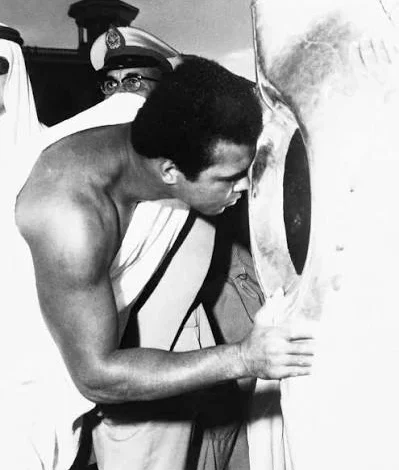
This meeting came during Ali’s first visit to Saudi Arabia, when the legendary boxer traveled to the Kingdom to perform Hajj.
What began as an unplanned brief stop at a neighborhood cafe would eventually become a memory passed down through the family, carrying with it a rare glimpse of old Jeddah and a fleeting encounter with one of the world’s most celebrated sporting figures.
Could a Brief Visit Last for Decades?
Najee was just 12 years old when the legendary boxer entered his father’s shop. This means that he did not witness the encounter himself.
He was also too young to understand that the weight of this brief visit and did not imagine that it would one day become part of the family’s history.
He learned about it from his father, who kept the story alive as the cafe remained with the family for more than five decades.

His father remembered Ali’s striking presence in simple but vivid terms: a towering man who arrived unexpectedly, with a warm and friendly smile.
The Sobia Moment
The presence of senior Saudi officials soon caught the attention of nearby residents, who realized that the small shop was hosting a very unusual visitor.
Inside the shop, Ba Zaraah greeted Ali with a gesture deeply rooted in Hijazi hospitality, offering him sobia.
Served cold, the traditional drink is commonly prepared with soaking barley, brown bread or oats in water and blending the mixture with sugar and aromatic spices, including cinnamon and cardamom.
What Was Ali’s Lasting Mark on the Shop?
Offering Ali a glass of sobia was, for Ba Zaraah, simply an act of traditional hospitality.
However, once the legendary boxer left the shop, the brief encounter became something worth remembering.
The neighborhood soon found its own way of commemorating the visit, with the father acquiring a new nickname. “The neighbors started calling my father ‘Clay’ after Muhammad Ali,” Najee said.
Born Cassius Marcellus Clay Jr., the boxer adopted the name Muhammad Ali after converting to Islam.
When Memory Became the Photograph
Ali’s 1972 pilgrimage to Makkah has been preserved in photographs, offering a visual record of his historic journey to the Kingdom.
But there is no image of the moment he stepped into Ba Zaraah’s cafe.
The small shop had no camera that day, and no one could have imagined that the unexpected encounter would one day become part of the family’s history.
Yet the memory endured through his father’s account and was survived through memory and the generations that followed.
A New Chapter for an Old Story
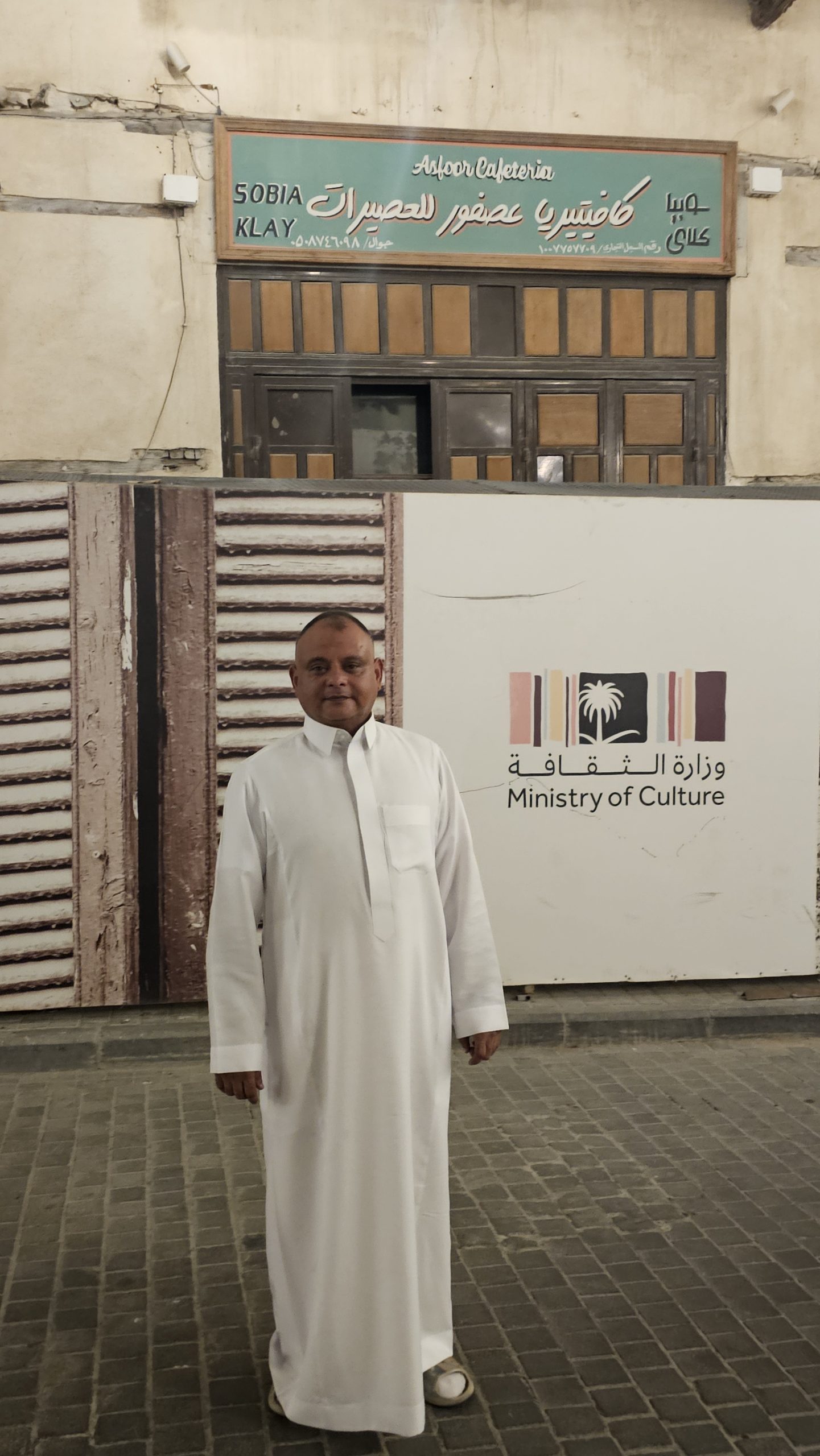
Today, the old cafe is still there in Al-Balad, where it is undergoing restoration as part of efforts to preserve and regenerate Jeddah’s Historic District.
For Najee, restoring the space means more than preserving a building. It offers an opportunity to ensure that his father’s story does not remain only a family memory. At the same time, he hopes to bring a new identity to the cafe, inspired by the visitor who once walked through its doors.
“I want to name it Clay Sobia,” he said, describing the name as a tribute to his father and to the unexpected encounter that connected their small Jeddah shop with one of the world’s sporting legends.
Related Topics:
Discover Al-Balad: A Saudi Treasure Trove in the Heart of Jeddah
Ramadan Season 2025: Jeddah Historic District Receives 1mn Visitors in First Week
Jeddah’s Historic District Splashes Green in Celebration of National Day