From Arabia to the World: How Early Islam Laid the Groundwork for Modern Global Trade
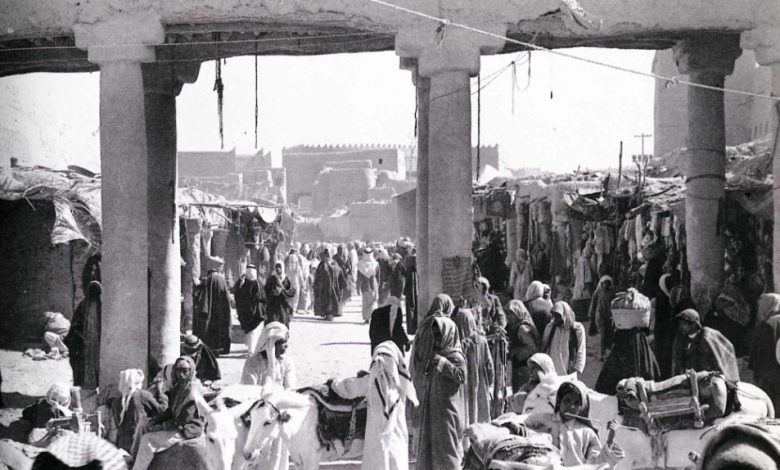
Centuries before modern banking systems emerged, a quiet economic upheaval was taking root in the trading centers of Makkah and Madinah.
While Western economists trace the rise of capitalism to Europe, global scholars are increasingly recognizing the 7th-century Arabian Peninsula as the true birthplace of key concepts of global trade.
Early Islam & Capitalism
In an episode of the Financial Times podcast “The Story of Money,” economist and author Benedikt Koehler shares an insightful view on the Prophet Muhammad (PBUH) as a merchant and a businessman before and after the divine revelation.
Benedikt Koehler is the author of “Early Islam and the Birth of Capitalism.” In his book, he argues that early Islamic trade practices sowed the seeds of capitalism in Europe, through increased interaction between Western and Muslim traders across the Mediterranean.
Furthermore, he details how these early market principles included robust protections for private property, written contract enforcement, and financial innovations like the Sakk – the predecessor of the modern check.
Prophet Muhammad: The Rise of Arabia’s Entrepreneur
Koehler takes us back to 595 CE in Makkah – a thriving regional trade hub at the time. The Prophet Muhammad (PBUH), an orphan descending from an elite family, followed in his family’s footsteps in caravan trading (transporting high-value goods from one part of the world to the other).
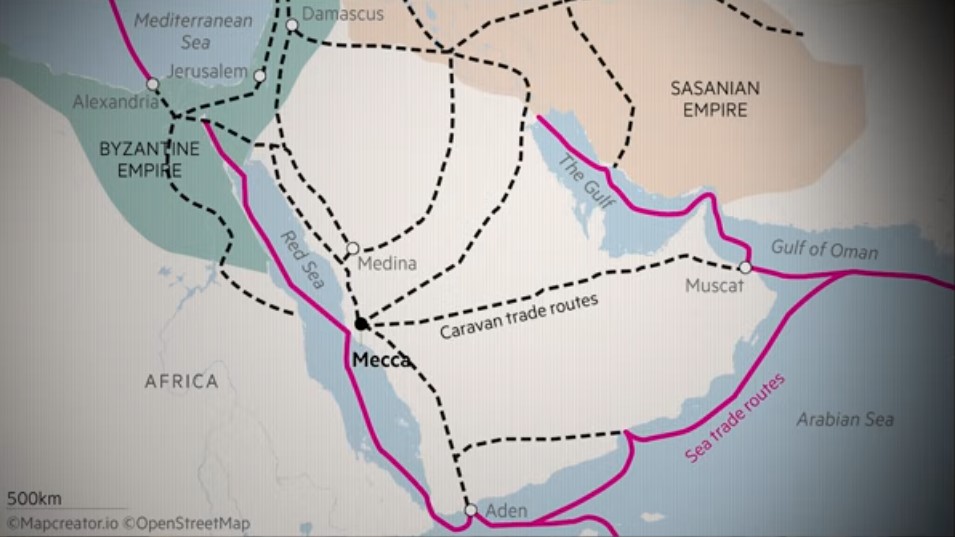
According to Koehler, the Prophet (PBUH) managed long-distance caravan trade across desert networks, mastering risk management and logistics. “It’s what you’d call vertical integration across the whole production of the economy of Makkah, which went on for several months until, on a specific date, they’d leave,” Koehler noted.
The podcast also touches upon the Prophet’s marriage to Khadija (RA) – a very wealthy businesswoman who provided financial and emotional support for her husband.
Islam’s Business Model
In the podcast, Koehler outlines several financial concepts introduced by Islam. While Islam prohibits lending at interest (Riba), it promotes equity investment and shared risk (Mudarabah).

According to Koehler, this business model later inspired the Venetian “Commenda,” the legal structure that powered the European Renaissance and modern private equity.
Madinah: An Early Free-Market Center
After the migration to Madinah, the Prophet Muhammad (PBUH) set a precedent with a series of distinct rules. He established a tax-free market, where he introduced price deregulation – a first in that time in the Middle East. Even in times of famine, the Prophet refused to cap prices, demonstrating an awareness of natural economic realities such as supply and demand. He also outlawed hoarding and manipulation.
Moreover, the free markets (a form of capitalism) were balanced by a formal social safety net, with the introduction of the mandatory wealth redistribution (Zakat) to protect vulnerable members of society. This system aims to achieve a balance between economic growth and community welfare, in what Koehler describes as a “very libertarian idea.”
Fair Trade Principles
According to Koehler, Islamic business model paid high regard to ethics throughout the supply chain and production process. Furthermore, Islam set rules against monopolies. To ensure compliance, a market supervisor (Muhtasib) was responsible for overseeing markets to enforce fair trading, prevent monopolies, and maintain transparency.
Additionally, one of the ideas that Europe adapted from the Islamic world is the charitable trust (Waqf). It provided a blueprint for modern non-profit trusts, corporate bodies, and early European university funding systems.