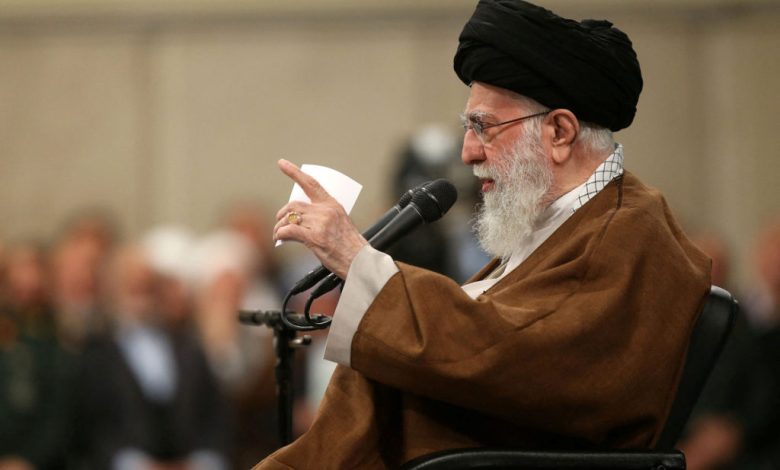
Iran’s Supreme Leader Ayatollah Ali Khamenei warned on Tuesday that Tehran possesses weapons capable of sinking US warships deployed to the Gulf, following the conclusion of Oman-mediated Geneva talks without breakthrough between the adversaries. Meanwhile, President Donald Trump intensified pressure on Iran to strike a comprehensive nuclear deal. Consequently, Washington strategically deployed two aircraft carriers near Iranian territorial waters this weekend.
Satellite imagery confirms the USS Abraham Lincoln, carrying nearly 80 aircraft, currently sits approximately 700 kilometers from Iran’s coastline. This strategic deployment effectively places dozens of advanced US F-35 and F-18 fighter jets within immediate striking distance. Additionally, Iran’s Revolutionary Guard launched extensive war games Monday in the strategic Strait of Hormuz. Tehran also announced temporary closures of this vital oil transit route for scheduled safety drills.
“We constantly hear that they have sent a warship towards Iran,” Khamenei declared during his televised speech. “A warship is certainly a dangerous weapon, but even more dangerous is the weapon capable of sinking it.” He further asserted that Trump would never succeed in destroying the Islamic Republic through military pressure.
Diplomatic Deadlock Persists
Trump previously warned of severe consequences if Tehran failed to strike a comprehensive deal quickly. “I don’t think they want the consequences of not making a deal,” he told assembled reporters. However, Iranian officials consistently insisted that comprehensive sanctions relief must anchor any final agreement firmly. Foreign ministry spokesman Esmail Baqaei emphasized this non-negotiable requirement during Tuesday’s official press briefings.
Iran sought limiting discussions strictly to its controversial nuclear program exclusively. Conversely, Washington pushed for significantly broader talks covering ballistic missiles and regional proxy forces. US Secretary of State Marco Rubio expressed cautious optimism despite the challenging diplomatic atmosphere surrounding negotiations. “We’re hopeful there’s a deal,” Rubio stated Monday to international media. “The president always prefers peaceful outcomes and negotiated outcomes to things.”
Iran’s top diplomat Abbas Araghchi shared similar sentiments on social media platform X recently. He arrived in “Geneva with real ideas to achieve a fair and equitable deal.” Nevertheless, he firmly rejected any diplomatic “submission before threats” from Washington officials directly. The foreign minister also met IAEA chief Rafael Grossi for technical nuclear discussions Monday.
Analysts recognize Iran currently faces an “existential dilemma” amid mounting international pressure. Ali Fathollah-Nejad from Berlin’s Centre for Middle East explained the complex strategic calculus. “Giving in to US demands could bring sanctions relief that it would desperately need to stabilise the regime and fund its repressive apparatus,” he noted. “However, any significant concessions on the nuclear, ballistic missile and regional proxies issues would sensitively undermine its ideological and military standing.”
Previous diplomacy collapsed after Israel’s surprise strikes triggered a brief 12-day conflict last year, with Washington briefly joining operations targeting Iranian nuclear sites during that dangerous escalation period. Now both sides carefully navigate renewed tensions while seeking potential common ground for future agreements.