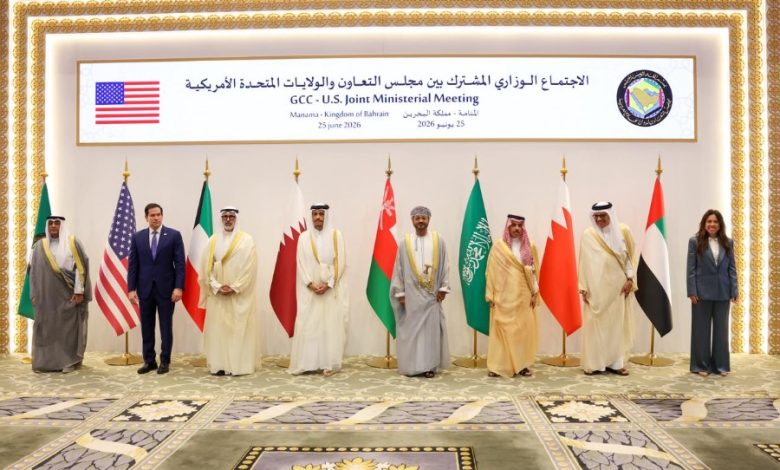
The foreign ministers of the Gulf Cooperation Council (GCC) and US Secretary of State Marco Rubio reaffirmed their shared commitment to strengthening regional security and stability and supporting de-escalation efforts.
Rubio took part in the GCC-US ministerial meeting on Thursday, concluding a Gulf tour featuring stops in the UAE, Kuwait and Bahrain, during which he reassured the US allies and partners that Washington will not take any decision that undermines their security.
GCC-US Discussions
The GCC-US Ministerial Meeting in Bahrain’s capital Manama reviewed the regional situation in light of the recently signed memorandum of understanding (MoU) between Washington and Tehran, exploring ways to enhance the region’s security and stability, as well as de-escalation and mediation efforts.
Moreover, the meeting discussed a number of regional issues and their security implications for the GCC countries and the region, in addition to efforts aimed at addressing them.
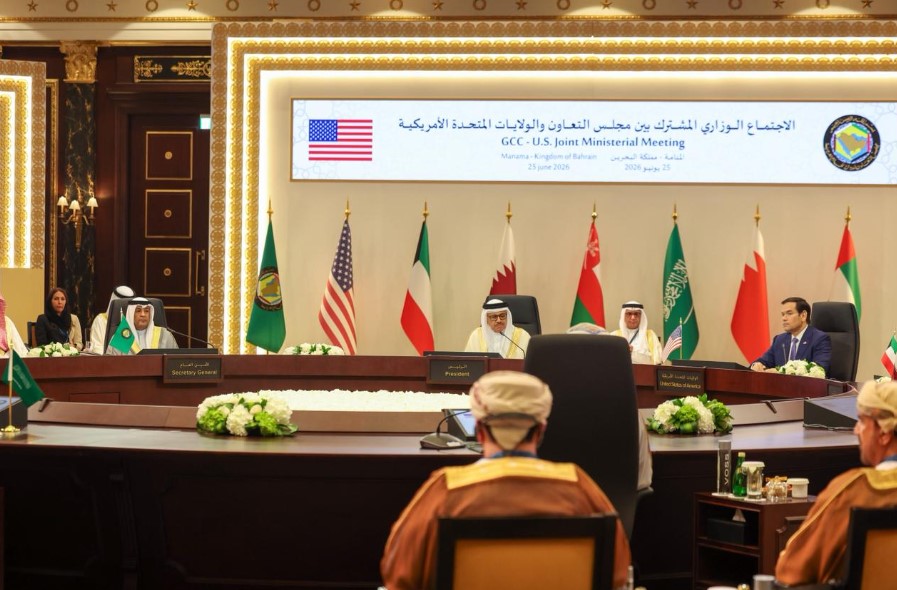
Bahrain’s Foreign Minister and President of the GCC Ministerial Council’s current session Abdullatif bin Rashid Al Zayani said that the meeting explored ways to expand cooperation across various sectors, including economy, technology and energy security.
The meeting also addressed key regional issues, including the recent developments in Syria, Lebanon and Gaza.
US-Iran Preliminary Deal
According to a statement by the GCC Secretary-General Jasem Albudaiwi, the participants emphasized that any future understandings or arrangements must integrate GCC security needs and protect regional interests.
These arrangements must respect state sovereignty, promote good neighborliness, and uphold international law without interference in internal affairs to reinforce long-term regional stability.
The recently signed US-Iran MoU halted the fighting, reopened the Strait of Hormuz and initiated a 60-day negotiation period to discuss disputed issues, with technical talks currently underway to secure a comprehensive agreement.
With regard to this, the GCC ministers welcomed all diplomatic efforts aimed at de-escalation and bolstering regional security and stability. They also voiced support for efforts made to ensure the security of maritime corridors, including the Strait of Hormuz, and freedom of navigation, the statement noted.
In his opening remarks, the Bahraini Foreign Minister stressed that lasting regional security “requires a definitive end to missile and drone attacks, ceasing support for militias, and halting interference in the sovereignty of our states.”
He added that any agreement must also ensure that the consequences of those attacks are addressed in line with UN Security Council Resolution 2817, which condemned Iran’s attacks against Gulf countries and Jordan.
US Commitment to Gulf Security
Rubio, for his part, assured Gulf allies that any deal with Iran will take their interests into account, reiterating the US position he earlier conveyed during his visit to the region.
“The message that I come with is that we want to ensure that any decisions that are made throughout this negotiating process, the interests of our partners and our allies in the region are always taken into account,” Rubio affirmed.
“There is no part of this deal that’s undertaken that in any way undermines the security, the stability, or the prosperity of any of our partners in the Gulf region,” he added.
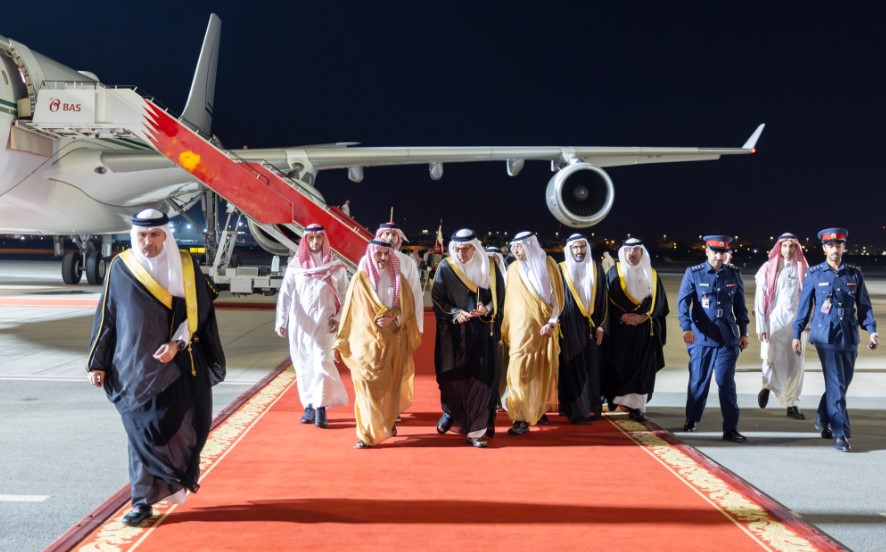
Stressing that partners and allies don’t undermine one another, Rubio said that Washington will make sure that none of the agreements that are made will in any way be counter to the interest of any of the GCC countries.
US Priorities
Speaking about the ongoing US talks with Iran, Rubio noted that Washington wants to secure a good deal. “We don’t want a deal at any price. We want a deal that’s good,” he said, adding that the US wants a deal that’s “verifiable” and” adhered to.”
“It is important that any agreements that are reached both in the process of negotiation and in the aftermath be adhered to and followed,” he explained.
Rubio made clear the US priorities in its talks with Iran. Regarding the Strait of Hormuz, the US Secretary of State voiced strong opposition to imposing tolls or fees on shipping.
He emphasized that international waterways do not belong to any nation-state, warning that any charges on the maritime corridor will spread across the world like a “contagion,” risking “total chaos.”
On Wednesday, Oman announced the establishment of a temporary toll-free maritime corridor for all vessels transiting the Strait of Hormuz, in coordination with the International Maritime Organization (IMO).
Oman, alongside Iran, will hold discussions with other Gulf littoral countries to “define the future administration and maritime services in the Strait of Hormuz,” according to the Omani Foreign Ministry.
As for the second priority for the US in its talks with Iran, Rubio noted that “Iran will never have a nuclear weapon” – a core demand in any future agreement.
“And so any deal that we enter into has to be one that guarantees that that’s not the case and that puts in place verifiable steps that can be taken,” Rubio said.