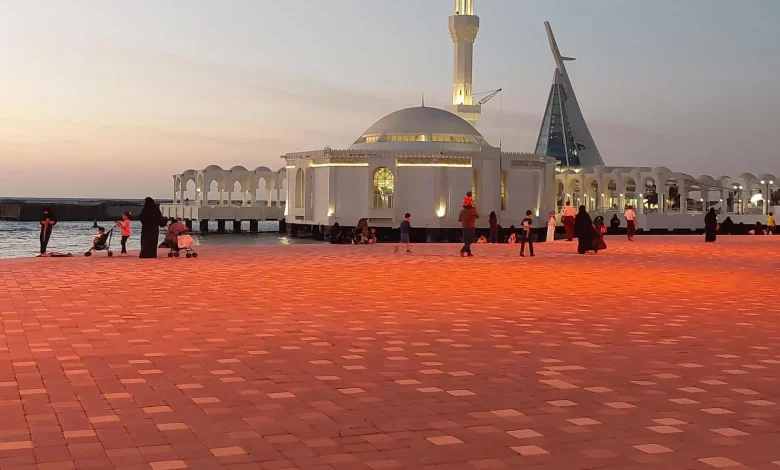
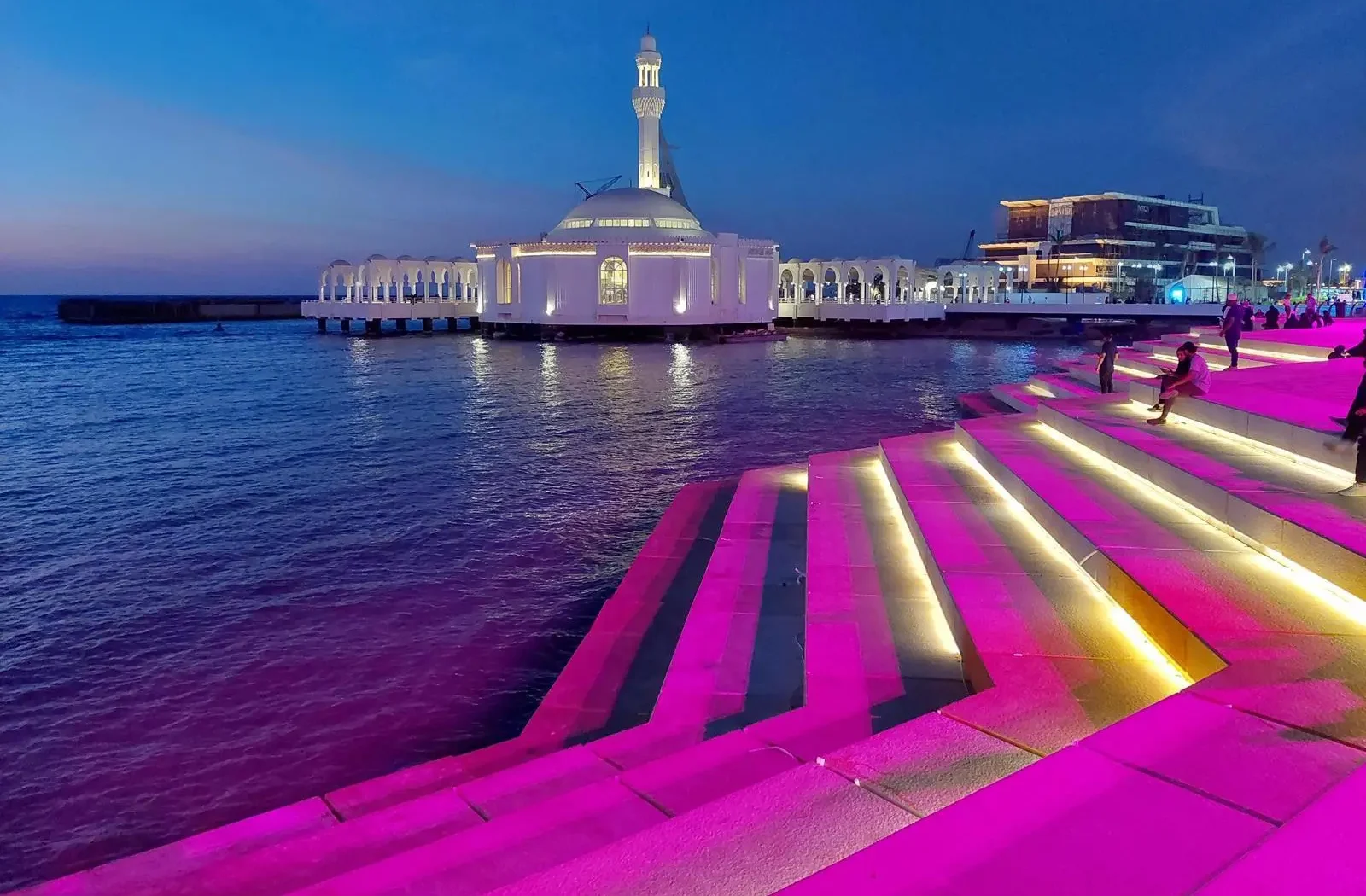
Set against the endless blue of the Red Sea, Al-Rahma Mosque stands out as one of Jeddah’s most striking waterfront scenes.
Rising above the water along the city’s northern coast, the mosque has earned its familiar nickname, the “Floating Mosque,” while emerging as a defining feature of the waterfront, bringing together architectural expression, striking setting, and spiritual significance.
A Defining Waterfront Landmark
Over the decades, the mosque has evolved into an unmistakable feature of the cityscape, helping define the city’s coastal visual identity through its outstanding presence.
More vividly, Al-Rahma Mosque’s architectural character features a seamless blend of Islamic traditions and contemporary design.
At its center, a prominent main dome anchors the structure, surrounded by graceful arches, smaller domes, and decorative details.
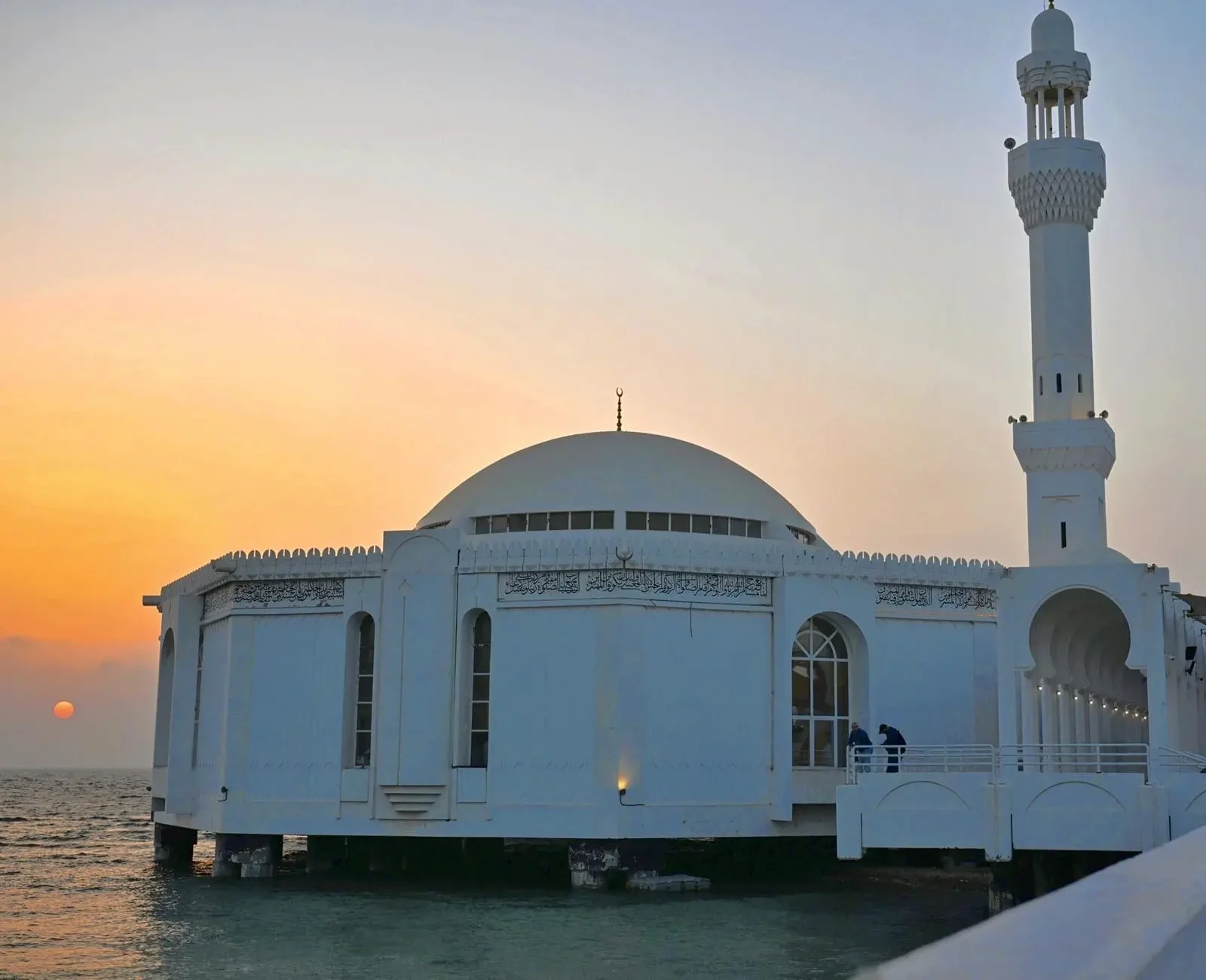
Rising alongside them, the slender minaret strengthens the building’s balanced composition, making the entire design appears to complement rather than compete with the vast seascape around it.
What Awaits Visitors Inside the Mosque?
Stepping inside, the mosque boasts a richly detailed prayer hall where traditional craftsmanship takes center stage.
Illuminated by natural light passing through detailed stained-glass windows, the hall draws attention to the Andalusian geometric tilework, custom carpet, as well as grand chandelier.
The hall’s visual richness is further complemented by a suspended wooden balcony, which provides a dedicated prayer area space for women while adding architectural depth to the mosque’s interior design.
When Is the Best Time to Visit?
The timing of a visit can shape the whole experience of Al-Rahma Mosque, especially for those seeking to capture its compelling relationship with the Red Sea.
Different times of day offer striking views of the landmark and its surrounding seascape.
- Golden Hour: Sunset is an ideal time for those hoping to capture captivating views of the mosque, as warm red and golden hues spread across the sky and illuminate its white domes against the Red Sea.
- High Tide: A high tide can dramatically enhance the mosque’s unique “floating” appearance, with the surrounding water solidifying the visual connection between the structure and the sea. Visitors are advised to check local tide forecasts when planning their visit.
- Sunrise: For a peaceful perspective of the mosque, arriving at dawn offers a quieter atmosphere. The soft morning light and calm waters create a serene setting, particularly for visitors seeking a more tranquil experience.
What Should International Visitors Know?
For international visitors, experiencing Al-Rahma Mosque goes beyond admiring its architecture and waterfront setting.
Since the mosque stands out as an active house of worship, visitors are expected to observe local religious customs and maintain a respectful atmosphere.

Dress with Respect: Modest attire is essential when visiting the mosque. Both men and women should ensure their shoulders and knees are covered, while tight-fitting clothes and beachwear are not appropriate within the mosque grounds.
Observe Head-Covering Customs: Women can explore the exterior courtyard without covering their heads. However, a hijab is required when entering the mosque’s interior, in keeping with the sanctity and religious character of the space.
Understand Access: Visitors can explore the mosque’s outdoor walkways, courtyards, and gardens, which offer opportunities to experience its architecture and waterfront setting. The indoor prayer hall, however, is reserved for Muslim prayers.
Preserve the Peaceful Atmosphere: Visitors are encouraged to respect the mosque’s tranquil setting, particularly during the five daily calls to prayer, or Adhan.
They should keep their phones on silent and avoid loud conversations to help preserve the serenity and reverence of the space.
How Can You Reach Al-Rahma Mosque?
Nestled along the northern stretch of the Jeddah Corniche in Al Shati District, Al-Rahma Mosque sits nearly 25 kilometers north of downtown Jeddah and around 20 kilometers south of Obhur Creek.
Through its waterfront location, the mosque offers visitors a unique opportunity to experience Jeddah’s coastal character along the way.
For a more convenient visit, travelers can pre-book a private driver, particularly during busy periods.
Parking areas near the mosque can become congested, especially on Fridays.
Arranging private transportation allows visitors to be dropped off near the pedestrian entrance and picked up afterward, making access to the waterfront landmark more seamless.
Related Topics:
Saudi Arabia Tourism Expansion: Red Sea Global Unveils Rosewood AMAALA
Bani Unaif Mosque in Madinah Highlights Ongoing Heritage Preservation Efforts
Discover the Untouched Beauty of Saudi Arabia’s Red Sea Islands