
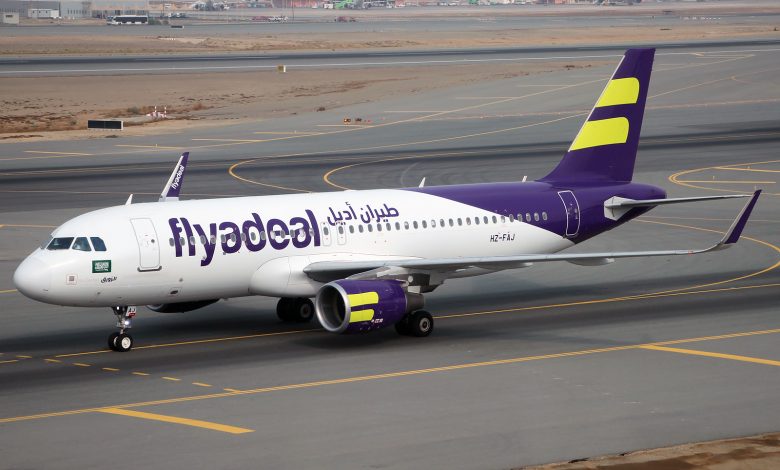
The growing air links between Saudi Arabia and Syria are gaining further momentum as flyadeal unveils a new direct connection between Madinah and Damascus.
A New Link to Madinah
The Saudi low-cost carrier has launched twice-weekly flights on the route, strengthening its presence in the Syrian market and offering another travel link between the two countries.
This new service builds on flyadeal’s existing Jeddah-Damascus connection, which operates three times a week, further expanding travel options for passengers moving between Saudi Arabia and Syria.
Connecting Madinah, home to the Prophet’s Mosque, with the Syrian capital also enriches the new service with a religious tourism dimension.
The direct flights are expected to make travel to the Holy City more accessible for passengers from Syria while strengthening air links between the two countries.
The expansion also supports Saudi Arabia’s broader tourism ambitions under Vision 2030, which targets attracting 150 million visitors annually by 2030, with improved international connectivity playing an important role in facilitating visitor access to the Kingdom.
What Makes the Connection Significant?
The Madinah-Damascus service will operate using flyadeal’s Airbus A320neo aircraft, with two weekly departures in each direction.
Flights from Madinah are scheduled for Sundays at 13:00 and Wednesdays at 12:40, arriving in Damascus at 15:05 and 14:45, respectively.
For the return journey, flights depart Damascus at 16:05 on Sundays and 15:55 on Wednesdays, reaching Madinah at 18:10 and 18:00, respectively.
Commenting on the significance of the new route, Lloyd Misquitta, acting chief commercial officer at flyadeal, emphasized the role of direct flights in facilitating access to Madinah, a city of deep religious significance for Muslims around the world.
Syria’s Economic Recovery Gains Momentum
The new air connection comes as Syria works to rebuild its economy after more than a decade of conflict, with international financial institutions stepping up their engagement and the authorities pursuing reforms to restore economic and financial stability.
In August, the International Monetary Fund (IMF) reported that the country’s recovery was gaining momentum, projecting double-digit economic growth in 2026.
However, it stressed the need to sustain progress through fiscal, banking, and structural reforms.
More tellingly, international support has also taken shape through reconstruction initiatives. In October, Syria and the World Bank Group agreed to establish the Syria Recovery and Reconstruction Trust Fund (START), aimed at supporting rebuilding efforts, attracting investment, and encouraging private-sector financing.
The country has also received $493 million in grants from the World Bank’s International Development Association (IDA), targeting key sectors including electricity, healthcare, water, education, public finances, and financial services.
Related Topics:
Flyadeal Expands Horizons: New Flights to Pakistan Starting February 2025
The Road to Recovery: How Saudi Arabia Powers Syria’s Long-Term Resilience
Gulf to Mediterranean Bridge: How Saudi-Syria Transport Deals Reshape Regional Trade