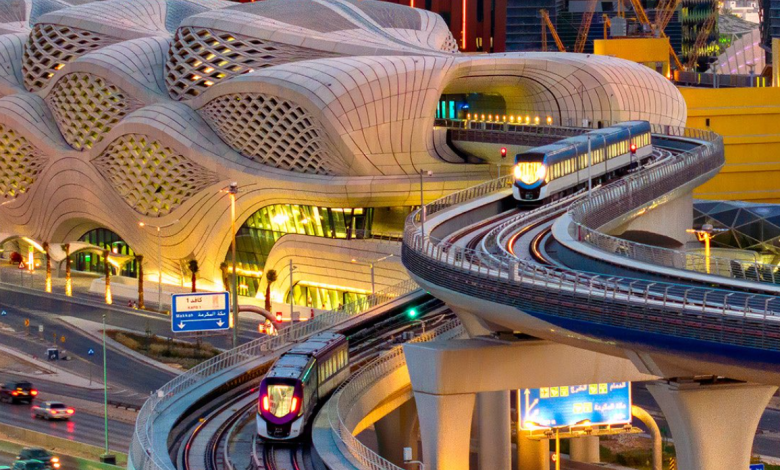
Riyadh metro and bus stations are bustling with passengers, demonstrating a major shift as more people ditch cars for public transportation.
This massive transformation aligns with Saudi Arabia’s efforts to advance a more sustainable transport network, in line with the objectives of Vision 2030. A surge in public transport network users, coupled with a significant expansion in the metro fleet, reflects Riyadh’s ongoing transformation from a car-centric metropolis into a world-class public transit capital.
The 500-Million Milestone
Driving the News: Speaking at a dialogue session titled “Reshaping Transport and Energy Technologies” at the 25th World Energy Congress 2026 in Riyadh, Saudi Deputy Minister of Transport and Logistics Dr. Rumaih Al-Rumaih announced a breakthrough in the number of passengers using Riyadh’s public transport network (including the metro and buses), with approximately 500 million users in less than two years.
The Big Picture: Al-Rumaih noted that this surge in demand for public transport reflects a significant shift in mobility patterns, highlighting the Kingdom’s active plans to expand public transport networks across various cities, with the goal of increasing reliance on electric transport and diversifying energy used in this sector, which uses a mix of electricity and conventional fuels.
Why It Matters: Under Vision 2030, Saudi Arabia targets net-zero emissions by 2060. To this end, the National Transport and Logistics Strategy aims to provide more sustainable public transport options across aviation, maritime, railway, road, and land transport and raise the public transport modal share across Saudi cities to 15% by 2030.
Riyadh Metro Expansion
State of Play: Riyadh Metro is one of the largest transportation networks in the world, including an extensive grid of 6 main lines spanning 176 kilometers and connecting 85 stations. It is complemented by a comprehensive bus network designed to connect the capital’s districts with business and commercial centers.
Between the Lines: The Royal Commission for Riyadh City (RCRC) signed contracts with Germany’s Siemens and France’s Alstom to purchase 94 new trains, as part of the first phase of Riyadh Metro’s expansion plans. The new trains will be delivered in batches starting from 2028.
By the Numbers:
- SAR 5.5 billion: The total value of the contracts.
- 60%: The increase in the Riyadh Metro network’s overall capacity after expansion.
- 277: The total number of Riyadh Metro trains after expansion.
- 300 million: Number of metro passengers since its launch.
- 25%: Increase in average metro use between January and September 2026, compared to the same period last year.
A Major Transport Boost
The Goal: The new expansion aims to increase capacity on the busiest lines, enhance the network’s readiness to accommodate future growth, and improve operational flexibility during peak hours.
Line-by-Line Breakdown:
- Red Line: From 154,000 to 370,000 passengers (142% increase).
- Yellow Line: From 133,000 to 288,000 passengers (116% increase).
- Blue Line: From 338,000 to 532,000 passengers (60% increase).
- Orange Line: From 187,000 to 237,000 passengers (27% increase).
- Purple Line: From 136,000 to 158,000 passengers (16% increase).
The Context: According to the RCRC, the Riyadh Metro network was originally designed to accommodate larger numbers of trains and gradually expand its capacity as usage grows.
Preparations for Mega-Events
Zoom In: Saudi Arabia will host Expo 2030 Riyadh and FIFA World Cup 2034 – two mega-events that are expected to draw millions of visitors to the capital. The metro network expansion is set to accommodate the growing demand for public transportation. It is also designed to keep pace with the continued development of residential, commercial and entertainment destinations across Riyadh.
What to Watch: Speaking at the 37th Government Press Conference, RCRC CEO Ibrahim Al-Sultan revealed progress in future network extensions and enhancing connectivity.
- Red Line Extension: Adding 5 new stations, connecting King Saud University, King Saud University Medical City, and Diriyah.
- Road Infrastructure Development Projects: Developing the Main and Ring Road Axes, covering around 700 km of roads and over 330 major intersections, in addition to constructing more than 300 bridges and 80 tunnels. Progress on the project linking Taif Road to Qiddiya reached 81%, while progress on the Second Southern Ring Road reached 45% and the two bridges parallel to Riyadh’s Suspension Bridge reached 42%. These projects go hand in hand with environmental and urban development initiatives, such as the Green Riyadh Program, which targets planting more than 4.5 million trees.
The Bottom Line: The growing public transport network underscores Riyadh’s commitment to sustainable urban mobility, by lowering the capital’s carbon footprint and supporting a greener city. Moreover, it reinforces Riyadh’s logistics readiness for hosting mega-events such as Expo 2030 and World Cup 2034.