The US and Iran will resume high-stakes nuclear negotiations this Thursday in Geneva, in a bid to avoid a military confrontation.
The announcement, confirmed by Omani officials on Sunday, comes as Tehran faces a narrowing window to submit its proposal against the backdrop of a significant US military buildup in the region.
Third Round in Geneva
Geneva will host the third round of indirect Omani-mediated negotiations between the US and Iran on Thursday, February 26, 2026, Oman’s Foreign Minister Badr Albusaidi confirmed.
“Pleased to confirm US-Iran negotiations are now set for Geneva this Thursday, with a positive push to go the extra mile towards finalizing the deal,” he posted on X.
Oman – a longtime mediator in US-Iran negotiations – hosted the first round of indirect talks and facilitated the second round in Geneva.
Draft Proposal
During the last round of talks, American officials demanded a “detailed proposal” from Tehran within two weeks. Addressing the “Board of Peace” on Thursday, US President Donald Trump demanded a “meaningful deal” within 10 days, threatening Iran of “bad things” if they failed to propose a new deal.

During an interview with CBS, Iranian Foreign Minister Abbas Araghchi said that Iran was working on a draft proposal that addresses the gaps in their positions, emphasizing it would be ready within days. He also pointed to a “good chance” for a diplomatic solution with the US regarding the nuclear issue.
Conditional Concessions
The Iranian President, Masoud Pezeshkian, signaled cautious optimism regarding the talks, while maintaining that Tehran is ready for any scenario.
“Recent negotiations involved the exchange of practical proposals and yielded encouraging signals. However, we continue to closely monitor U.S. actions and have made all necessary preparations for any potential scenario,” he posted on X.
Iran has signaled readiness to make concessions on its nuclear program in return for lifting economic sanctions and recognizing its right to peaceful uranium enrichment, Reuters reported citing a senior Iranian official.
These concessions involve shipping out half of its highly enriched uranium, diluting its remaining stockpiles, and joining a regional enrichment consortium, the official said.
Tehran has also offered to open its massive oil and gas sectors to US contractors, in an effort to settle the decades-long nuclear standoff.
“Within the economic package under negotiation, the US has also been offered opportunities for serious investment and tangible economic interests in Iran’s oil industry,” the official said.
Nuclear Ambitions
The US and its Western allies believe Iran is seeking to acquire nuclear weapons, despite Tehran maintaining its nuclear program is for peaceful purposes.
In June 2025, the US joined Israel in its 12-day war against Iran, bombing three key nuclear sites. However, Washington still believes Tehran has stockpiles of enriched uranium.
“They’ve been enriching well beyond the number that you need for civil nuclear. It’s up to 60% (fissile purity). They’re probably a week away from having industrial, industrial-grade bomb-making material, and that’s really dangerous,” US Envoy Steve Witkoff said during an interview with Fox News.
Military Pressure
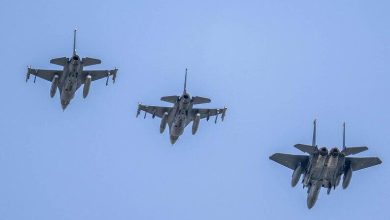
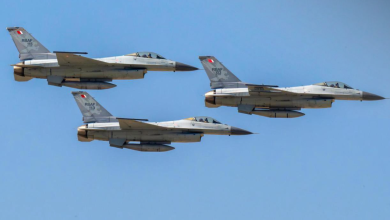
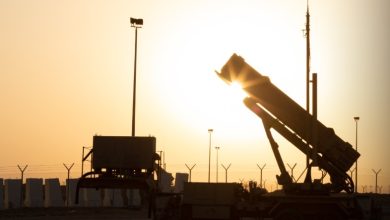
Amid escalating tensions, the US has deployed two aircraft carriers near Iran, alongside dozens of guided-missile destroyers, fighter squadrons, surveillance aircraft, additional refueling tankers and air defense systems.
Furthermore, more than 150 US military cargo flights have delivered weapons systems and ammunition to the region. Over the past 24 hours, the US sent another 50 fighter jets — F-35s, F-22s and F-16s – to the Middle East.
Last Friday, Trump said he was considering a limited military strike against Iran if negotiations failed. Meanwhile, media reports suggest the US is preparing for a large-scale, weeks-long military operation against Iran that could start within days.
In light of this, Witkoff said that Trump is questioning why Iran has not yet “capitulated” in the face of the US significant military buildup in the region.
“I don’t want to use the word ‘frustrated,’ because he understands he has plenty of alternatives, but he’s curious as to why they haven’t… I don’t want to use the word ‘capitulated,’ but why they haven’t capitulated,” Witkoff said.
“Why, under this pressure, with the amount of sea power and naval power over there, why haven’t they come to us and said, ‘We profess we don’t want a weapon, so here’s what we’re prepared to do’? And yet it’s sort of hard to get them to that place,” he added.