What’s Next For Post-Maduro Venezuela? FEEAL Founding Member Answers
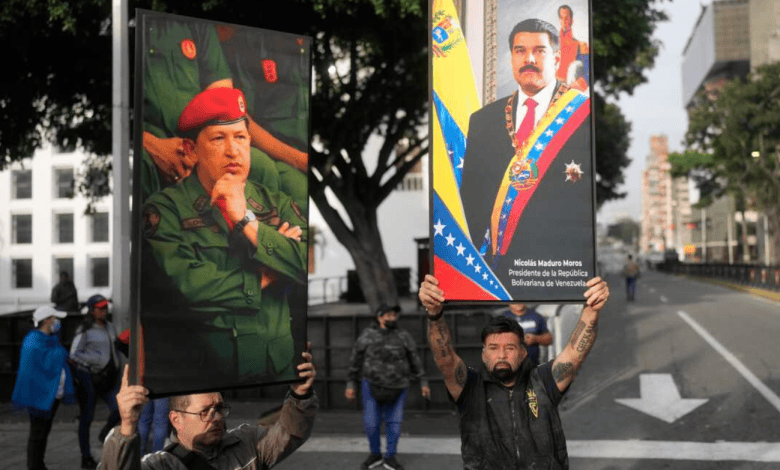
A series of dramatic events has shaken Venezuela over the past few days, as the US captured the country’s leader, Nicolas Maduro, transported him and his wife to New York to face charges related to drug trafficking and terrorism.
The American military operation, known as Operation Absolute Resolve, stirred strong reactions from US allies and adversaries alike, raising questions about the future of the Latin American country, the survival of the “Chavismo” political system and the US-Latin America ties.
Maduro’s Successor
Despite speculations that US President Donald Trump would choose the Venezuelan opposition leader, María Corina Machado, as a successor of Maduro, Trump said that Machado “doesn’t have the support within or the respect” to lead Venezuela and has repeatedly said that the US is in charge of the country.
Interestingly, Maduro’s vice president, Delcy Rodríguez, was sworn in Monday as Venezuela’s interim president in a parliamentary session. However, Trump insisted the US is running Venezuela, leaving many questions unanswered about who is actually in charge of the country and what is the future of its political system.
End of Chavismo?
The political system in Venezuela is based on Chavismo – a left-wing populist political ideology established by late Venezuelan President Hugo Chávez. It advocates social welfare programs, nationalization of industries, including the oil sector, and strong opposition to neoliberal economic policies.
Maduro succeeded Chávez as Venezuela’s President in 2013. But his capture by the US raises questions about the survival of Chavismo in the Latin American country.
In this context, Eliane Boutros, a political researcher and Founding Member of the Egypt–Latin America Businessmen Foundation (FEEAL), said that the current political landscape in Venezuela reflects a clear model of what can be described as “coerced negotiation.”
This has imposed a “new political equation and placed the Venezuelan state before a highly sensitive test regarding the concepts of sovereignty and institutional stability,” she said.
“However, field and institutional indicators do not suggest a total collapse of the regime despite the absence of President Nicolás Maduro. Instead, there is an organized effort to rearrange decision-making centers within the framework of ‘Chavismo continuity,’” Boutros told Leaders MENA.
She added that the inauguration of Rodríguez as interim president, with a direct support from the military establishment and the supreme Court, can be interpreted as a “commitment to preventing state collapse and adhering to legal paths that ensure a minimum level of stability and prevent a political vacuum, rather than a mere superficial reproduction of power.”
As a close observer of Venezuelan affairs, Boutros noted that the resilience of both the popular forces and the military establishment has been evident, even under the harshest economic and humanitarian conditions. “The poor and those most affected by economic crises have consistently rallied around the state, bearing immense burdens without severing their connection to the concept of the national state or the legitimacy of its institutions,” she noted.
Ruling Out Opposition
The Trump administration’s reluctance to push the opposition to the forefront carries significant political weight, according to Boutros. “It reflects Washington’s lack of confidence in the opposition’s ability to exert control on the ground or manage internal realities,” she said.
“This approach suggests that the US prefers dealing with the entity that holds actual influence and can guarantee a minimum level of stability, rather than gambling on a fragile political alternative lacking executive capacity and field impact,” she explained.
Dangerous Challenge
The country’s politico-military cohesion faces a challenge no less dangerous than external pressure, which is “subsistence resilience,” Boutros pointed out.
“The military establishment realizes that the gravest threat to internal stability is not direct US military action, but hunger, economic contraction, and the erosion of the ability to secure basic needs – especially as the US oil embargo takes full effect.
“Consequently, maintaining the loyalty of the army’s junior and mid-level ranks, who suffer from the same living pressures, has become an existential issue rather than a merely administrative one,” she added.

Boutros suggested that, in light of this reality, the Venezuelan military “will likely act with a high degree of discipline and political flexibility to protect people and preserve state integrity,” recognizing that negotiation is a “forced necessity to minimize losses, secure basic living stability, and prevent a slide into chaos or total collapse.”
US Strategy in Venezuela
As Trump suggested that the US could cooperate with Rodríguez if she takes the right decisions, Boutros explained that the US strategy appears closer to a “decapitation” option rather than the full dismantling of the state structure.
“This opens the door for a conditional politico-economic settlement based on the survival of Chavismo in power in exchange for core concessions. While this negotiation process is fraught with pressure and coercion, its success remains contingent on the state and military’s ability to endure economic hardship as effectively as they have endured political and military challenges,” she said.
Implications for Latin America
Most Latin American countries have voiced strong rejection of the US operation in Venezuela and the capture of Maduro. In light of this, Boutros told Leaders MENA that this operation has caused sharp division across the continent and revived memories of historical US interventions in Latin America, negatively impacting political trust and regional security.
“On a regional level, key nations such as Brazil, Mexico, and Colombia – despite their diverging stances on the Maduro government – have voiced deep concern over what they consider a ‘violation of national sovereignty’ and a direct threat to regional security.
“This position reflects a growing fear that these events could set a repeatable precedent for dealing with states that do not align with US interests,” she said.
“Furthermore, the operation has pushed the continent back into a state of ‘ideological polarization,’ with one camp viewing Washington as an ‘international policeman’ enforcing the law, and the other viewing it as a ‘colonial power’ interfering in domestic affairs,” Boutros noted.
“This polarization is expected to weaken regional cooperation on migration, security, and development, while deepening the rift between the Left and the Right – a trajectory that threatens to undermine any project aimed at building a unified Latin American front,” she explained.
Boutros pointed to the broader implications of this development. “The Venezuelan crisis reveals that opening the door to foreign intervention – regardless of the justifications – leads to the weakening of state prestige and the national image. It leaves populations vulnerable to political and economic pressures that may escalate to ‘pressure in exchange for food and medicine.’
“Overcoming such crises requires building internal cohesion, diversifying the production base, and avoiding the ‘oil dependency trap’ to achieve the self-sufficiency that enables states to endure in a world that has little room for the weak,” she said.