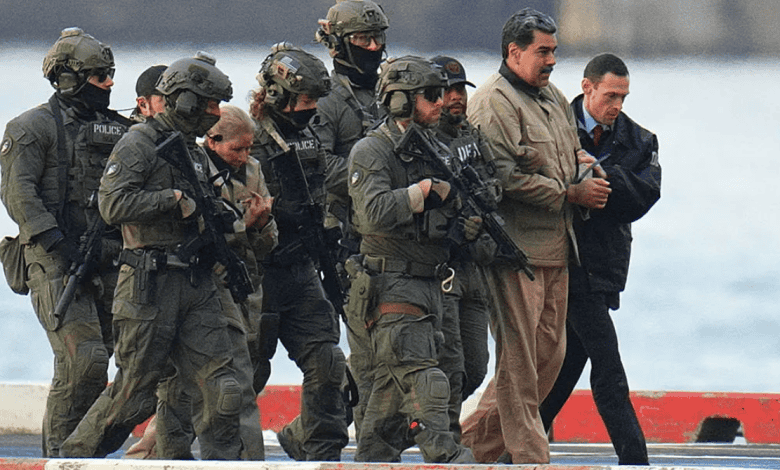
The US has faced strong denunciation at the UN Security Council (UNSC) from allies and adversaries alike regarding its military operation in Venezuela and capture of President, Nicolas Maduro.
Meanwhile, Maduro and his wife made their first appearance before a New York court hours before Venezuela inaugurated an interim president.
UNSC Meeting
In an operation dubbed Absolute Resolve, American troops captured Maduro and his wife Cilia Flores de Maduro on January 3, 2026, to stand trial in the US where they are facing charges of narco-terrorism.
The US operation faces doubts regarding its legality, as many legal experts suggested it violated international law and was in breach of the UN Charter. Moreover, the UN voiced deep alarm over the “potential worrying implications for the region.”
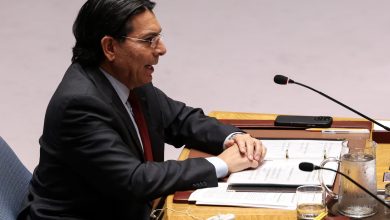
In light of this, the UN Security Council (UNSC) held an emergency session on Monday to discuss the situation in Venezuela, during which the US faced sharp criticism for committing a “crime of aggression” against the Latin American country.

Venezuela’s Ambassador, Samuel Moncada, said the US targeted his country with an “illegitimate armed attack lacking any legal justification.”
“No state can set itself up as a judge, party and executor of the world order … Venezuela is the victim of this attack because of its natural resources,” he added.
Similarly, several countries condemned the US operation in Venezuela, including Brazil, China, Colombia, Cuba, Eritrea, Mexico, Russia, South Africa and Spain.
On the other hand, the US Ambassador to the UN, Mike Waltz, justified the attack as a legitimate “law enforcement operation,” describing Maduro as an “illegitimate so-called president” and a “fugitive from justice.”
The US operation got backing from Argentina and Paraguay.
Maduro Court Appearance
On Monday, Maduro and his wife appeared before the court in New York, pleading not guilty to four charges, including narco-terrorism conspiracy, cocaine importation conspiracy, possession of machine guns and destructive devices and conspiracy to possess machine guns and destructive devices, according to BBC.
At the court, Maduro insisted he is the president of Venezuela. “I am, sir, Nicolás Maduro. I am president of the Republic of Venezuela and I am here kidnapped since January 3rd,” Maduro told the court through an interpreter. He added: “I was captured at my home in Caracas, Venezuela.”
The couple did not seek bail during the proceedings, but can do so at a later date. They will remain in custody until the next court hearing on March 17.
Interim President
After Venezuela’s Supreme Court rule, Maduro’s vice president Delcy Rodríguez was sworn in Monday as Venezuela’s interim president in a parliamentary session, telling the National Assembly that she did that “with pain” resulting from the “illegitimate military aggression.”
However, the US President, Donald Trump, has repeatedly insisted he will run Venezuela for a transitional period and tap its oil reserves, warning Rodríguez she could “pay a very big price, probably bigger than Maduro” if she “doesn’t do what’s right.”
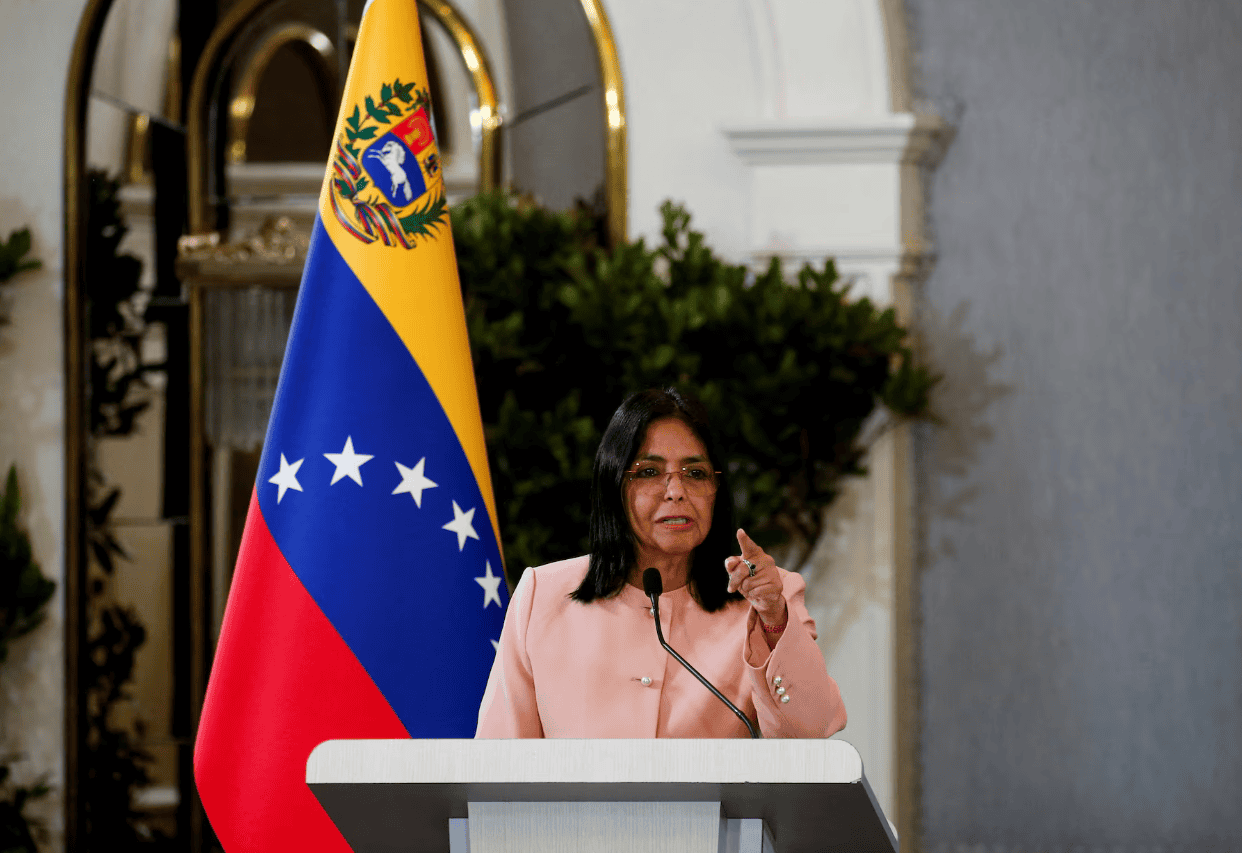
In an apparent reconciliatory tone, Rodríguez indicated an openness to cooperation with the US. “We invite the US government to collaborate with us on an agenda of cooperation oriented towards shared development within the framework of international law to strengthen lasting community coexistence,” she said.
Who Runs Venezuela?
In an interview with NBC News on Monday, after Rodríguez inauguration, Trump insisted that the US is running Venezuela, leaving many questions unanswered about who is actually in charge of the country.
He said that the US is not at war with Venezuela, adding that a group of US officials — including Secretary of State Marco Rubio, Defense Secretary Pete Hegseth, deputy White House chief of staff Stephen Miller and Vice President JD Vance — are overseeing America’s involvement in Venezuela.
But, when asked about who is ultimately in charge, Trump answered: “Me.”
Furthermore, he suggested that the transitional period in Venezuela will take more than a month. “We have to fix the country first. You can’t have an election. There’s no way the people could even vote. No, it’s going to take a period of time. We have — we have to nurse the country back to health,” Trump said on the possibility of holding elections next month.