Iran announced on Tuesday that it will not hold direct meetings with senior US envoys who arrived in the region following recent hostilities, casting fresh doubt on prospects for a lasting peace agreement between the two nations.
Iranian officials also said both sides must first resolve outstanding terms of the ceasefire they signed two weeks ago before addressing more contentious issues, including possible limits on Tehran’s nuclear program.
Consequently, these developments reveal that Iran and the US remain far apart on core elements of their initial framework, which requires Iran to ease restrictions on the Strait of Hormuz in exchange for financial incentives and sets up a 60-day negotiation window for a permanent deal.
Talks Proceed Through Mediators
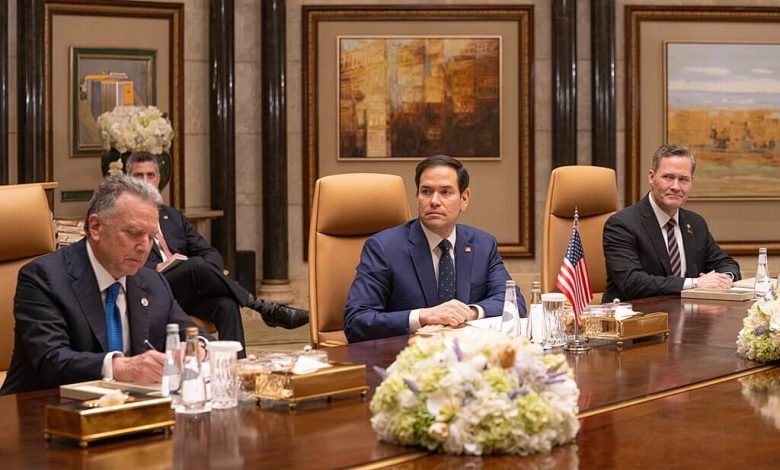
US President Donald Trump’s son-in-law Jared Kushner and envoy Steve Witkoff traveled to Doha for what the White House termed “high level” talks. However, Iran and host nation Qatar confirmed they would engage with mediators rather than meet Iranian officials directly.
Qatar’s government said Prime Minister Sheikh Mohammed bin Abdulrahman al-Thani joined the discussions with Witkoff and Kushner. Meanwhile, Iranian Foreign Ministry spokesperson Esmaeil Baghaei stated, “No meeting at any level with the American side has been scheduled for the coming days.”
Still, the two countries plan to begin lower-level technical talks soon, according to Majed al-Ansari, spokesperson for Qatar’s foreign ministry.
Seeking to break the deadlock, Trump reportedly discussed resuming full-scale military action with Defense Secretary Pete Hegseth and Joint Chiefs Chairman General Dan Caine, the Wall Street Journal reported, citing US sources. Reuters could not independently verify this account. Nevertheless, Trump has so far chosen to give diplomacy more time, the report added.
Dispute Grows Over Hormuz Tolls
Shipping has partially resumed through the strait, which handled one-fifth of global oil and liquefied natural gas before war erupted on 28 February. However, Iranian officials insist they share authority over the waterway with Oman and intend to impose tolls once the 60-day period ends in mid-August.
Iran’s top negotiator, Mohammed Baqer Qalibaf, declared on state television, “The sovereignty of the Strait of Hormuz lies with Iran and Oman, and traffic in the Strait is subject to arrangements determined by Iran.”
Conversely, US Vice President JD Vance rejected this stance, telling The Michael Knowles Show, “This is not going to end in a place where the Iranians are collecting tolls on ships going through the Strait of Hormuz.” He added that oil flows through the strait have already returned to pre-war levels, and in some cases exceeded them.
Despite the uncertainty, oil prices have fallen since the weekend, when the US struck Iranian military facilities following drone attacks on commercial vessels and Iranian strikes on US bases in Kuwait and Bahrain. Even so, the UN trade agency warned that vulnerable economies could still face rising food and fuel costs.