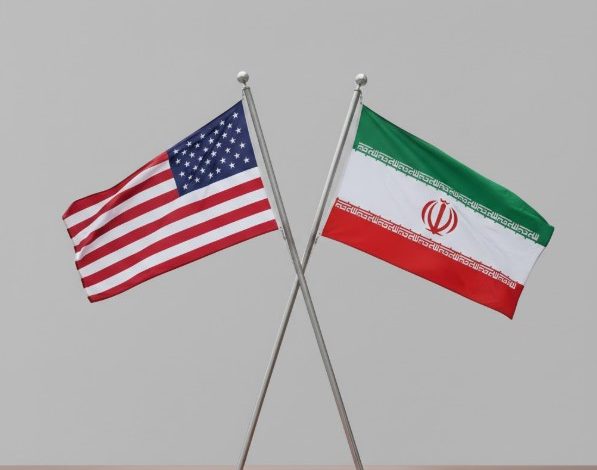
The US and Iran are resuming their indirect talks in Geneva in their latest attempt to resolve the longstanding nuclear issue and avert a military action against Iran.
In addition to the nuclear program, the US has been pushing to include Iran’s missile capabilities and support for regional proxies in the talks amid firm rejection from Tehran.
US-Iran Nuclear Talks
Iranian Foreign Minister Abbas Araghchi is holding indirect negotiations with US Special Envoy Steve Witkoff on Thursday in Geneva. US President Donald Trump’s son-in-law, Jared Kushner, is expected to join Witkoff, a US official told Reuters.
Discussions will focus on halting Iran’s uranium enrichment and reducing its production of long-range missiles, reported the Associated Press (AP).
Iranian Proposal
On Wednesday, Araghchi met with his Omani counterpart Badr Albusaidi in Geneva. During their meeting, they “reviewed the views and proposals that the Iranian side will present to reach an agreement on the Iranian nuclear program, based on the guiding principles agreed upon in the previous round of negotiations,” the state-run Oman News Agency reported.
Albusaidi is “expected to meet with the American negotiating team this morning to convey the Iranian perspective and, in turn, listen to the ideas and proposals put forward by the American side,” the agency added.
Oman has long served as a mediator in the talks between the US and Iran, hosting the two previous rounds of negotiations.
Araghchi was preparing a draft proposal to bridge the gaps between the two sides and was supposed to present it during the talks. Iran’s state media outlet IRNA reported that is designed to measure the US “seriousness.”
“Rejecting it would amount to confirming the initial suspicion that the United States is not genuinely committed to diplomacy and that its diplomatic posture is merely a game,” the news agency said.
Uranium Enrichment
Trump eyes a deal that constrain Iran’s nuclear program, insisting he will not allow Tehran to have a nuclear weapon. The US has amassed a significant military buildup in the Middle East, with Trump warning Iran of “really bad things” if a deal is not reached.
The US Vice President, JD Vance, echoed a similar tone on Wednesday. “Iran can’t have a nuclear weapon. That would be the ultimate military objective, if that’s the route that (Trump) chose,” he said during an interview with Fox News.
Similarly, US State Secretary Marco Rubio said that Iran is seeking to “rebuild elements” of its nuclear program. He added that while Tehran is not enriching uranium right now, “they’re trying to get to the point where they ultimately can.”
However, Tehran maintains it has the right to enrich uranium, stressing it does not seek to acquire nuclear weapons. The Iranian President Masoud Pezeshkian said on Thursday that Supreme Leader Ali Khamenei has banned weapons of mass destruction, which “clearly means Tehran won’t develop nuclear weapons.”
Moreover, Araghchi reaffirmed that Iran would “under no circumstances ever develop a nuclear weapon.” Meanwhile, he emphasized his country’s “right to harness the dividends of peaceful nuclear technology for our people.”
The Missile Issue
Iran’s ballistic missiles remain one of the most sticking points in the ongoing talks. Tehran firmly rejects discussing its missile capabilities, while the US insists on including them in negotiations.
In light of this, Rubio warned that Iran’s refusal to discuss the missile issue was a big problem. “I would say that the Iranian insistence on not discussing ballistic missiles is a big, big problem,” he said on Wednesday.
Furthermore, Rubio said that Iran possesses ballistic missiles that can target US assets and allies in the region, in addition to “naval assets that threaten shipping and try to threaten the US.”
However, he stressed that Trump prefers “diplomatic solutions,” hoping that the talks will include “conversations about more than just a nuclear program.”
During his State of the Union address on Tuesday, Trump claimed that Iran is developing long-range missiles that can reach the US territory.
Iran, for its part, has repeatedly stressed that its missile program are not up for negotiations, rejecting US claims about its missile capabilities.
In an interview with India Today, Araghchi said that Trump was a “victim of fake news” over Iran’s missile capabilities, noting that Iran’s missiles are “defensive in nature.”