Syria and Israel have reached a ceasefire agreement, according to an announcement by the US Special Envoy for Syria, Tom Barrack.
This followed days of fierce clashes between armed groups, Bedouins and government forces in the southern Druze-majority province of Sweida, which prompted Israel to intervene under the pretext of protecting the Druze community.
Ceasefire Announcement
Early on Saturday, Barrack, who is also the US Ambassador to Türkiye, announced a new agreement between the Syrian government and Israel, although he did not share the agreement’s details.
“Israeli Prime Minister (Benjamin) Netanyahu and Syrian President Ahmed al-Sharaa, supported by the USA State Secretary Marco Rubio, have agreed to a ceasefire embraced by Türkiye, Jordan and its neighbors,” he said in a statement on X.
“We call upon Druze, Bedouins, and Sunnis to put down their weapons and together with other minorities build a new and united Syrian identity in peace and prosperity with its neighbors,” the statement added.
However, there has been no official confirmation from Syria or Israel on the announced ceasefire agreement.
Sweida Clashes
On Sunday, clashes broke out between Druze armed groups and local Bedouin tribes in Sweida province. The Syrian government sent forces to restore order, but they were engaged in fighting with the Druze armed groups.
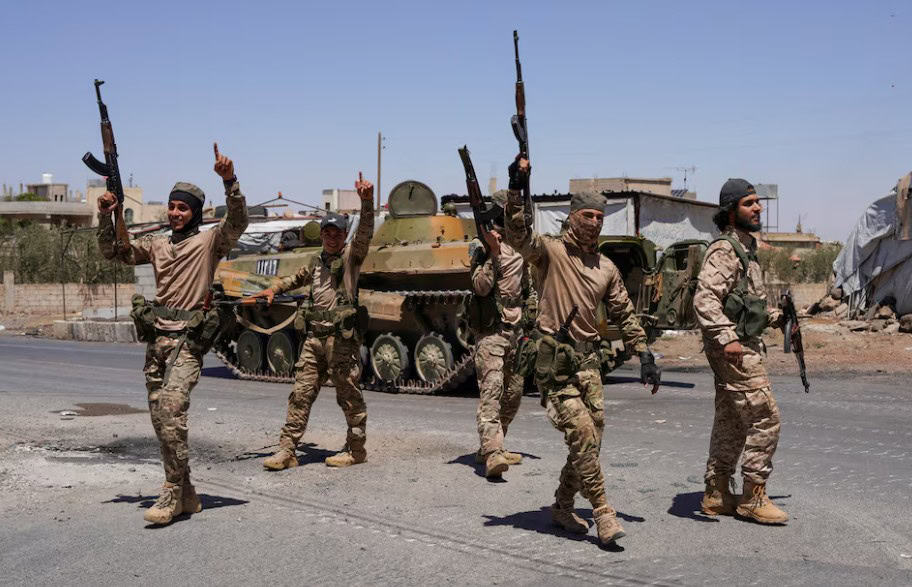
After two days of brutal fighting, the Syrian government announced a ceasefire agreement with the Druze on Tuesday. But it shortly broke down as both sides accused each other of violating the agreement.
Israeli Intervention
In response to the ongoing clashes, Israel intervened under the pretext of shielding the Druze community, which constitutes a loyal minority in Israel and often serves in its military.
On Tuesday, Israel launched airstrikes against Syrian government troops and convoys. It also struck the Syrian Defense Ministry headquarters and near the presidential palace in the heart of Damascus on Wednesday.
Furthermore, Israel warned the Syrian government to withdraw its troops from Sweida or face a tougher response. “The (Israeli military) will continue to attack regime forces until they withdraw from the area — and will also soon raise the bar of responses against the regime if the message is not understood,” the Israeli Defense Minister, Israel Katz, said.
Attempts to Restore Calm
Clashes in Sweida killed hundreds of people and displaced tens of thousands. The Syrian Network for Human Rights put the number of deaths at 321 since Sunday, including medical staff, women and children, according to Reuters.
On Wednesday, the Syrian government announced a new ceasefire agreement with the Druze leaders to quell the fighting and restore calm. Under the ceasefire agreement, the government forces would withdraw and the Druze leaders were to manage Sweida’s internal security.
Moreover, the truce’s terms included the immediate cessation of all military operations in Sweida and the formation of a monitoring committee of government representatives and Druze leaders to oversee the ceasefire implementation, according to SANA.
The terms also involved the agreement on a mechanism to regulate heavy weapons, in cooperation with the Ministries of Interior and Defense, and the full integration of Sweida province into the Syrian State.
Renewed Clashes
Despite Al-Sharaa‘s pledge to protect the Druze, prioritizing the interests of the Syrian people over clashes and destruction, clashes renewed by late Thursday between the Druze and Bedouin groups in Sweida.

Following media reports of Druze attacks against Bedouin communities in Sweida, the Bedouin tribes mobilized their supporters from across Syria to join the fighting on Friday, further escalating the situation.
This led Syria’s Transition President to announce on Friday sending a “specialized force to break up clashes and resolve the conflict on the ground,” but the deployment was delayed, according to the Associated Press (AP).
Saudi Support for Syria’s Stability
Saudi Arabia is closely monitoring the developments in Syria, spearheading efforts to support the country’s stability and security. The Kingdom has also reiterated its steadfast support for Syria, rejecting any action that undermines its civil or social peace.
In the light of this, Riyadh expressed its confidence in the Syrian government measures to maintain security, stability and civil peace; preserve Syria’s sovereignty and security; and meet the aspirations of the Syrian people.
Moreover, Saudi Arabia strongly condemned Israel’s blatant aggressions on the Syrian territories and interference in its internal affairs under any pretext.
The Kingdom also led extensive diplomatic discussions with the foreign ministers of Arab countries, Türkiye and the US on the situation in Syria, aiming to form a unified position to support the Syrian government in rebuilding a unified, stable and secure Syria.
As a result, the top diplomats of Saudi Arabia, Egypt, the UAE, Jordan, Bahrain, Iraq, Oman, Qatar, Kuwait, Lebanon, and Türkiye issued a joint statement stressing their unwavering support for Syria and their categorical rejection of all forms of foreign intervention in its internal affairs.
They also called on the international community to support the Syrian government in the reconstruction process, urging the UN Security Council to ensure the full withdrawal of Israel from occupied Syrian territories and halt all Israeli hostilities against Syria.