
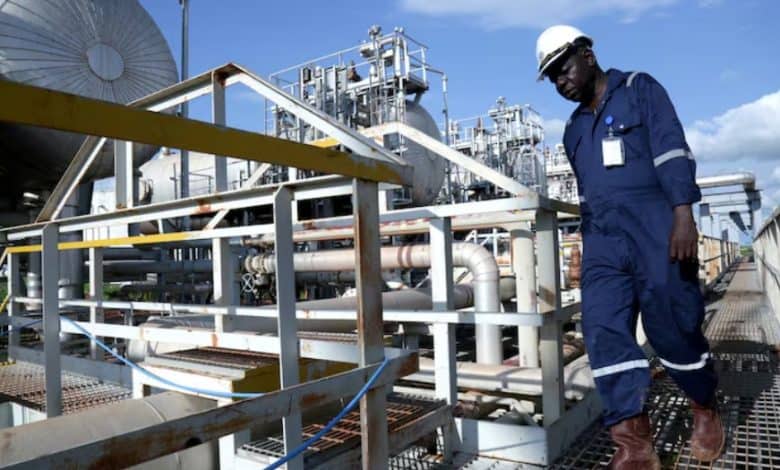
South Sudan’s army has been deployed to secure Heglig oilfield bordering the country, following a trilateral agreement between Juba and Sudan’s warring parties.
The Heglig oilfield has a significant strategic importance to South Sudan, as it hosts the main processing facility for Juba’s oil destined for export.
Trilateral Agreement
South Sudan People’s Defence Forces (SSPDF) Chief of Staff, Paul Nang, announced on Thursday that Juba has sent troops to secure the Heglig oilfield in neighboring Sudan, after the Rapid Support Forces (RSF) seized the strategic field.
Nang said that the deployment followed a tripartite agreement involving South Sudan’s President, Salva Kiir; Sudanese Armed Forces (SAF) Chief, General Abdel Fattah Al-Burhan; and RSF leader, Mohamed Hamdan Dagalo.
“The three agreed that the area of Heglig should be protected because (it) is a very important strategic area for the two countries. Now it is the forces of South Sudan that are in Heglig,” Nang told reporters in Heglig, according to state-owned South Sudan Broadcasting Radio.
Protecting Facilities
The South Sudanese army chief noted that the agreement requires the forces of both SAF and RSF to withdraw from the area. It also obligates all parties to ensure the continuous, uninterrupted flow of oil.
He added that “the primary goal is to completely neutralize the Heglig field from any combat operations,” because it “represents an economic lifeline not only for South Sudan but for Sudan as well.”
Nang stressed that South Sudan’s forces are neutral and will not participate in the conflict in any form, emphasizing that their mission is limited, clear, and neutral, solely focused on protecting the oil installations.
RSF Seizing Heglig
The RSF confirmed on Monday it had taken control of the strategic oil field in the South Kordofan state, after the withdrawal of SAF troops.
“The liberation of the Heglig oil area marks a pivotal point in the path toward liberating the entire country, given the region’s economic importance as a key source of funding for the Port Sudan clique, which has used it to finance the war, expand its scope, and prolong its duration,” the paramilitary group said in a statement.
The RSF also pledged to secure oil facilities, protect technical teams, and commit to their self-declared humanitarian truce.
Meanwhile, military sources said SAF troops withdrew from the area to “protect the oil facilities and prevent damage.”
Hundreds of SAF soldiers fled to South Sudan’s Unity State after leaving their positions in Heglig, handing their weapons and vehicles to South Sudanese authorities.
Heglig Oilfield
The Heglig oil field is the largest in Sudan, located in one of the country’s two main oil-rich regions. It has a significant economic importance for both Khartoum and Juba. The oil field represents a vital source of revenue for Sudan, which endures dire economic conditions resulting from the war.
Moreover, the strategic energy hub houses the main processing facility for landlocked South Sudan, which can only export oil through Sudan’s territory due to lack of other pipelines. It handles 130,000 barrels per day (bpd) of crude oil from South Sudan to Port Sudan for export.
Additionally, the Heglig facility also processes oil from Block 6, Sudan’s second largest oil field located in the West Kordofan state.
Operations at the field shut down and technical teams were evacuated to South Sudan following the RSF takeover.
Heavy Fighting
The Kordofan region, which provides a strategic route to the capital, Khartoum, and links central Sudan to Darfur, has become a frontline in Sudan’s war, which erupted in April 2023.
The RSF tries to expand its outreach to the east and south of the Darfur region, over which it had taken full control after capturing the city of El-Fasher in late October.
The war has driven Sudan into effective partition, with the SAF controlling the center, north and east, while the RSF holds the entire Darfur region and parts of Kordofan in the south, with each side declaring a government.