Saudi Railways Link Cities, Markets with 38 Million Q2 Passengers
Saudi Arabia’s railway network recorded strong performance during the second quarter of 2026, carrying more than 38 million passengers. It also transported 3.7 million tons of minerals and goods and shipped 47,000 standard containers, underscoring the sector’s growing role in passenger mobility, freight transport and connectivity between cities, economic zones, ports and airports.
The figures point to more than rising demand for rail services. They reflect the sector’s expanding contribution to urban transportation, long-distance travel, services for pilgrims and visitors, and the movement of goods through the Kingdom’s supply chains.
Riyadh Metro Drives Passenger Growth
Urban rail services accounted for the largest share of passenger traffic during the second quarter (Q2), recording 36 million passengers. The Riyadh Metro led all urban rail services with approximately 29.7 million passengers, highlighting the growing demand for public transportation in the capital and its role as a practical option for daily commuters.
The automated people mover at King Abdulaziz International Airport carried approximately 3.9 million passengers, while 1.9 million people used the Al-Mashaaer Holy Sites Train. Meanwhile, the automated people mover at Princess Nourah bint Abdulrahman University recorded 635,000 passengers.
Together, these figures demonstrate the expanding role of automated rail systems in airports, universities and other vital facilities, in addition to conventional urban transport networks. They also show how trains have become increasingly integrated into daily life by connecting neighborhoods with key destinations, facilitating access to airports and universities, supporting the movement of pilgrims and visitors, and providing an alternative to private vehicles.
By helping reduce reliance on cars, rail services can ease congestion and improve the overall commuting experience in the Kingdom’s major cities.

Strengthening Intercity Connectivity
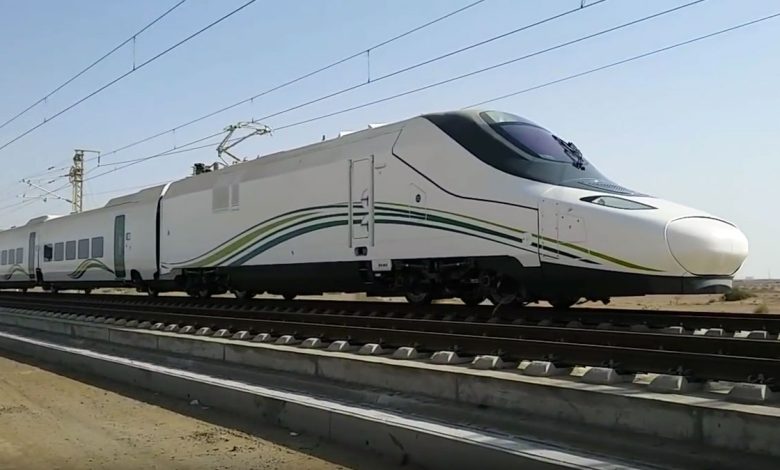
At the intercity level, the Haramain High-Speed Railway carried 1.6 million passengers during the second quarter. The service links Makkah and Madinah through stations in Jeddah, King Abdulaziz International Airport and King Abdullah Economic City, operating at speeds of up to 300 kilometers per hour.
The railway has become a major component of Saudi Arabia’s high-speed rail network, connecting religious, population and economic centers. The East Train, which links Riyadh with the Eastern Province through Al-Hofuf and Buqayq before reaching Dammam, carried 389,000 passengers.
The North Train, meanwhile, transported approximately 246,000 passengers on its route linking Riyadh with Al-Majma’ah, Qassim, Hail, Al-Jouf and Qurayyat.
These services extend beyond the basic movement of passengers between stations. They strengthen links between administrative capitals, population centers and economic regions, while supporting travel for work, education and essential services, as well as domestic tourism.
Saudi Arabia Railways (SAR) operates passenger services on the North and East networks, in addition to the Haramain High-Speed Railway, and manages 10 main stations across these networks.

Freight Expands Rail’s Role
The sector’s second-quarter performance was not limited to passenger transport. SAR North trains carried 3.3 million tons of minerals and goods, while SAR East transported 396,000 tons. In addition, 47,000 standard containers were shipped during the same period.
The figures highlight the growing importance of railways in transporting large volumes of minerals and goods over long distances. Rail freight helps improve supply-chain efficiency and reduce reliance on trucks, while enabling shipments to move between ports, mining and production areas, economic zones and distribution centers through more organized and efficient routes.
Container transport by rail is also strengthening the integration of different modes of transportation. By connecting ports with inland destinations, it supports the smooth movement of goods and enhances the competitiveness of the logistics sector.
This approach is consistent with the objectives of the National Transport and Logistics Strategy, which seeks to develop infrastructure, improve network efficiency and position Saudi Arabia as a logistics hub connecting three continents.

Expansion Supports Vision 2030
Saudi Vision 2030 treats railways as an integral part of an interconnected transport and logistics system, rather than as a standalone passenger service. Its priorities include developing existing networks, increasing capacity, linking cities with ports, airports and economic zones, and improving integration between rail, road, maritime and air transport.
The Ministry of Transport and Logistic Services has emphasized that the development of the railway sector aims to expand infrastructure, strengthen connectivity and mobility, and support economic growth and sustainable development.
As part of this direction, efforts are continuing to improve the North and East networks through upgraded stations and services and greater operational efficiency. SAR has also launched a tender to manufacture 10 new passenger trains for the North network, in a move designed to increase capacity and meet rising demand for rail travel.
The Haramain High-Speed Railway remains one of the main pillars of the Kingdom’s existing rail system and future expansion plans. The proposed Land Bridge project, meanwhile, is intended to connect the Red Sea coast with the Arabian Gulf coast through Riyadh.
If implemented in accordance with its approved scope and plans, the project would strengthen passenger and freight movement and connect ports with industrial zones and logistics centers.
Within cities, urban transport plans are focused on expanding metro and automated rail networks, particularly the Riyadh Metro, and connecting them with new urban developments and major projects such as Diriyah and Qiddiya. This would support the capital’s continued expansion and the changing distribution of its population and economic activity.
https://x.com/Saudi_Gazette/status/2087101720589705444
Railways, Quality of Life
Expanding the rail network will provide faster and more reliable travel options between cities while improving access to airports, economic centers and religious and tourism destinations. Public transportation can also reduce dependence on private vehicles, ease pressure on roads and lower the time and cost associated with daily travel.
The economic impact of rail expansion is equally significant. It can stimulate investment around stations and surrounding areas, support trade and tourism, expand logistics services and generate demand for industries and services linked to the railway sector.

As the network becomes more reliable and geographically extensive, it will be better positioned to connect residents with workplaces, educational institutions, healthcare facilities and entertainment venues while supporting commercial activity between regions.
The second-quarter figures therefore carry significance beyond their operational value. They combine strong urban rail use, improved interregional connectivity and the movement of millions of tons of minerals and goods, confirming that railways have become a core component of Saudi Arabia’s development infrastructure.
Some projects, including the Land Bridge and future network expansions, remain subject to studies, approvals, funding and implementation schedules. The North and East networks, the Haramain High-Speed Railway and the Riyadh Metro, however, already represent key components of the existing or developing system.
The broader direction is clear: Saudi Arabia is building a larger and more integrated rail network designed to support economic growth, improve quality of life and advance the objectives of Saudi Vision 2030.
Related Topics:
Haramain High-Speed Railway to Operate 3,662 Trips in Ramadan
Saudi Arabia Expands Haramain Fleet with 20 New High-Speed Trains
Haramain Railway Boosts Hajj 2025 Capacity by 25%