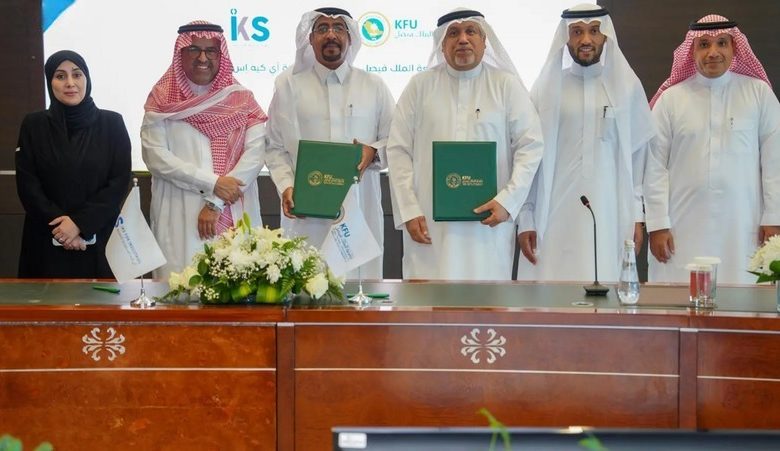
The big picture: King Faisal University (KFU) in Hofuf, located in Saudi Arabia’s Eastern Province, signed a landmark cooperation agreement with IKS for Industries. Consequently, this strategic initiative moves academic discoveries from university laboratories directly onto industrial production lines. Specifically, the institution aims to translate its growing patent portfolio into viable commercial products.
Located in the fertile Al-Ahsa region, the university produces specialized research in agricultural technology, water management, and renewable energy. Under the agreement, both entities will launch joint applied research projects, share specialized laboratory infrastructure, and provide practical training opportunities for students. Thus, this partnership bridges the gap between academic innovation and market needs across the Gulf region.
Why it matters: Saudi universities produce growing volumes of research and intellectual property. However, patents generate economic value only when companies can develop, manufacture and sell the underlying technologies.
This deal links three parts of Saudi Arabia’s knowledge economy. Labs generate ideas, factories develop them technically, and markets sell them for a profit. Closing that loop matters as much as funding the research in the first place, since patents alone don’t build industries or create jobs.
For KFU, it’s another step from producing knowledge to selling it. The university’s portfolio already carries a deep stack of patents and Science Park spinoffs. This partnership gives both a clearer path to Saudi factory floors, and, eventually, to store shelves at home and abroad. Expect more Saudi universities to chase similar deals as the pressure to show economic returns on research grows.
What they’re saying: Dr. Adel Abuzenadah, President of King Faisal University, highlighted the strategic value of this partnership during the official signing ceremony at the campus headquarters.
“The agreement aligns with the university’s strategic goals and Vision 2030 targets to maximize the economic impact of research and innovation, turn knowledge into added value, and strengthen ties with the industrial sector,” Abu Zanadah stated.
Eng. Saad bin Abdulaziz Al-Qanbar, Chairman of the IKS for Industries, emphasized the commercial potential of local academic research.
“Integrating academic research capabilities with practical industrial expertise accelerates the transformation of laboratory concepts into high-value commercial products, thereby driving knowledge-based national economic growth,” Al-Qanbar noted.
Expanding Research and Development Landscape
This agreement arrives as Saudi Arabia experiences an unprecedented expansion across its national research ecosystem. The Kingdom actively converts public investment into tangible industrial output to diversify its economy beyond oil revenues.
By the numbers: Recent statistical data from the General Authority for Statistics (GASTAT) highlights this rapid momentum.
- Total national research and development spending jumped 30.4% in 2024, reaching SAR 29.5 billion.
- Business led that spending at 40.3%, followed by government at 40.2% and higher education at 19.5%.
- The business sector led research funding, contributing SAR 11.9 billion to local innovation projects. Higher education institutions invested SAR 5.8 billion, generating the majority of domestic patents.
- Government entities provided over half of all financial contributions across the national research landscape.
- The national R&D workforce expanded by 14.7% annually, reaching 56,600 specialized workers.
- Total active researchers reached nearly 42,000 personnel, reflecting a 13% year-over-year increase.
- Saudi universities employ 71.3% of the research workforce and 83.4% of active researchers nationwide.
Therefore, higher education institutions remain the primary engine driving intellectual property creation throughout the country.
Advancing Vision 2030 Priorities
Additionally, King Faisal University holds a prominent international position in intellectual property generation. The United States Patent and Trademark Office consistently ranks the university among top global academic recipients for granted patents. However, institutional leadership recognizes that theoretical patents create real economic value only when national factories commercialize them locally. Building local manufacturing capabilities ensures that domestic industries adopt Saudi-developed intellectual property rather than importing foreign technologies.
Furthermore, the Research, Development and Innovation Authority directs national grant funding toward four crucial priority sectors aligned with Vision 2030 goals:
- Health and Wellness
- Sustainable Environment and Essential Needs
- Energy and Industrial Leadership
- Economies of the Future
Consequently, transferring university technology to local factories builds resilient domestic supply chains and reduces reliance on foreign tech imports. Moreover, this initiative boosts local content, enhances national industrial competitiveness, and creates high-skilled technical jobs for Saudi university graduates. As a result, local enterprises gain access to tailored, locally produced solutions.
What’s next: Saudi Arabia is systematically transforming university campuses into industrial innovation engines. By connecting campus inventors directly with commercial manufacturers, the Kingdom ensures that national research spending yields tangible economic value, boosts regional industrial self-reliance, and accelerates the broader transition toward a sustainable knowledge-based economy.