Saudi Arabia Expands Regional Commerce Dominance as Gulf Trade Surplus Reaches SAR 9.28B
The big picture: Saudi Arabia’s non-oil merchandise trade surplus with its Gulf Cooperation Council (GCC) neighbours nearly doubled in August 2026, climbing 91.85% year-on-year on the back of stronger export performance with the United Arab Emirates and Kuwait.
Why it matters: The jump signals deepening intra-Gulf commercial integration just as Saudi Arabia pushes non-oil trade higher under Vision 2030. Stronger regional trade ties also help cushion the Kingdom’s economy against oil-price volatility, a priority as Riyadh works to diversify revenue streams ahead of 2030.
According to preliminary non-oil commodity trade data from Saudi Arabia’s General Authority for Statistics (GASTAT), cited in a report by Al Arabiya Business, the Kingdom’s trade surplus with the GCC, a figure that excludes petroleum exports, reached SAR9.28 billion ($2.47 billion) in August, up from SAR4.84 billion ($1.29 billion) in the same month of 2025.
Driving Factors Behind the Regional Export Surge
Between the lines: Two complementary economic drivers fueled this surging surplus. These drivers include rapid growth in national non-oil exports and steady expansion across regional re-export channels.
Saudi industrial capabilities are expanding rapidly under the National Industrial Development and Logistics Program (NIDLP). Consequently, domestic manufacturers are fulfilling an increasingly large share of regional demand for industrial products, plastics, petrochemicals, building supplies, and processed foods.
Total non-oil trade volume between the Kingdom and its GCC partners grew 44.35% year-on-year in August 2026. Therefore, aggregate cross-border trade reached SAR 27.91 billion ($7.44 billion) during the month. This trade volume compares to SAR 19.34 billion ($5.16 billion) in August 2025.
Saudi total exports to GCC neighbors rose 53.86% year-on-year during August 2026. Total exports reached SAR 18.60 billion ($4.96 billion) compared with SAR 12.09 billion ($3.22 billion) in August 2025.
National non-oil exports recorded the most aggressive gains across all categories. These domestic exports leaped 146.3% year-on-year to SAR 7.37 billion ($1.97 billion) in August 2026. In August 2025, national non-oil exports stood at SAR 2.99 billion ($798.27 million).
Meanwhile, re-exported national commodities rose 23.4% year-on-year to reach SAR 11.22 billion ($2.99 billion). Re-exports totaled SAR 9.10 billion ($2.42 billion) in August 2025.
Saudi Arabia’s import bill from GCC nations also increased as domestic commercial activity expanded. Import volumes grew 28.5% year-on-year to SAR 9.32 billion ($2.48 billion) in August 2026. This import total compares to SAR 7.25 billion ($1.93 billion) in August 2025.
Regional Trade Breakdown and Bilateral Dynamics
By the numbers:
- United Arab Emirates: The non-oil trade surplus with the UAE expanded 46.66% year-on-year to SAR 7.06 billion ($1.88 billion). Furthermore, the UAE received 85.6% of all non-oil goods that Saudi Arabia re-exported to GCC nations. These re-exports totaled SAR 9.61 billion ($2.56 billion), marking a 20% annual increase.
- Kuwait: Bilateral trade performance with Kuwait witnessed dramatic expansion. The surplus jumped 210.67% year-on-year to SAR 1.70 billion ($452.67 million), reflecting robust Kuwaiti demand for Saudi non-oil commodities.
- Qatar: The non-oil trade surplus with Qatar decreased by 27.97% year-on-year, settling at SAR 524.5 million ($139.87 million).
- Oman: Saudi Arabia successfully transformed its commercial position with Oman. The Kingdom turned a previous trade deficit into a positive trade surplus of SAR 124.8 million ($33.28 million).
- Bahrain: The Kingdom narrowed its net trade deficit with Bahrain by nearly 43% year-on-year to SAR 131.7 million ($35.12 million).
- First Half 2026 Context: During the first six months of 2026, Saudi Arabia achieved a 12.05% year-on-year rise in its non-oil GCC trade surplus. The cumulative H1 2026 surplus reached SAR 24.58 billion ($6.55 billion), compared to SAR 21.94 billion ($5.85 billion) in H1 2025.
Strategic Impact on Vision 2030 Goals
These preliminary trade statistics provide tangible evidence that Saudi Arabia’s industrial and economic policy is achieving its primary targets. Vision 2030 aims to increase non-oil exports significantly while expanding Saudi manufacturing capacity.
By directing capital into advanced factory automation, specialized economic zones, Red Sea seaports, and cross-border customs infrastructure, Saudi Arabia is creating an integrated logistics network.
The UAE continues to act as the primary destination for Saudi re-exports due to established cross-border logistics links. Simultaneously, the sharp 146.3% jump in domestic non-oil exports proves that Made-in-Saudi products are capturing greater market share across Kuwait, Oman, and neighboring Gulf markets.
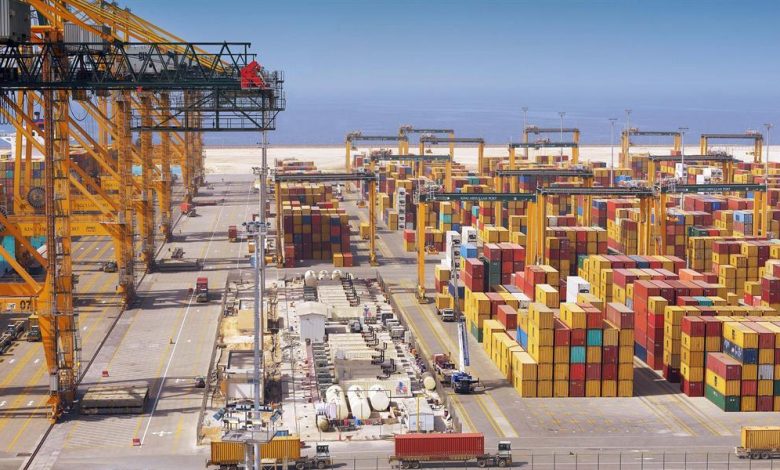
What’s next: Economic analysts expect sustained export growth through the remainder of 2026. Key infrastructure projects, including expansion works at King Abdulaziz Port in Dammam and King Abdullah Port in Economic City, are boosting cargo handling speeds.
Additionally, as regional economic integration deepens under the GCC Customs Union, streamlined cross-border procedures will further lower trade friction and accelerate non-oil trade flows across the Arabian Peninsula.