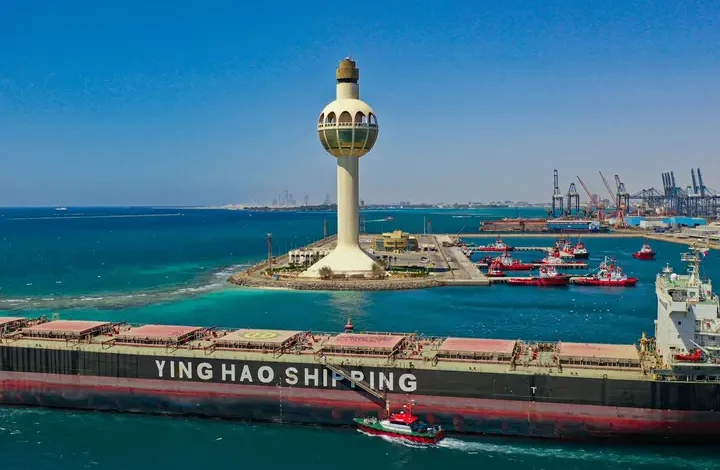
Saudi Arabia is further strengthening its position as a global logistics hub through total investments of SAR 14 billion, after the Saudi Ports Authority, Mawani, signed contracts to establish and expand 7 new logistics centers at Jeddah Islamic Port and in the Al-Khumrah area, with investments of nearly SAR 1 billion. The projects raise the total number of logistics centers across Saudi ports to 34, with cumulative investments exceeding SAR 14 billion.
The new developments are part of the National Transport and Logistics Strategy and Saudi Vision 2030, which seek to boost supply chain efficiency, strengthen the competitiveness of Saudi ports, and position the Kingdom as a logistics platform linking the world’s continents.

Beyond Storage
The projects go beyond simply expanding storage capacity. They include the creation of an integrated logistics system offering more than 384,000 square meters of space for storage, consolidation, and re-export, along with digital solutions and advanced logistics services designed to speed up shipping cycles, improve handling efficiency, and enhance services for investors. The projects are also expected to create more than 5,000 direct and indirect jobs and support the growth of the Kingdom’s logistics sector.
Jeddah, Al-Khumrah as New Hub
The plans also include the expansion of Maersk’s logistics center at Jeddah Islamic Port, which will strengthen the port’s operational capacity. The strategic location of the Al-Khumrah area, linked to the port, King Abdulaziz International Airport, and the main road network, gives it a competitive edge that supports the movement of goods and supply chains across local, regional, and global markets.
Lower Costs, Greater Competitiveness
Logistics expert Hassan Al-Hilal told Al Arabiya Net that the economic impact of the projects goes beyond expanding logistics space, extending to improving supply chain efficiency and reducing cargo-handling and shipping cycle times. He said this would help lower storage costs, improve inventory management, and strengthen companies’ cash flow.
Additionally, he added that developing integrated logistics centers near Jeddah Islamic Port enhances coordination between the port and the industrial and commercial sectors, while increasing supply chain resilience in the face of global fluctuations. He stressed that investment in logistics infrastructure has become a key pillar for boosting the competitiveness of the national economy and achieving sustainable growth.

Ports Become Economic Hubs
Al-Hilal said Saudi ports are no longer limited to receiving and exporting goods, but now provide value-added services including storage, distribution, packing, and re-export, which strengthens the logistics sector’s contribution to GDP, improves the competitiveness of Saudi exports, and makes the Kingdom more attractive to quality investments.
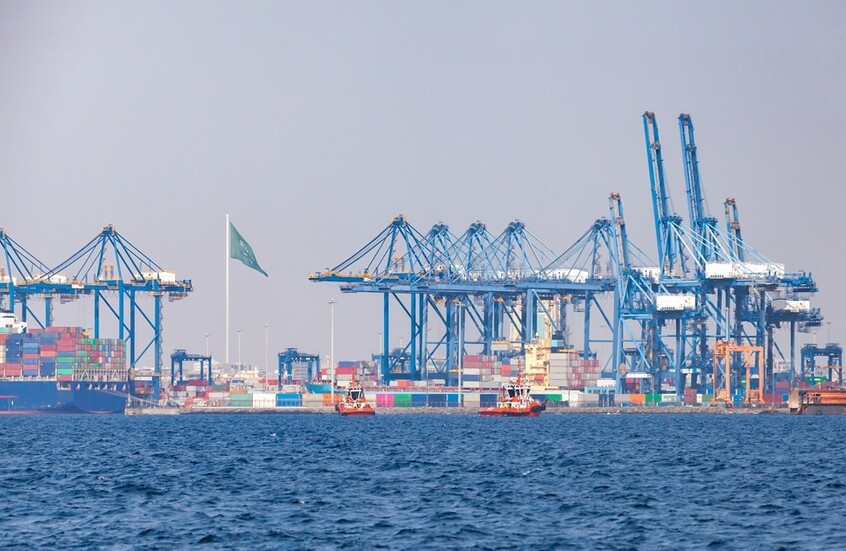
He also noted that the expansion of global companies, including Maersk, inside Jeddah Islamic Port reflects growing confidence in the Saudi investment environment and confirms the increasing competitiveness of national ports on global trade routes.
These projects represent one of the implementation tracks of the National Transport and Logistics Strategy. It also seeks to cement the Kingdom’s position as a global logistics hub through port development, stronger supply chain efficiency, and the attraction of quality investments in support of Saudi Vision 2030.
Related Topics :
Mawani Highlights Digital Transformation at IMO Meetings
Red Sands 2025: Saudi Arabia, US Conduct Largest Counter-Drone Drill in Mideast
Al-Sisi in NEOM: A Closer Look at Saudi-Egyptian Robust Ties