The evolving partnership between Saudi Arabia and the European Union (EU) is opening historic avenues for mutual growth, cultural exchange, and strategic alignment.
Driven by the momentum of Vision 2030, this collaboration marks a new era of clean energy partnerships, technological exchange, and a shared commitment to regional stability.
High-Level Engagements
The Big Picture: The Chair of the European Parliament’s Delegation for Relations with the Arabian Peninsula, Reinhold Lopatka, arrived in Saudi Arabia on Sunday, July 19, 2026, for a three-day visit that covers Riyadh and Jeddah.
Why Now: Lopatka will take part in the 18th EU–Saudi Arabia Interparliamentary Meeting, which aims to bolster parliamentary dialogue. Discussions focus on Saudi Vision 2030, ways to boost Saudi-EU cooperation, and maritime security in the Strait of Hormuz.
Between the Lines: Saudi Deputy Foreign Minister Walid Al-Khuraiji received Lopatka in Riyadh. The two officials discussed ways to deepen bilateral cooperation and exchanged views on the latest regional and international developments, the Saudi Foreign Ministry said.
Saudi-EU Strategic Partnership
State of Play: In December 2025, the EU approved a roadmap for establishing an official Strategic Partnership Agreement (SPA) with Saudi Arabia that deepens cooperation in various areas, such as security, trade and investment, energy and climate, digital transformation, artificial intelligence (AI), innovation, and culture.
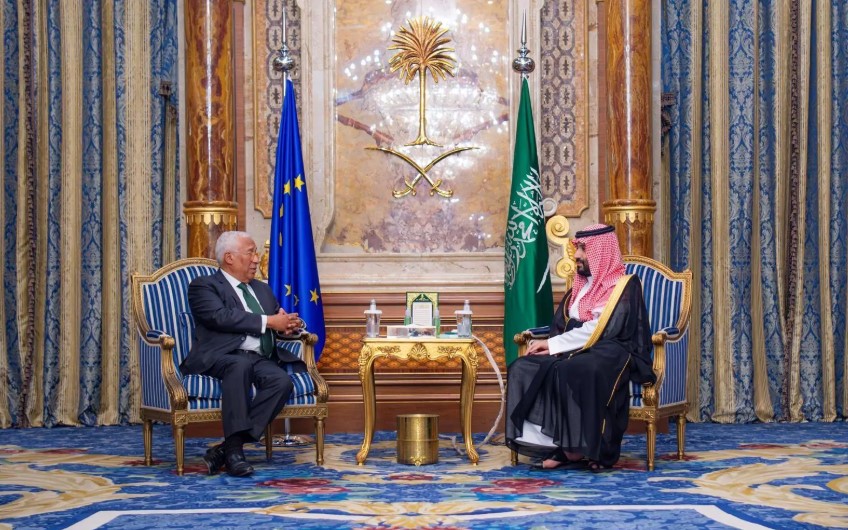
Flashback: In April 2026, Saudi Crown Prince and Prime Minister Mohammed bin Salman met with President of the European Council António Costa in Jeddah. During their meeting, they reviewed the Saudi-EU strategic partnership. They also discussed the latest regional developments and their security and economic implications at the international level, in addition to avenues for coordinating efforts to reinforce security and stability.
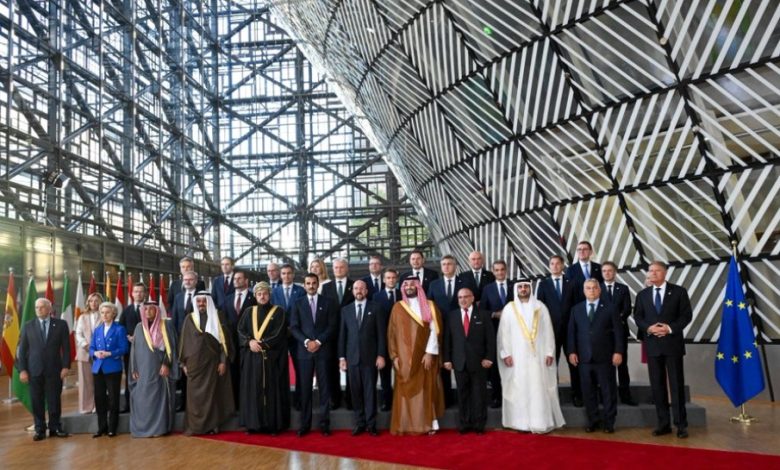
What to Watch: The second GCC-EU Summit will take place in Riyadh, building on the inaugural meeting held in Brussels in October 2024. The Riyadh summit will provide a unique opportunity for transforming Saudi-EU ties into sustained strategic cooperation.
The Bottom Line: According to Lopatka, the EU targets three priorities to drive the relations forward:
- Securing a strategic partnership agreement.
- Advancing free-trade negotiations.
- Tightening coordination on the global stage, particularly at the UN.
Robust Trade Ties
The EU remains one of Saudi Arabia’s largest trading partners, boosting their trade ties in several areas, most notably sustainable energy, as part of their commitment to accelerating the green transformation of economies and societies.
By the Numbers:
- +50%: Saudi Arabia’s share of all GCC-EU imports.
- $74.03 Billion: The total volume of bilateral goods trade between Saudi Arabia and the EU in 2025.
EU Exports to Saudi Arabia:
- $42.15 Billion: The total value of European goods arriving in Saudi ports in 2025.
- $9.6 Billion: Capital spent on advanced machinery, nuclear reactors, and boilers leading the import surge.
- $5.0 Billion: The value of European pharmaceutical and healthcare products imported to support the Kingdom’s growing medical sector.
- $3.6 Billion: High-tech electrical equipment and components imported to power national infrastructure projects.
- #1: Germany’s rank as the Kingdom’s largest sourcing partner within the EU.
Saudi Exports to the EU:
- $31.88 Billion: The total value of Saudi goods flowing into European markets in 2025.
- $25.9 Billion: The baseline value of traditional mineral fuels and oils fueling European industry.
- $1.9 Billion: The footprint of Saudi plastics in Europe, marking a key milestone in downstream industrial expansion.
- $1.7 Billion: High-grade organic chemical exports, showcasing the rapid scaling of the Kingdom’s non-oil manufacturing.
- #1: France’s rank as the top destination for Saudi exports within the EU, anchored by massive aerospace and energy partnerships.
Vision 2030: Driver of Cooperation
The Catalyst: Saudi Vision 2030 has emerged as the driving force behind the growing Saudi-EU relations. The EU wants to benefit from the Kingdom’s push toward utilizing renewable energy and green hydrogen. Consequently, the bloc is actively seeking to tie its European Green Deal with Saudi Arabia’s Vision 2030 giga-projects.

The Context: Saudi Arabia’s large-scale solar and hydrogen projects, together with the EU’s advanced renewable technologies, unlock potential for joint initiatives in green hydrogen, sustainable fuels and next-generation energy infrastructure. The EU has also expressed interest in tapping into the Kingdom’s massive domestic mineral resources to help the bloc diversify its mineral supply chains.
Geopolitical Alignment
Given its pivotal role as an anchor of regional stability, the EU views Riyadh as an indispensable partner for maintaining security in the Middle East.
Go Deeper: Saudi Arabia and the EU have aligned their stances on maritime safety and freedom of navigation in critical waterways amid heightened volatility and growing threats to supply chains.
Backstory: The EU has played a vital role in safeguarding maritime security and the freedom of navigation through international waterways. This has been evident in EUNAVFOR ASPIDES – an EU military operation launched in 2024 in response to Houthi attacks against commercial shipping in the Red Sea, Gulf of Aden, and the Indian Ocean. Moreover, European countries have launched a defensive multinational naval effort to safeguard navigation through the Strait of Hormuz.
The Pivot: Saudi Arabia has played a critical mediation role to resolve conflicts in Gaza, Sudan, Yemen, and Ukraine. The Kingdom also supports the stability and territorial integrity of Syria and Lebanon. Saudi efforts have led to the recognition of the State of Palestine by many European countries, including France, Spain, Ireland, Norway, and Portugal.