Saudi Arabia Reaffirms Commitment to Global Food Security, Sustainable Marine Systems

Saudi Arabia has reaffirmed its commitment to advancing international and regional efforts to enhance the sustainability of marine resources, combat illegal, unreported and unregulated (IUU) fishing, and strengthen fisheries governance—contributing to the protection of global food security and the long-term health of marine ecosystems.
The statement came as the Kingdom’s delegation, led by Dr. Ali Al-Sheikhi, Assistant Deputy Minister for Animal and Fishery Wealth at the Ministry of Environment, Water and Agriculture, took part in the 37th session of the FAO Committee on Fisheries (COFI37) and a high-level event marking the 10th anniversary of the Port State Measures Agreement, held at the Food and Agriculture Organization’s headquarters in Rome.

In his address at the high-level event, Dr. Al-Sheikhi said the Kingdom regards seas and oceans as a shared heritage and a cornerstone of food security, development and prosperity. He added that the challenges facing marine resources cross national borders and demand an integrated international response grounded in cooperation, transparency, innovation and a firm commitment to implementation.
Aligned with Saudi Vision 2030, Al-Sheikhi noted that the Kingdom is continuing to develop its national marine fisheries management system by strengthening governance, control and compliance frameworks, improving inspection efficiency and data quality, and deploying modern technologies for tracking and monitoring. These measures are intended to promote sustainable resource management, reinforce supply-chain transparency and support the growth of the blue economy.
Balancing Development, Sustainability in Red Sea
He emphasized that the Red Sea occupies a special place in the Kingdom’s efforts due to its unique biodiversity and ecosystems of environmental, economic and developmental significance. Saudi Arabia is working to strike a balance between development ambitions and sustainability requirements by protecting sensitive marine habitats, regulating fishing activities, enhancing monitoring and tracking, improving landing-operations management and encouraging responsible, sustainable fishing practices.
Strengthening Regional Cooperation
Al-Sheikhi underscored the importance of deepening regional partnerships among Red Sea states through the exchange of information and data, the integration of control and inspection efforts, and capacity-building to safeguard these resources for future generations.
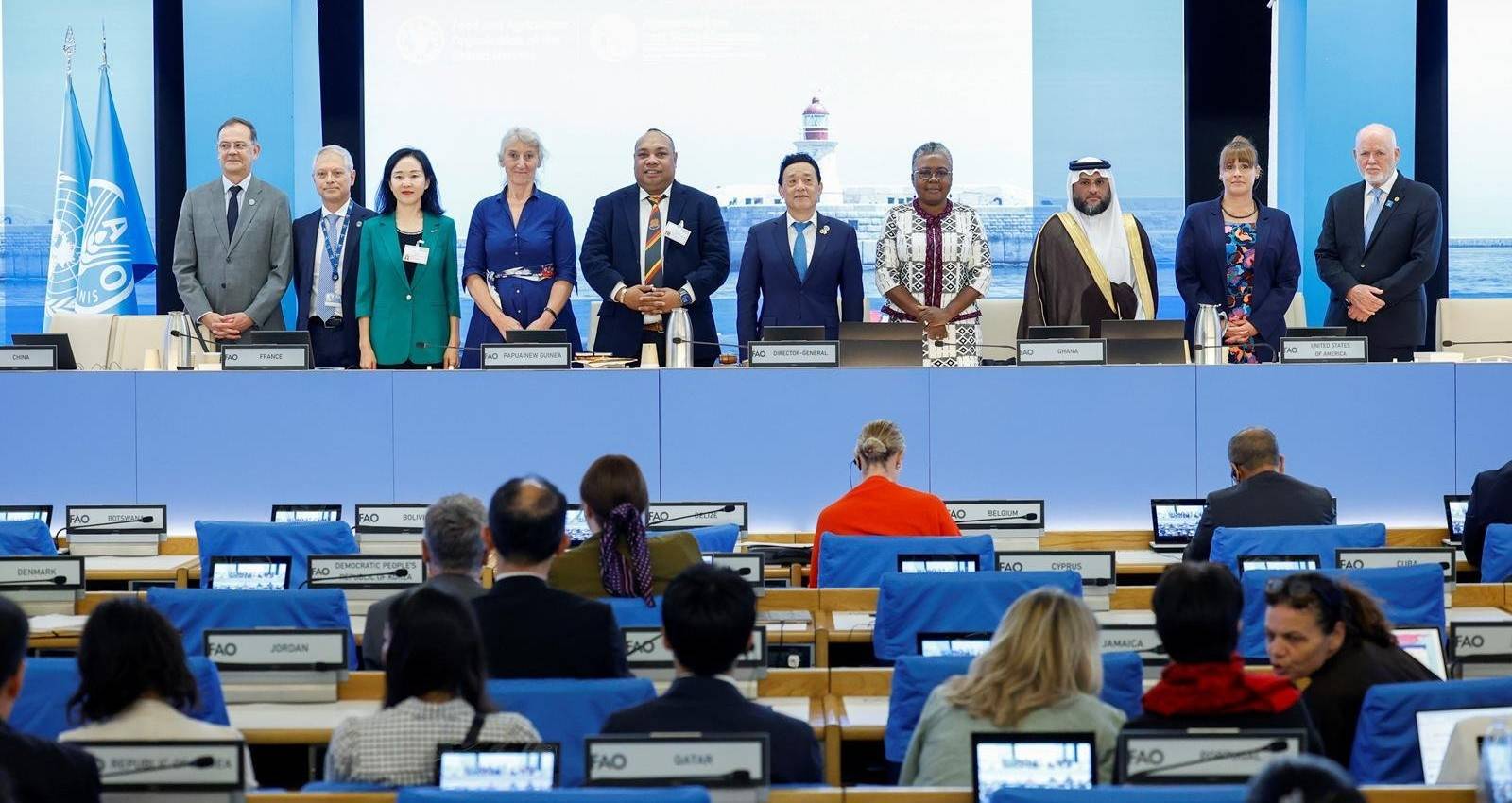
The Kingdom is participating in COFI37, which runs from September 7 to 11, 2026, and is addressing key issues in fisheries and aquaculture. Agenda items include the 2026 State of World Fisheries and Aquaculture report, progress in combating IUU fishing, implementation of relevant international instruments, climate change adaptation and mitigation, and support for small-scale fisheries and aquaculture.
Moving Toward Smart, Proactive Monitoring
The Kingdom highlighted the need to shift in the coming phase from traditional monitoring to smart monitoring, and from reacting to violations to anticipating them. This includes strengthening integration among flag, coastal, port and market states, and expanding the use of monitoring and tracking systems, data analytics and modern technologies.
Saudi Arabia renewed its commitment to working with FAO, member states, regional and international organizations and partners to enhance fisheries governance, confront IUU fishing, support the sustainability of marine resources and global food security, and translate international commitments into tangible, lasting outcomes.
Related Topics :
Sustainability at the Core: Madinah Emerges as an Urban Transformation Model
Saudi National Day: Traditional Dishes at the Heart of Celebrations
Jazan Municipality Launches Investment Opportunities in Jazan
Bad Weather, War Raise Concerns about Global Wheat Supplies